Tag Archives: teaching

Take a Closer Look at Schools

Standard

Taking a Closer Look at Schools

Do You See What I See?

My grandson was pitching for batting practice this week.  He was hit in the eye with a line drive ball which broke five bones around his eye.  His eye was blood-shot,  swollen almost shut and he has temporarily (we hope) lost all depth perception.  In the emergency room, he couldn’t even get a straw into his mouth to take a drink without putting his hand on the straw first to guide it to his mouth.  He has to wear protective glasses at all times to keep everyone and everything from inadvertently jarring his eye until these fractures heal.

During this same week I was visiting schools to meet newly placed student teachers.  These are college seniors who are doing their final practice teaching before hopefully finding teaching positions in their own classrooms next year.  The professional teachers who are sharing their classrooms with these novices are called mentor teachers.  It took me eight days to visit 20 students in thirteen schools located in four different school districts.

How Are These Two Events Connected?

taking a closer look at schools

I see a significant parallel.  And I don’t think it was just because I was emotionally experiencing both of these events simultaneously.

It seems that everything you hear through the media about schools and our educational system these days is bad news.

And yet when I walk in schools’ hallways I see wonderful things happening.  It appears to this career teacher that the reporters and politicians who are being constantly quoted about the bad state of our American educational system, have no depth perception.  They are seeing out of only one eye.  Or are they even in our schools’ hallways.

I used both eyes and both ears as I walked the schools’ hallways and talked with the staff.

This is what I saw and heard about teaching.

I saw teachers sitting with students before school hours having breakfast together.  This free breakfast was served to everyone, every day to ensure that all students were getting a nutritional start to their day of learning without singling out anyone.

When I asked student teachers to describe their mentor teachers, they used these words:

committed, caring, kind, patient, hard-working, she comes in early and stays late, he answers all my questions and explains everything he is doing for me, helpful, fair, consistent, he has a wonderful rapport with his students, well-organized, enthusiastic, even the students who claim they don’t like English still like this teacher who is teaching English.  S/he is exactly the kind of teacher I want to become.

One student teacher was describing the principal in the building where she is assigned.  “She had all the student teachers over to her house for a meal.  She wanted to get to know us individually.  The teachers in the building tell me she offers to babysit their own children.  She is always asking the question, ‘What can I do to help you?'”

I saw classrooms decorated and organized with so much care, that the rooms made you want to spend days there learning.   I know how much (or more accurately) how little money a teacher is given to set up a classroom.  These teachers reach deep into their own pockets to make a comfortable environment conducive to learning. Their classrooms were charming, and exciting places to learn.

I saw so much evidence of beginning-of-the-school-year activities planned specifically to build a positive classroom community.  Anti-bullying themes were apparent everywhere.  One teacher photographed her students’ feet (shoes, socks and all) on the first day of school and placed these foot photos on their lockers.  Each student then wrote a paragraph about what they would do this year to put their best foot forward.

Secondary students were gathered in a circle discussing ways we can make isolated peers feel included.

I had one-on-one interviews with all the student teachers and asked them why they wanted to teach and what they wanted to teach.  More than one had tears in their eyes as they explained their passion for the profession.  Their enthusiasm was uplifting.  It made me feel optimistic all over again about this profession I love so much. One of my student teachers appears to be in his forties.  He left the insurance industry to become a teacher because of the way he recognized that teachers can change the lives of young people.

About three weeks ago I had dinner with a couple of former students who are now in the teaching profession.  One of them is in a district where her salary has been frozen for five years because the school tax levy was not passed by voters.  In addition to her rent and car payment she pays  $700.00 a month toward her college loan for her education.  She had applied at surrounding school districts trying to increase her pay and relieve some of her financial stress.  One of those districts called her for a job interview ten days before the beginning of this school year.  She thought it would be unfair to leave her current school district and students so close to the beginning of the school year, so she didn’t go after the job.  And yet in the media we only read about the seeming selfishness of teachers who strike for wages.  Does the teacher I just described sound selfish to you?  Will we read about her?  Only here.

Yesterday I was surfing the internet reading stories about teaching.  One article had a link to the Huffington Post.  I had never been there before.  What did I see?   Dozens of negative articles about teachers.  There was only ONE positive one.  And that article was written by a celebrity, Tony Danza.  Thank you Tony!  But once again, it was driven home to me that only negative or celebrity-written articles about teaching seem worthy of publication.

I’d start a personal campaign to get every parent and teacher I know to write a positive story about teaching and flood the media with them; but I know they wouldn’t get printed.  In the media there is a popular expression they use to determine what gets heard.  “If it bleeds, it leads.”  In other words bad stories, ugly stories attract viewers and readers.

All I can do is stage my own personal campaign on my blog site here or write a book about the positive side of teaching… which I have.  If you are new to my site, scroll back through the past couple of months and check out many true and inspiring stories about teaching.  Also read, TEACH…To Change Lives.

TEACH...To Change Lives

Available at Amazon.com

One Final Word About Our Schools

If the parents and grandparents of our country could have walked the halls of our schools with me this past ten days, they would have felt so good  and been so impressed with the commitment the teachers show to your children.  I heard it and saw it and felt it everywhere I went.   Take a deep breath and feel good about our schools.  This doesn’t seem to be popular right now, but it is the truth.

My grandson goes back to the eye specialist tomorrow.  It will be his third visit this week.  We know he has five fractures (one of them pretty serious) and a depth perception problem and we are watching it closely.  As for the media…I have only one piece of advice.

Taking a Closer Look at Schools

You Need Glasses!! 

TEACH…To Change Lives

Standard

Life Changers

TEACH...To Change LivesThey sneak up on you.  Life changers come from out of nowhere.  You wake up in the morning expecting a typical day, but you meet someone new, or something unexpected happens on that day, and it changes the course of your life.  Sometimes you figure it out on the very day it happens.  You say to yourself

Wow.  I’m going to remember this day forever.

But some life changers only reveal themselves over a long period of time.  It may take decades before you know the full impact they have on you.  Life changers can feel wonderful or horrible.  The things they have in common are that they are out of our control and they change us profoundly.  They are different from significant days that you plan like a wedding or a reunion. They appear suddenly and alter our lives in unexpected ways.

One of the things I love about teaching is that we get to experience so many life changers.  Sometimes it’s a person, often a student, other times it’s an event or simply a tiny moment. Sometimes we teachers become the life changers and we may even be unaware of it. But in this wonderful profession life changers are possible every single day.

My life changerOne of My Life Changers

This is my youngest daughter, Kelsey Easley. Her life was a life changer for me. This story isn’t mostly about Kelsey but it begins with her.  When Kelsey was born I had already been a teacher for fifteen years. I believe I was a good teacher, creative and hard-working.  But watching my daughter’s life and her experiences changed my teaching profoundly.

Kelsey was diagnosed with brain cancer at age five. She battled cancer off and on for eleven years until the disease took her life at age sixteen.  When Kelsey had to receive radiation to her brain at age five, it saved her life but it also changed her life.  Radiation kills healthy cells as well as cancer cells.  As a result Kelsey’s intelligence plummeted.  She went from being the top reader in her kindergarten class, to the lowest reader by the end of the first grade with the same peers.  Now she didn’t just have a deadly disease to battle, she also was forced to enter the population we politely label special needs.

That experience put me (Kelsey’s mom) on the other side of the IEP conference table…the side of the table where no parent ever chooses to be. I learned a lot of lessons on the parent side of the table, most of them painful.  I saw teachers and specialists in a whole new and often unflattering way.  Too often I saw condescension or inflexibility. It changed me.

I also learned how naturally accepting and inclusive young children are.  They’ll love you bald.  It makes no difference.  But acceptance changes at about junior high age.  What Kelsey needed the most in junior high and high school were friends and there were very few. I watched her hurt and no one deserved it less.



How This Changed Me

life changers

It would be impossible to describe all the ways parenting Kelsey changed me; but for right now I’ll share one story.  When I began teaching a Teacher Academy program at the high school level, I decided to begin a Friendship Club between my class full of academically talented future teachers and the students with special needs in our high school.  Kelsey had taught me that friends were what the special population needed most.  Instinct and my own experiences taught me that my future teachers would learn even more. My students knew all about Kelsey.  She had passed away by then but I shared many stories about her.

We planned monthly activities pairing our aspiring teachers and their new friends from the special education department.  The outcomes were wonderful.  True friendships emerged.  Simply a new friend to greet in the high school hallways was an improvement for the special population.  Many of our new friends wandered into our classroom routinely before school and during breaks.  My future teachers learned to plan appropriate activities that encouraged conversations and natural friendships. They also learned patience, tolerance, how to modify activities to feature all talents, a new respect for challenges our less fortunate friends encountered and a gratitude for our own gifts.

You’d think a win/win idea like this one would be greeted with positive reactions from all, but it had its challenges.  Most of the special population didn’t drive and were quite dependent on school transportation specially equipped for their needs.  This meant our functions had to happen within school hours.  Some teachers were opposed to having students miss class, though we tried mightily to schedule these events during lunch hours.  Locations were hard to schedule too.  But the challenges were worth the effort.  Relationships formed and barriers were removed.

Will You Help?

One day an unexpected email (a life changer) challenged all of us to examine just how sincere our intentions were. The email came from Steven’s mom.  Steven was one of our new friends who was almost completely nonverbal.  Steven’s mom wanted her son to have the opportunity to attend the prom. Would any of my students be willing to have Steven be part of their prom night?  I read the question from the email aloud to my future teachers and waited.  It was very quiet.  No teens made eye contact with me. Here was Kelsey’s mom standing in front of them asking an uncomfortable question.  PROM?  A pretty sacred night for a teen.

After a somewhat lengthy pause Chelsea finally spoke up.

I’ll take Steven to the prom. I didn’t have anyone special I wanted to go with, and I couldn’t rationalize spending the money, but this gives me a good reason to go.   

Her friends complimented her and told her they’d support her in her decision.

The Friendship Date

Prom night was a little more challenging than Chelsea had expected.  Steven didn’t like the noise level in the room where the dancing was taking place.  He mostly enjoyed standing at the front doors in the lobby watching the limos come and go as teens arrived.  Chelsea, on that night, didn’t realize that she was right in the middle of a life changer.  But she was.

Steven’s mom called Chelsea the next day and told Chelsea how much Steven had seemed to enjoy the evening.  A friendship grew as Chelsea began to make sporadic visits to Steven’s house to hang out.  She followed his lead into things that he enjoyed, basketball, wood working and equipment that digs.  He learned to make an attempt at saying her name.  He pronounced Chelsea’s name “Chs.”

Before long Chelsea went off to college to fulfill her dream of becoming a math teacher. But, as a true friend does, she took the time to visit Steven whenever she came home for breaks.  When Chelsea was a junior in college she walked back into my high school Teacher Academy classroom to share some news with me.  She grinned a little as she said these life changing words.

Guess what Mrs. E?  I’ve changed my college major.  I’ve decided to become a special educator.  

I, of course, was pleased but not even the tiniest bit surprised.   Today Chelsea is in her second year of serving in the classroom as an intervention specialist in a school not far from here.  It’s close enough that she can still be a friend to Steven; and that is exactly as it should be.  Steven and Chelsea were life changers for each other.  It was a particular joy for this teacher to watch this transformation take place.

I can feel Kelsey grinning down on all three of us.

Chelsea and Steven, Still Friends Today

still friends

TEACH…To Change Lives

Available at Amazon.com

Humor in the Classroom

Standard

Funny Stories from My Classroom

It’s Labor Day which means school has begun for just about everyone.  I’ve taught almost all age levels, preschool through high school seniors…and now college student interns, learning to teach.  I have the true and funny stories to prove it.

The Obvious Question

It was close to Thanksgiving.  I had been sharing a book of turkey riddles with my preschool class.  The following day we visited a supermarket for a tour and to talk about foods our families might serve for Thanksgiving. In each department there was a spokesperson who talked to the young children briefly about their area of the store.  The lady in the produce section let the preschoolers spray water on the fruits and vegetables.  Big hit with the kids!  In the bakery department they had the chance to sample a cookie.  Yum.  But the head of the meat department clearly had no experience with preschoolers.  His talk included technical terms about meat inspections, USDA requirements, meat temperatures, and how meats were classified.  The class grew very restless, but the speaker seemed unaware. At last it appeared that he was going to release us to the next department.  We were all anxious to move on.  But before we left his area he asked one last thing. ”

Do any of you boys and girls have a question about meat?

Chris raised his hand.  I was stunned.  What could this four-year-old possible want to ask about meat that our tour guide hadn’t already over-explained?

Yes, son?

All the teachers turned to listen.  Chris’ question was thankfully simple.

Why did the turkey cross the road?

The teachers broke into laughter.  The guy from the meat department was finally speechless.

funny classroom stories

Keep Searching

I was teaching an important lesson about diversity to my high school seniors who were future early childhood educators.  We were discussing the importance of choosing preschool toys and materials that are sensitive to the diverse backgrounds of the children we serve.  I warned them to reject items that weren’t gender sensitive in today’s world, such as books and puzzles that always depicted a doctor as male and a nurse as female.

I cautioned my students to make certain all ethnic backgrounds were included in the main characters of stories and materials.  “Also look carefully to be certain that toys and materials include children with special needs,” I said.

Their comments showed they were enthusiastic about this topic. I ended the class with an assignment.  The students were given a ‘make-believe budget” of $500.00 and told to search through catalogs and find items sensitive to a diverse population.  Only politically correct toys would do.

Way in the back of the room, Jennifer started right away.  But she was turning pages just as quickly as she could.  I silently wondered how she could even evaluate the toys at that rate; so I said,

Jennifer, you look like a woman on a mission.  Can you see the items flipping the pages that quickly? 

Her reply?

Don’t anybody bother me, I’m looking for fat Barbies.

classroom humorDelicious Recipe

It was right at the end of a long school day in my third grade classroom.  I was putting my students through our closing chores as they prepared to go home.  I gave my directions without giving it much thought.

Be sure to put your chairs up on top of your desks and pick up any debris.

Eight-year-old Bobby seemed puzzled when he asked,

What’s debris?

                                         My reply was also pretty impromptu.

                                                     Debris is left over stuff.

You could see understanding appear in Bobby’s eyes as he said,

Oh yeah, my mom fixes debris for supper sometimes.

funny calssroom storiesFollow the Rules!

I was preparing a group of teens to travel out-of-town for an educational conference.  I spoke to them seriously about our stay in a hotel.

                         No one is ever to be in the hotel hallway alone. 

                   Even if you’re just going for a bucket of ice, take a partner.

Never talk to strangers or enter the room of someone you’ve just met, no matter how nice they seem.

The atmosphere of my classroom was very sober…just the way I wanted it to be.  It is a big responsibility taking teens out-of-town for several days to stay in a hotel.  I never took this part of the job lightly.

At precisely that moment there was a knock on my classroom door.  A man from the technology department whom I had never met before, was looking for the room that housed the media brain of our building.  That particular door is somewhat hidden.  You must pass through another room that has no posted room number in order to find it.  I tried to describe the process to him, but he was still confused.  I stepped outside my classroom door, walked a few feet down the hall, opened the unmarked door and escorted him inside, to point to the door he was trying to find.  I was back to my classroom in seconds.

My classroom was completely quiet, still sober from our previous conversation.   Then one of my girls with a twinkle in her eye spoke up bravely and said,

Excuse me, Mrs. Easley, but didn’t we just see you leave your friends and go into a room alone with a strange man who you didn’t even know?

For a second I didn’t smile.  I tried to stay stern.  But it was a hopeless cause.  We dissolved into giggles, then laughter, then finally guffaws.  Tears streamed down our faces. My safety lecture is one they (and I) will never forget.

TEACG

Read about ways to help students create success in life.

TEACHTo Change Lives.

Now available at Amazon.com

Creating Winners in School

Standard

big vs. smallBig or Little?

There is a trend for American schools to grow larger and larger.  Population growth and the economic down turn seem to have made this a reality whether we like it or not.  It makes more economic sense to build one large building rather than to furnish and hire support staff for two, claim the advocates for large schools.  (I know this opening sounds a little boring, but keep reading I have a story to tell).

But how do these larger schools impact students?  Some argue students can be offered a greater variety of subjects and activities when only one building is involved.  But even before I am a teacher, I am a parent and a grandparent.  I wonder how my own loved ones will find a place to fit in.  In the huge school where I live you have to be to a future professional athlete to make the team.  You have to be a future All Star not to sit the bench even after you make the team.   Teens must sing like an American Idol, dance like a Broadway hoofer and act with the skill of an Oscar winner to be cast in a play.  That leaves two thousand other kids trying to find a place to fit in.  And let me make a confession right here…

I Hate Try Outs!

feeling rejected

More importantly kids hate them too.  I remember my humiliation of trying out for cheerleading six times.  (Yes, that is a sad true story.  I’m demonstrating a maturity I don’t even really feel to admit that now).  But I hate it even more for my grand kids. Before the end of their  elementary years in a building with over a thousand other students, I had two granddaughters announce, they would never try out for anything ever again.  They already felt too rejected and excluded to try to participate any further and they hadn’t even reached junior high.

Why are we making younger and younger children audition in order to even participate?  Can’t we do better than Dance Mom? Seriously, is that woman not a bully?  Why do schools have anti-bullying hot lines while that gal has a TV show?  That’s a paradox I find hard to digest.

No try outsThink Differently

We need to think in news ways…ways that will benefit all our students.  If huge schools are the new reality, how can we make all students feel included in our schools.  Let me share a story with you.

When I taught in the elementary grades my individual class put on two shows a year.  First rule:  no try outs!  Everyone was in the play or song and dance production.  I don’t just mean some kids worked behind the scenes and some were on stage.  My hard and fast rule was that every kid had a speaking part in the show.  If you happened to have a big part in one production, you had a small part in the next, fair is fair, but everyone was in.

Is that challenging for the teacher?  Sometimes.  But the benefits for the kids far out weigh the challenge.  I once had a young boy with autism.  He couldn’t generate language on his own.  He could read words off paper, but he couldn’t produce words without reading them.  So on the stage he read his ‘proclamations’ in the style of a narrator between scenes.  I had another boy who couldn’t remember lines at all, but he could show quite a bit of facial expression.  What did we do?  We had him lip sync his lines off a recording of the words while he showed lots of facial expression and body gestures.  It worked great!

When you plan productions this way, you start with the skills of the students and then proceed with your show, not the other way around.  Humor was plentiful, some planned, some not.  Our shows didn’t have the polish of a Broadway production, but they showcased our kids to the best audience in the world…their parents.   One time we did a very, very abbreviated version of The Sound of Music.  All parts were played by twenty second graders and it was over in 20 minutes.

Four years after that mini show, I ran into Alex’s mom in a local restaurant.

“I’m so glad I ran into you,” she said as she spotted me.  She then told me that her sixth grade son Alex had just been cast in the Cincinnati Opera Company’s production of Amahl and The Night Visitors.  She beamed and I was very impressed.

“But what I really wanted to tell you was what he said when he got the part.” she continued.  “He said, Mom I never would have had the nerve to try out, but after all, I already played the part of Captain Von Trapp in second grade.”

We both laughed.  But I’ve never forgotten that conversation.   In a child’s mind, both of those parts had the same importance.  Alex hadn’t realized that every kid in that second grade classroom had a part.  That tiny production gave him the courage to try out for and win a significant role on the stage.  It took my breath away.  What wonderful seeds we plant when we give a young child a chance to shine.

TEACH...To Change Lives book cover

Author’s note:  Alex was a very academically talented young man, however, he chose music as his life’s profession.  He became a jazz pianist and has played the piano at two inaugural balls in Washington DC.

A Lesson for Teachers

Standard

                        From Caterpillars to Butterflies

the teacher learns


Jennifer walked into my early childhood education class in her senior year planning to fail.  No, she didn’t announce this goal to me or to the class.  I guess you could say it was a secret goal, but she had her strategy all mapped out.  She even knew exactly when she was going to fail; November.  I had exactly two months to change the course of her destiny, but she didn’t even give me the benefit of telling me this.

The Countdown

graphShe was busy stacking all the evidence (data) to support her decision to fail.  It was powerful data, hard to ignore.  In her sophomore and junior years she had been absent over thirty days each year.  At this time in our state she was required to pass proficiency tests in four subject areas in order to prove she had the ability level of at least a ninth grader or she would not receive a high school diploma even if she had passed all her classes.  Though she had taken these tests twice a year since the ninth grade, she had continued to fail three of the four every time.  Neither of her parents had graduated from high school and they wanted her to graduate because they knew what if felt like to go through life without a high school diploma.  However, without any serious illness, they still allowed her to stay home more than thirty days per year.  In November Jennifer would be eighteen and she would no longer need her parents’ signature to drop out.  In November she would be out the door and I wasn’t even aware of the plan.  Even worse, the class I taught was in early childhood education.  Jennifer wanted to work in a child care setting with young children.  In our state you have to earn a high school diploma to do that.  Why had she signed up for my class if she had no chance to graduate?  The answer was simple.  She had to spend those two months somewhere.  But by November the charade would be over.

A Plan Thwarted

the U turn

Here’s how the U turn happened.  As soon as I found out Jennifer still needed to pass three of the four proficiency tests, I signed her up for tutoring sessions every day of the week.  No, she didn’t want to go.  She argued long and hard about the futility of it.  Hadn’t she already proven six times that it was impossible for her to pass those tests?  But I refused to allow her to skip those tutoring sessions. However hard she complained and dragged her feet, I still insisted she attend.  She went for tutoring during a portion of my class and during her lunch break, crabbing about it every step of the way.

I had another really lucky break.  In this particular school where I was teaching at the time, we had a significant number of at-risk kids.  With this type of enrollment one of the silly things that I noticed was that a substantial number of them failed to come on the first few days of school.  They would just pretend that they didn’t know when school started.  This behavior baffled me, because when I was growing up it seemed like everyone enjoyed the first few days of school.

But for whatever reason in this particular class everyone showed up for the first three days of school.  The first week was a short week of only three days.  I made a really big deal of having perfect attendance for a whole week.  I can’t remember the specific treat I brought in, but they really loved it.  Somehow this group of students latched on to that humble success and started seeing how long they could go with the whole class having perfect attendance. They really put pressure on one another not to break that chain.  It was a lucky break for me and Jennifer.  I don’t know if I could even recreate this set of circumstances.  I rewarded them every Friday with a treat and talked it up all around the school bragging about them to others when I knew my students could hear me.

Perfection!

blue ribbon

At the end of the first quarter at our awards program I asked our administrator to make a big deal out of their attendance.  He had the whole class stand up and told everyone in the packed room (full of their peers from other programs)  that this was what “perfect” looked like.  I’ll never forget that line.  The members of my class were far from perfect, but they had managed to accumulate perfect attendance for a full quarter.  They just beamed.  I’m certain Jennifer had never had the benefit of going to school regularly in her whole life.

In October Jennifer retook those three proficiency tests.  She wouldn’t find out the results until December.  She decided not to drop out until she had gotten those results.  So without my knowing about the plan to fail, I was given a one month’s reprieve.  Just before the holiday break, she found out she had passed two of the three tests!  Encouraged but still wary she quietly decided to stay until March when she would have just one more chance to pass that final test.   She continued to go for tutoring, but by now she could concentrate all her efforts on just one subject in which she was still deficient.

Let the Magic Begin

That extra time gave us the window for magic to take hold. Buoyed with her successes and reinforced with perfect attendance, Jennifer’s self esteem started to bloom.  She put together a project and competed in the regional competition and won.  She advanced to state competition and won.  In February my class began their final senior project.  Each student was required to put together a plan for an entire school.  Jennifer latched onto this project of planning a child care center with a commitment she had never shown in school before.  She named her child care facility From Caterpillars to Butterflies.  The project was outstanding in every way.  Step by step she poured all of her creativity into the project.  She drew a floor plan, wrote a philosophy, created a marketing strategy that included a logo and a slogan, developed an inventory and made a tri-fold display board about her school.   Her project was voted the best all around by hundreds of visitors who came to see our finished projects on display. Jennifer, the loser, became Jennifer the star.  Her peers looked to her for advice on their projects.

Becoming a Butterfly

She found out in early May that she had passed her final proficiency test she had taken in March.  She would be graduating with all of her peers, despite her total intention to fail when she first walked into my room.  How do I know all this?  In May she told me all about her original plan.  During our end of the year program with parents, employers and advisory council members in the audience, I gave Jennifer a small butterfly decoration.  I told everyone how I had watched Jennifer change from a caterpillar into a butterfly during that school year. (Just like the process she had named her child care facility).  She and her family were very touched.

On graduation night, during the graduation ceremony someone tapped me on my shoulder.  I ignored the tap.  I thought it was going to be one of my students asking to leave the ceremony to go to the restroom and I didn’t want to honor that request.  But the tap was repeated and over my shoulder was passed a flower arrangement from Jennifer’s mother and a card from Jennifer.  Inside the card Jennifer had included a butterfly necklace for me to wear.  She had also written me a poem.  I never saw Jennifer after the graduation ceremony.  I suppose the family had graduation celebration plans they had to rush off to implement, or perhaps Jennifer was too emotional for even a good-by hug. But the necklace and the poem brought tears to my eyes.  Though the poem is very simplistic its words touched my deeply.  I have recited its words to teacher audiences many times when I speak.

spreading wingsThe best teacher for me would be

The wonderful Mrs. Easley.

She listened as I talked

She even pushed me as I walked.

She pushed me to my limit

I didn’t even know I had it.

I was going nowhere and fast

I thought I’d never last.

I kept remembering failures of my past.

She turned my life around.

Now I might be college bound.

How do I repay something like this?

I keep remembering her words…

The lectures I’m going to miss.

Now because of her I believe

That “teacher” means much more to me.

A Question and a Challenge

How could a young woman who was two months away from dropping out of school write words I would be happy to have on my headstone when I die?

She listened as I talked

She even pushed me as I walked.

What teacher wouldn’t be honored to have a student write those words about her?

But there are two other lines in that poem that should scare every teacher in America.

She pushed me to my limit

I didn’t even know I had it.

How and why would a young lady in America make it all the way to her senior year in high school without even really knowing that she “had it?”  Jennifer had the ability all along.  Isn’t that our main job as teachers?  We have to reveal for students that they “have it” within them to succeed.

We must push them to their limit until they realize that they have it.

I learned that from a poem written by an 18-year-old girl who was two months away from walking away from an education.  Those are her words.  We must listen.

TEACH...To Change Lives

Jennifer’s story and many others…

plus classroom activity ideas to build success in life for our students…

 are in my newest book for teachers.

TEACH…To Change Lives.

Available at Amazon.com

Teaching Strategies

Standard

teaching strategiesThe Lesson

We were going to make a memory.  I mentally pictured one of those warm and fuzzy moments between my students and me.  Planning all the little details was giving me a great deal of pleasure.  On our high school career campus where I taught at the time,  all the buildings surrounded a courtyard.  The landscaping in this opening was minimal, especially at this time of year.  It was autumn and most of the trees had shed their leaves, but one spectacular tree was left.  Its leaves shone a brilliant crimson in the sunshine.  I decided to take my class outdoors under this single beautiful tree to make the moment memorable.  I knew they would enjoy the break from our windowless classroom. this would alert them to the importance of the occasion and help cement the memory.

Why?

Something positive and significant had happened.  It was an event of great importance to me; I had just had my first article published.  Admittedly, it was published in a small local newspaper.  Technically, I hadn’t sold the article.  No money was offered or expected.  Yet still I felt high on success.  An article I had written had been published with my own byline. They even spelled my name correctly… a rare event. This had been a long-term personal goal and a sense of pride was flowing through me. I wanted to mark this milestone with my class.

the lesson

Goal setting is something I try to model for my students.  I didn’t realize until I started teaching teenagers how lucky I had been in my life.  Setting goals was something my mother taught me at home.  I was surprised and sorry to note that this skill was particularly lacking in many of my adolescent students.  How fortunate for me that my mother had taught me all the steps.  First dream. Then visualize your dream.  Begin to make it real by finding a picture of what you want and displaying it. In my mother’s home, this meant the kitchen refrigerator.  List the steps toward accomplishing this dream and take the first step.  As soon as possible, take another step.

Role models are the best teachers, I believe.  Sharing my dreams, my accomplishments, and my setbacks with my students is one of the most powerful things I bring to the classroom.  My students knew that I wanted to be a published writer.  My frequent failures and rejections I shared with them too.  How better to make them capable of facing failures in their future than to admit my own and let them watch me continue working the steps toward a dream, even after a failure?  They teased me about my dreams, but they humored me too.  Naively, I visualized how excited they were going to be for me…how this tiny but significant event in my life would motivate them to set new goals and give them the courage to dream a little larger.  I could mentally hear the song ‘I believe I can Fly’ serenading my soul.  I looked forward to the last class of the day when this tremendous bonding moment would take place.

I Had Forgotten One Thing

goal settingTeenagers sometimes use automatic weapons to burst your bubble when a pin would do the job nicely.  Oh, but it was a humbling experience.  When I told them we were holding our class outside under a beautiful tree, amazingly but immediately the complaining began…

Why do we have to go outside?

It’s freezing out here!

Where are we supposed to sit?

There’s not enough room on this bench!

I’m not sitting on the concrete!

Why are we doing this?

This is soooo dumb!

And my personal favorite….

                                              Do we get a grade for this?

Disappointed and through clenched teeth, I growled.  I mean I really growled.  (Clench your teeth and snarl when you read this).  We…are…making…a…memory!

mad teacher

Though it wasn’t audible, you could feel the expletive at the end of that sentence.  Some of the students quieted down, but several continued to grumble throughout the whole activity.  I told them the about the significance of the occasion.  I showed them my byline in the newspaper with my name on it.  They were not impressed.  I read the story aloud to them.  It was a touching story about planting tulips with my daughter and about how the reappearance of those tulips each spring signaled that she had survived another year cancer free.  They were not touched.  I talked briefly about the importance of having meaningful goals and celebrating successes when they occurred.  The exact moment I paused in my speaking someone said,

Can we go in now?

Totally deflated, I nodded.  A few of them actually sprinted for the door.  I had never before seen them run.  They sure didn’t run when they were coming to my class.  I walked back to the building slowly, feeling completely rejected.  I made a mental note never to try anything which even remotely resembled this activity ever again.  My self-esteem couldn’t survive it.  My wonderful lesson felt like it had been ground through the garbage disposal.

The Revelation

the lesson

About a year and a half later, Edie, one of my new graduates came to school to visit me.  While we were catching up I shared some of my current good news with her.  I had just received a book that contained an article I had written for A Fourth Course of Chicken Soup for the Soul.  I showed her the book autographed by Jack Canfield and Mark Victor Hansen.  She gave me the most startled look and said something quite odd as she extended her arm in my direction.

Mrs. Easley, feel my arm.

I was puzzled but I wrapped my hand around her arm as she went on…

I have goosebumps.  Can you feel them?  You’ve given me goosebumps.

Then she said something even more surprising…

“I can remember the day you took our class outside into the courtyard to read us your article that was in the newspaper.”  Her voice was full of awe as she continued.  “You told us on that day that you wanted to have a story published in the Chicken Soup for the Soul series.  I can’t believe you have accomplished this!  I’m so proud of you.”  She gave me a big hug and then sat down to read the story.  I watched her read as I blinked back tears.

How different were our memories of that day.  I was certain that I had reached no one.  Frankly, it was a horrible memory for me.  And yet here was proof that my message had been heard.  I have no recollection of telling my students that one of my goals was to be published in Chicken Soup for the Soul.  I’m certain I did, but only because Edie shared her memory with me. What an incredible lesson she taught me on that day.

In even our bleakest moments as teachers,

we may truly be accomplishing so much more than is apparent.

Edie taught me that. I will try and remember this forever.  Quite by accident, I learned about the positive impact I had made on an afternoon I felt was a total failure.  I had literally seen and felt the evidence.  Goosebumps are not to be taken lightly.

teacher

A Celebration!

TEACH...To Change Lives

Just this week my second book for teachers,   TEACH…To Change Lives has become available on Amazon.com.  Woo-hoo!  Purchase a copy to thank or encourage a teacher or future teacher.

It is full of classroom ideas and inspiring true stories.

Each MONDAY in August and up through September 10th, I will post an inspiring true story about teaching.  Please pass the word along to all your teacher friends.

Thank you for reading my blog! 

The Empty Truck

Standard

the empty truckAre You Kidding Me?

All the prospective teachers in my classroom were angry.  You could feel the tension hanging in the air within the classroom walls.  I  was teaching in a Teacher Academy program for high school juniors and seniors.  I had just shown my group of high school aged future teachers an article that compared teacher salaries to the yearly income of a wide variety of other professions.  But this activity backfired.  The reality didn’t just inform them, it infuriated them.

Heated comments fueled by adolescent hormones were flying around the room.  “Why should we work this hard to learn about a profession that pays so poorly”?  “What makes accountants and salesmen more valuable than teachers?”  “How come basketball players and sports figures are worth so much more than teachers who educate our country’s children?”  They looked at me with indignation.  They seemed to blame me as though I had written the economic reality of my own profession.

In that moment I sensed I was poorly prepared to answer them.  I chose the escape route of a chicken.  If you don’t know the answer, pose a question.      chicken

“Maybe it’s a good time to revisit the question I asked you on the first day of school,” I challenged them.  “Why do you want to teach?”

I paused and waited for their answers.  But they weren’t falling for it.  They didn’t feel like sharing those touchy-feely stories again.  If society didn’t value teachers were they preparing for the wrong career?  Their body language said it all.  They leaned back in their chairs and crossed their arms over their chests.  They were daring me to defend a profession that was seemingly undervalued by our American culture.

I paused even longer, and not just because I know that an effective teacher gives students time to formulate answers.  I waited because I knew I had to say exactly the right thing to this group at this moment.  I couldn’t come up with the right words.  I started to sweat.

Finally seventeen-year-old Chelsea began to speak.  “My real dad is jealous of my step dad,” she began.

Every head in the room swung to look at her like she was nuts.  Why in the world was she talking about her two dads at a time like this?  But she read their body language and continued, “Wait, just a minute, hear me out.  My real dad is jealous of my  step dad.  I know this is true because he told me so.  My real dad said he is jealous for two reasons.  First, my step dad gets to live with me.  My real dad claims he’s jealous because my step dad gets to spend more time with me.”

two dads

“The second reason he says he’s jealous is because my step dad is an engineer who designs toys.  He first designs a toy.  If that toy design is selected by the big toy company he works for, he gets to watch the whole toy development process.  He watches them produce the toy, choose packaging for it, and market the toy through ads and television commercials.  He even gets to see his finished toy on the toy store shelf and watch kids take it home to play.  My real dad thinks that would be such a cool way to make a living.

You see, my real dad drives a delivery truck.  One day when we were having one of those kind of serious father/daughter talks, he told me that in his job at the end of a really good day all he has to show for it is an empty truck. He told me that he doesn’t care what profession I choose, but he wants me to choose carefully so that at the end of the day I will have something more than an empty truck.”

Teach to Change Lives

She paused to let that sink in and then she continued, “That’s why I want to teach.  Because as a teacher, at the end of a day of helping students learn, I’ll feel a sense of accomplishment that will be so much more than an empty truck.”

teacher

I had a lump in my throat when she stopped speaking. I thought about the courage of her father.  How tough it must have been to so eloquently admit his jealousy for her stepfather.  He was so focused on his daughter choosing a career with meaning that he put his own self-esteem on hold to share an analogy she will never forget.  She internalized his message so completely that she could pull it out and share it with others at just the right moment.  It changed the whole climate of my classroom in an instant.  My students sensed the complete truth in that story.  I didn’t have to add a word.

Isn’t that, after all, why all of us teach?  At the end of a day, a school year or even a career we will have so much more than an empty classroom.  In this profession we build relationships that can honestly span a lifetime and touch generations to come. When we prepare a student to enter a profession with meaning because we have first helped him believe in himself, we help define not just his life, but the way he raises his family as well.  As a career teacher, I admit not every day is easy.  On those tough days I like to think about Chelsea’s story of the empty truck.  I make myself stop, close my eyes, and actually visualize that truck.  Then I take a deep breath and just keep on truckin’.

TEACH...To Change Lives

Today Chelsea is a teacher and has her own students in Hamilton, Ohio.   I have written my second book for teachers titled TEACH…To Change Lives and Chelsea’s story is only one of the stories in it.  It is now available at Amazon.com.

Full Circle

Standard

Full Circle

A True Story

Dedicated to All Teachers Who are Returning to their Classrooms in August

When I began to teach about the profession of teaching with high school students, I gave my students a unique assignment. I asked them to write a thank you letter to the best or most memorable teacher they had ever experienced.  The power of this assignment was amazing.  It required my students to focus on the qualities of great teachers and describe those attributes in written words. We could never find all of the teachers my students wanted to thank, of course, but it was a triumph every time one of them received a response from one of their treasured teachers.  They would bring those letters to class and share them orally with everyone.  All the other class members would start hoping anew that they would be the next one to receive a reply.

The first time I ever tried this activity with high school students, I tried to locate Mrs. Harriet Ranson, my former high school science, biology and physiology teacher. As a teenager back in William Mason High School in Mason, Ohio I have to confess, I thought she was boring.  It wasn’t until I attended college that I discovered, too late, just what a great teacher she had been.

At Miami University in the 1960s anatomy and physiology was what we fearfully called a ‘flunk out’ class. If you are from my era, you know the kind of class I’m describing.  The students gathered in a huge auditorium.  The professor was way down in front, barely visible, giving prolific notes, never pausing to explain.  The text was as thick as an unabridged Bible.  Then on test day you’d discover that nothing in the notes or the book had anything to do with the questions you were expected to answer for a grade on the test.  Brilliant students were failing the course.

It wasn’t far into this potential nightmare that I came to an amazing realization. I was having no trouble with the material. While students much brighter than I were at their wit’s ends, I simply somehow knew the answers. It was an astonishing discovery for me, a triumph I owed completely to Mrs. Ranson.  In high school she had quite frankly taught me everything I needed to know about college level anatomy and physiology.

thank a teacher

I knew then what I didn’t have the maturity to realize in high school.  Mrs. Ranson was an incredible teacher.  I started feeling guilty.  I promised myself I would write her a thank you letter and tell her so.  My home town of Mason was small at the time.  I even knew exactly where she lived.  But weeks turned into months, then years, and too quickly even decades.  I never did write that letter. 

It wasn’t until I gave my own students this assignment that I decided to finally follow through and write Mrs. Ranson a long overdue letter of gratitude.  I wondered if she remembered me.  I thought it would be neat to bring in a letter from one of my own former teachers and read it to my students.  But I had waited too long. People can move quite a bit in twenty-five years.  I tried hard but I simply couldn’t find her.

Even more years slipped away until later at my thirty-year high school reunion, I finally received a clue that helped me locate her.  I was asked to be the speaker at our reunion. What a compliment! I was pleased but also more nervous than when I speak in front of an audience of strangers.  Though I was forty-eight years old I felt like a gawky teenager.  But once I began speaking I relaxed; my friends laughed in all the right places and we had a ball.  But it was during this speech, in a poignant moment, I decided to thank Mrs. Ranson.  She wasn’t there, of course, but at least I had the chance to express my gratitude in front of an audience who knew her and would understand.  As I talked about my college experience with the physiology class and the debt that I owed Mrs. Ranson, you could see heads nodding all around me. It was clear, we all agreeed.  Mrs. Ranson was a great teacher. And yet, how many of us actually took the time to say ‘thank you’?

class reunion

One of the big surprises of the reunion evening was that Mrs. Kathy Ross, our old English teacher, actually attended our reunion.  We couldn’t believe it.  Most of us had assumed she was dead.  But we learned that evening that while we had been seventeen and eighteen, she had been only twenty-three and twenty-four.  She had aged well too.  That night we were asking her questions like, “Were you in my chemistry class?” And she would respond, “I was your teacher!”

About a week after my reunion speech, I received a nice card and a note from Mrs. Ross.  A complete thrill.  She told me what a great speech she thought I had made.  Is there anything better than your high school English teacher complimenting you on a speech?  Nothing. Even when you are pushing fifty that still feels wonderful.  I felt like a high school kid again soaking up a teacher’s compliment.

But that card also included two challenges.  First she asked me for a copy of my speech.  I was in trouble there, because I don’t really write out my speeches. I know the stories I’m going to tell and the points I’m going to make, but I never completely write it out because I don’t want my speech to sound memorized.  But how do you tell your old English teacher you didn’t write it down?  So I quickly sat down and typed up what I could remember about what I had said.

Mrs. Ross also wrote, “If you are really sincere about thanking Mrs. Ranson, I have her address.  She moved to Florida years ago, but we still exchange Christmas cards.”

The Letters

There it was in front of me more than thirty years later –  Mrs. Ranson’s address.  Thankful for the second chance I immediately sat down and wrote Mrs. Ranson a letter.  I told her about my college course and let her know how indebted I was to her.  I even sent her a copy of my reunion speech. (Thanks to Mrs. Ross’s assignment, I now had a written version). Amazingly in only two weeks I received a reply.  The answer was handwritten on a yellow legal pad by her husband.

Dear Mrs. Easley,

Thank you so much for your letter and the speech you made at your thirty year class reunion.  They could not possibly have arrived at a better time.  Harriet is currently in the hospital…My wife has not responded to the medication and has been unable to communicate with even me for several weeks.

I took your letter and a copy of your speech to the hospital.  She was unable to read them, of course, so I read them aloud to her.  When I told her who they were from she immediately began talking… all about you.  She told me all about your science project. She remembered and told me that you were a very good student. This is the first conversation I have been able to have with her except for a ‘yes’ or a ‘no’ in three weeks.

I have made copies of your letter and your speech and sent them to our sons and their families.  Again thank you so much for taking the time to write. I know these are things we will keep forever.

Sincerely,

George Ranson


A teacher and her student

Reaching out to each other

Reconnecting after thirty years,

Each validating the importance of the other.

Did you ever doubt that there is a special bond

Between teachers and their students?

I don’t…not anymore.

The Story Continues…

thank you to my teacher

Mrs. Harriet Ranson
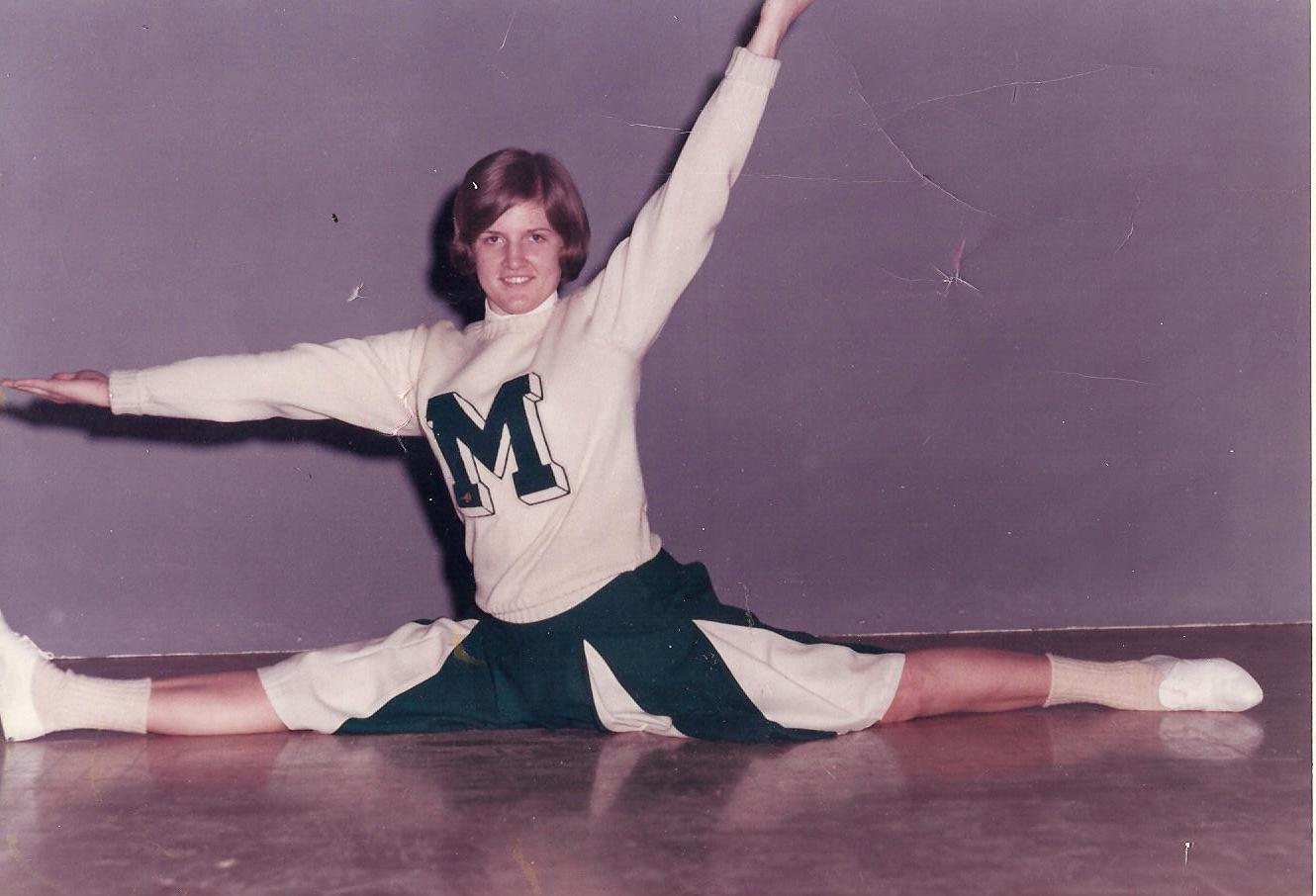
1965

Dauna Easley
1965
Look at the length of cheerleading skirts back then!

For many years the story ended this way.  I had the opportunity to travel the country talking to and encouraging teachers and this was one of the stories I always shared.  It never failed to moisten a few eyes. Many amazing things happened along the way.  When I was speaking in Los Vegas a gentleman came up to me following my speech and revealed that he had been George Ranson’s business partner for years.  He thanked me for sharing such a wonderful story about Harriet and George.   Always after I spoke teachers approached me from the audience and wanted to share stories of special teachers from their past. Many promised to go home and write to them.  And they did.

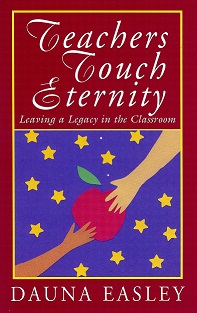
When I wrote my first book for teachers, Teachers Touch Eternity, I included the Mrs. Ranson story. I tried to send the Ranson family a copy of the book.  But the Florida address was no longer current.  I had lost them again.  It took me many months to locate them once more.  I finally learned that George had passed away and Harriet came home to Mason and lived in her son’s home.  She was bed ridden and not always cognizant by then.  But I went to her son’s home and gave them a copy of the book.

book coverOnce they read the story, they were so touched, that they read the story aloud to Harriet many nights before she went to sleep.  They claimed that she loved hearing it. The family was so moved by the story which was about their mother and contained a letter from their father, that they bought several copies of my book as a memorial tribute to their parents.  They passed them out as a surprise to the extended family members on Christmas Eve that year, and read the story orally to all of them.  That scene gives me goose bumps when I think about it.

Then when Harriet passed away, the Ranson family asked me…her student…to give her eulogy. 

I was proud to do so.

Never, ever underestimate the power of the bond between a teacher and a student.  I believe teaching is a profession like no other. If you enter into it with a desire to honor and elevate not just your students’ knowledge but also their entire lives, you have chosen the right profession.

I’ve just written my second book for teachers.  TEACH…To Change Lives.

Mrs. Ranson’s story is only one of the stories and classoom activities I share in the book.

 Available at Amazon.com

teaching


The Secret Dream

Standard

Some Dreams We Share with the World

Thank a teacherFor as long as I can remember I’ve wanted to become a teacher.  This dream was conceived unintentionally by observing an enthusiastic third grade teacher named Mrs. Waggoner.  She didn’t prepare a lesson about careers.  She didn’t ask us to write about what we wanted to be when we grew up.  She simply taught with joy.

Looking back I realize that my parents’ philosophy of child rearing -had they chosen to write it down- would have read like this:  “Do your chores and then go play.”  I had no complaints about that style of parenting.  I did my chores and then ran outside to play until the lightning bugs appeared.  I loved being outdoors and enjoyed a large circle of neighborhood playmates.

But in third grade I discovered a teacher named Mrs. Waggoner.  She was unlike any other adult I had ever encountered.  What made her unique?  She actually enjoyed playing with children.  She would enter whatever game we had devised and laugh with us.  Noise didn’t bother her.  Messes didn’t annoy her.  Instead of telling us to simply sit down and draw a picture during those long winter indoor recesses, she would have us push back all the desks and she taught us how to square dance.  She’d holler out the square dance calls and dance with us, clapping as she skipped around the room.  I was mesmerized by her and studied her like she was some kind of a science experiment.

 teacher

Consequently it was when I was only eight that I decided I wanted to grow up and enter a profession in which I could find as much joy and fun as Mrs. Waggoner. I began to fashion child sized classrooms on the porch, or in the garage.  That dream of becoming a teacher I made public and I rushed toward that goal as though racing along a zipline.  By age twenty I was teaching third grade myself.  Thank you, Mrs. Waggoner for revealing a career path I would love for decades.

 The Secret Dream

writing

But I also had a secret dream.  Maybe you have one too.  I wanted to become a writer.  I can’t pinpoint when this dream was conceived within me.  It wasn’t as clear-cut as meeting Mrs. Waggoner.  I just knew I enjoyed writing stories for fun. I wrote stories for myself and sometimes shared them with my family.  As a teenager, I wrote a collection of very mediocre poems that I kept hidden away.   No one encouraged me in this dream.  In fact, I rarely revealed this interest to anyone.

Why?  Every time I wrote a story or an essay for an assignment I was given a grade of a B minus.  B minus people don’t excel.  B minus people need to look elsewhere to succeed.  So I kept this interest tucked away in a private place. This dream percolated on the back burner, just below the surface of public admission for many years.

Ironically, it was once again a teacher who finally gave me “permission” to allow my writing dream to begin to grow.  She wasn’t royalty, but her name was Miss Throne.  Really.

Miss Throne’s Threat

She was my freshman composition professor at Miami University.

She issued a threat on the first day of class.  She circumvented any effort at tact and told us that most of us would fail her class.   We glanced at each other stunned.  She pointed out that we weren’t in high school anymore.  While we may have been making an ‘A’ in high school English, that didn’t impress her one iota.  She was the Marine drill sergeant equivalent of a college English prof.

 I had never seen an A for my high school writing efforts and I felt my already sagging confidence plummet.  In fact she claimed that most of us would make an ‘F’ on our first writing assignment.  Worse.  All our writing would be done during class with the topic only provided on the day of the assignment. No opportunity to refine and improve would be granted.

It was a grim group of students who showed up for that first classroom writing assignment.  She didn’t smile nor did we.  She distributed our blank blue books and then chalked our essay title in giant letters on the blackboard.

I Am An Eccentric

Decades later I still remember that title and the fear. We wrote furiously until she ordered us to stop.   The next class day was even more sullen as, sure enough, she began to hand back those blue books.  I saw, F, F, D, D-, D- – .  I even spotted an F- !  She wrote those grades in HUGE red pencil on the covers of the booklets.  Public condemnation with no apologies.

What did my booklet say?  She didn’t even return it to me.  I said absolutely nothing.  I figured she had ripped it to shreds in frustration.  You could hear a fly sweat in that classroom.  Silently Miss Throne made a throne of the desk in the front of the room as she perched on top of it and stared at us.  No one said a word.

Then quietly she began to read to us orally.  My essay.  I slid down as far as possible in my seat.  It was several minutes before I realized with astonishment that she liked it.  I have never been more surprised or embarrassed by anything in my life…not even to this day.  My grade?  It was an A minus, minus.  Miss Throne adored minuses. But the grade was no longer of any importance.

That was the day that I realized with stunning clarity that taste in good writing is subjective.  That was the day that I knew that I would allow my writing dream to continue to percolate and grow.  That was the day that I internalized that one day I would have the courage to write and make my words public.  It didn’t happen quickly, but it did happen.  First I became a teacher.  But, now also, I had permission to write.

Teachers Touch Eternity

write

TEACH To Change Lives

Please understand that as a teacher myself, I do not approve of Miss Throne’s methods.  I don’t believe you get your best results from students through intimidation.  I tell this story to prove another point.  Miss Throne does not remember me.  She doesn’t remember my name.  She doesn’t remember that day.  But notice the power one teacher had in my life, in one hour of one day.  I no longer felt that I had to squelch my secret dream.  That one day gave me the courage to write my first book.  My third book Teach…To Change Lives will be available at Amazon.com soon.  And Miss Throne is in it.

Never give up on a secret dream too soon.

The Comfort? Zone

Standard

the comfort zone  Learning from Students

Recently I had a pleasant lunch with a former student.  This happens more frequently than you would imagine.  I enjoy staying connected with former students to see how their lives are progressing.

Josh is a former high school student of mine who is now a college junior.   He is an aspiring writer who has all the talents to make his goal a reality. He had recently attended a writing seminar that greatly motivated him and he wanted to share what he had learned with me. The conference premise was that our entire  life is a story.  If we give the way we live our lives the same thought and importance that we would use on a story we are writing, the world would become a better place. Donald Miller, the conference speaker, said. “The best way to change the world is to tell a good story with your life.”

This concept resonated with Josh and he chatted for maybe half an hour sharing what he had learned.   Josh even brought me my own copy of the conference workbook because he knew this topic would intrigue me also.  He was right.  I’ve been working my way through the activities the workbook suggests.

It was during this lunch Josh told me about one of my classroom lessons that had also wormed its way into his psyche.  These are the moments a teacher lives for.  A golden nugget.  A student recounts a classroom conversation that has really become a part of the way a student lives.

Let me share that classroom conversation/lesson with you.

What is Comfortable?

I start by asking students to list words or things that they think of when I say the word comfortable.  They usually list items like slippers, robes or sweat pants.  Some go in the direction of comfort foods and list hot chocolate, mashed potatoes, pizza or warm brownies. Others describe a place like a comfy chair, their bed or lying on the beach.  Once they’re deep into the conversation about comfort I pose a new question.  “Is comfort ever a bad thing?”

Most immediately say, “No.”  I wait.  One time after a long silence one teen girl finally spoke up and said, “Well there is that old boyfriend that you’ve dated for years. You break up and get back together over and over again.  Deep down you know he’s not really right for you anymore, but you keep going back to him because he’s comfortable.”

Bingo.

As soon as one person breaks through others chime in with their own examples.

“You know the outfit doesn’t flatter you, but it’s comfortable.”

“You have a friend you’ve outgrown.  That friend is making poor choices, but their friendship is comfortable.”

Once we get that conversation flowing, I tell them the bad news  about the comfort zone.  We think if we are comfortable all is well.  But when we are completely comfortable we aren’t growing.  For a while this feels okay.  But eventually we learn that if we aren’t growing we aren’t really even standing still.  Our world is shrinking.  We stagnate.  And that no longer feels good.

It’s important if we want to live fully, that we make a conscious effort to push outside our comfort zone.  Is it easy?  Not usually.

teaching comfort zone

The Teacher Learns

I never went into a restaurant to eat alone until I became a professional speaker.  I thought I’d be too self conscious…look too pathetic…eating alone.  I had to push outside that discomfort.  Now it’s possible for me to drive through the city to an airport, fly into another city I’ve never visited before, rent a car and using Mapquest or GPS, drive hours to a speech location.  Once there I check into a hotel, go to a restaurant alone, sleep and then give a speech in front of thousands. Sometimes I venture from one state to another in a series before traveling home to my comfort zone again.  Increasing the size of our comfort zone opens up a world of possibilities. Confession: What remains as my only crutch?  I still need to carry a book into that restaurant and read as I eat alone.

We much teach young people AND remind ourselves about the perils of the comfort zone and encourage them to expand their own.  If you’re too afraid to drive into the city, before you know it you’ll be avoiding the interstate.  Next you’ll avoid high traffic times on the state routes.  If you’re not careful to force yourself through the discomfort, you’ll find yourself giving up more and more activities that you may have enjoyed.  Your freedom goes down the drain.  Comfort, packaged attractively, may keep us from living the lives we want.

The teacher learns

Thanks Josh, for taking that lesson in and living accordingly.  And even greater thanks for telling your teacher that you remembered.  It was always my goal while in the classroom to share lessons that would change people’s lives.