Category Archives: Facing Challenges Positively

Lessons for Teachers

Standard

The teacher learnsLessons from the Greatest Teacher Of My Life

Ironically we met in a hospital and not in a school.  She wasn’t even the one who inspired me to become a teacher.  When we met, I had already been a teacher myself for fifteen years.  But that just made it easier for me to recognize what a master teacher she was.  I made myself a promise.  I would watch her carefully, ask questions, and learn everything I could.

The greatest teacher of my life is my daughter, Kelsey.  Born with cerebral palsy, she later developed brain cancer when she was five years old.  Vivid and remarkable are the lessons she taught me. I am a better teacher forever because of her patience with me.

learn to tie shoesA Challenge

When Kelsey was four, she wanted to learn to tie her shoes.  A best friend had accomplished this important childhood feat.  Even though I had worked with preschoolers for many years, I was stumped.  Because of cerebral palsy Kelsey was left with very little use of the fingers and thumb on her left hand.  I was unable to tie a shoe with one hand.  How could I teach her?  Medical insurance refused to cover occupational or physical therapy.  It seems the term “pre-existing condition” excuses them, forever, from a child’s needs.  We struggled for three and a half years with this one maddeningly simple task.  But she mastered it.  On the first day of summer vacation when she was seven and a half years old, as I watched and encouraged her she taught herself to tie her shoes with one hand.  She beamed from ear to ear.  I cried.

Lesson Learned

I noticed something important after she conquered her shoe laces.  No one ever asked her how old she was when she mastered the skill.  Lesson learned by this teacher?  In the long run learning pace is of little importance.  Accomplishing meaningful goals within our own timetable is what matters most.

Then Came the Cancer

Kelsey during cancer treatment

Throughout her cancer treatment, Kelsey gained some control over her circumstances through play.  Whenever we were in the hospital, she wanted to play “restaurant”.  She was always the waitress and I was cast as the customer.  Hours on end we played this game of her choice.  She lost herself in this dramatic- play-acting; it was if we weren’t in the hospital at all.

When we were home where she felt safe, she always wanted to play “hospital.”  In this game she was the doctor – in charge for a change.  Family members and friends had to be the patients. She developed a game called “radiation” that had an uncanny realism to it.  Her play often included medical terms her peers and many adults didn’t understand, but it didn’t matter.  She had found a healthy way to cope with the scary things that were happening to her in the hospital.  She did much better than cope.  She was happy.  What had I learned?  She taught me firsthand and emphatically about the important therapeutic value of play.

The Enthusiastic Ballerina
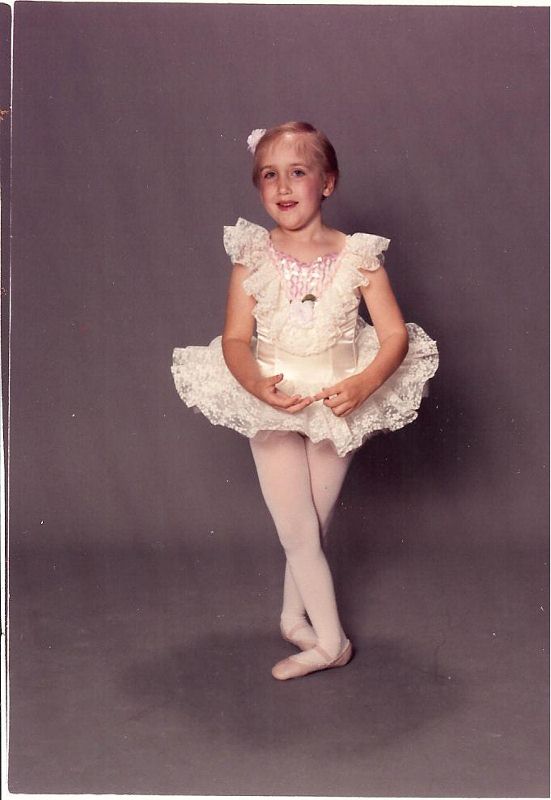
ballerinaWhen Kelsey was six she wanted to take ballet lessons. I’m embarrassed to admit how much this frightened me.  At the time she was in chemotherapy. Her muscles were weak from the chemo drugs.  She had very poor balance following her brain surgery and her weight had slipped to 34 pounds. There was an awkwardness to her left leg and arm due to her cerebral palsy.  She was bald and wore a patch over her left eye.  I was afraid she would fall and get hurt.  And, let’s be honest, I was afraid the other girls would make fun of her.

Fortunately I didn’t know how to tell my daughter about my fears, and she persisted with her request until I enrolled her in ballet class.  I had forgotten what she knew instinctively.  The process is always more important than the product.  She danced with joy.  The sheer fun of dancing was her goal. Did she fall?  Of course.  Was she awkward?  You bet.  Did it matter?  Not a bit.  Every child and adult who watched Kelsey dance gained something special from it.  Her dancing career lasted four years.  She only quit when she decided she wanted to take horseback riding lessons instead.  This time I had learned my lesson.  I signed her up without hesitating.

lesson from basketballLessons from Basketball

In fifth grade Kelsey excitedly brought home a registration form for intramural basketball.  She wanted to play.  I knew it would be a major challenge for her.  Our daughter could only run very slowly and with great difficulty.  She was also very short as her pituitary gland had been severely damaged by the cranial radiation she had received to survive cancer.  For many, many years she received a daily injection of growth hormone to grow at all.  She only had the use of one hand to play ball.  Caution bells went off inside my head again, but I had learned to ignore them.  The excitement in her eyes emphatically canceled out all those drawbacks.

We signed her up.  After the first practice the coach/gym teacher, George Losh, said he was afraid for her to play in a regular game.  He was afraid she would get hurt.  I’m certain lawsuits danced in his head.  But every child who participates in sports risks physical harm.  If her risk was greater, her need to belong was greater too.  We encouraged him to let her play.  George Losh’s physical education classes were always child-centered and structured so that every child could feel some measure of success.  For two years Kelsey played basketball harder than any girl in the league.  No, she never made a basket during a game.  Some huge successes are subtle.  In two years we never once saw a teammate treat her as anything other than as asset to the team.  After weeks of trying, when Kelsey made her first basket during practice, every girl in the entire gymnasium stopped to applaud.  Watching this young lady struggle and triumph increased the humanity of all who knew her.  On game days when we stopped in the grocery store, Kelsey quickly shed her winter coat into the grocery cart.  It took me a few times to figure out that she was so proud of her team shirt, she didn’t want it to go unnoticed under her coat.  She was thrilled to be part of a team.

Most Important Lesson of All

hurts

What is the single most important lesson Kelsey taught me?

Being excluded hurts.  Be certain of this.  The older my daughter grew, the more excluded she was… both by her peers and unfortunately by some teachers too.  Whatever educational jargon or current political term you choose to use, the results are still the same.  Being excluded hurts.

Possessing a physical disability or struggling with a different learning style did not rob my daughter of her sensitivity.  Being excluded hurts!  It hurts the children being excluded.  It robs them of the role models-their typically developing peers-they so greatly need.  It shortchange the children with ‘normal’ growth patterns too.  Inclusive environments reduce fears, build understanding, and teach compassion, patience, and tolerance in a way ‘special’ schools and ‘special’ classrooms never will.  Inclusive environments reflect life and the society in which we live.  How can we separate our children now and expect them to adjust successfully to one another at some magical, mythical time in the future?

Becoming a Great Teacher

Good teachers become great teachers when they become students themselves.  Children have much to teach us if we will only watch and listen carefully.  Kelsey’s dream of becoming a teacher did not end when her cancer returned and she died at age sixteen.  Kelsey was an incredible teacher all of her life. I cannot tell you how many times one of her teachers would come to me at the end of the year and say, “She taught me so much more than I taught her.”  I came to expect it, because I had learned that it was true.

Kelsey modeled for me how to handle rejection without becoming angry.  She showed me how to simply ignore seemingly insurmountable challenges and just focus on living life to the fullest.  She taught me how to more greatly appreciate the simple joys of family and traditions.  She modeled how to maintain a sense of humor and grace even in the face of death.  She has left the most incredible legacy for all who knew and loved her…and all my future students too.  She will forever be the greatest teacher of my life.  May her story touch your teaching life, too.

Kelsey Noel Easley

1982-1999

Kelsey's lessons

TEACH...To Change Lives

TEACH…To Change Lives

Autographed or in large quantities from the author dauna@cinci.rr.com

Also available at Amazon.com

Bright Ideas for Dark Days

Standard

bright ideas for dark days          The Teacher Was Absent

I post a new thought for teachers every Monday at this blog site.  However, on Monday December 24, my post was missing.  My apologies.  No, I wasn’t strolling on the beach as the photo seems to indicate.  I only wish that were the case.  My hubby was in the midst of a serious unexpected medical emergency.  I was at the hospital with him where I needed to be.  Yes, we spent the 10 days surrounding Christmas at the hospital, but our family came to see us there on Christmas Eve and Christmas Day.  He continues to recover.  Thank you for your understanding.

Twenty Bright Ideas for Dark Days

Bight Ideas fo dark days

When the memory of those beautiful fall days begins to dim and spring still seems a lifetime away, we may feel our classroom enthusiasm begin to take a nose dive.  Some of you may drive to school and/or even home in the dark.  Do you need some ways to keep yourself upbeat for your students?  Remember:  We can’t pass along what we don’t possess.  Try some of these ideas that worked for me.

  1. Fake it till you make it.  This isn’t phony.  William James, the psychologist called this the “as if” principle.  If you want to feel enthusiastic act ‘as if’ you already are.  I learned this lesson clearly during a particularly tough time in my personal life.  It was my job to be at the school entrance to greet young children when they arrived in the morning.  No matter how down in the dumps I felt when I arrived, after 20 minutes of greeting one child after another with a big smile and a friendly observation or two, I felt better for the whole day.
  2. Allow for spontaneity.  Change your plans.  Put a new twist on an old lesson.  What is something you have never tried in your classroom before?  Now is the time!  When I was writing my two books for teachers I discovered something that surprised me.  The stories I wrote about were almost always the first time I tried an activity in the classroom.   If the activity was a success, then I would do it again in subsequent years.  But it was almost always the first time I did the activity that was the “memory maker.”  Fresh ideas spark our creativity and engage students in new ways. 
  3. Build an encouragement folder.  Whenever someone writes you a positive note for any reason, pop that note into a folder.  Pull out all those notes when you need to recharge your batteries.  It will pump up your confidence and make you feel great.
  4. Lighten up!  When you find yourself getting really angry about something, step back and try to laugh about it.  Mentally make it into a comedy routine if you have to.  In our profession we spend way too much time lamenting about policies and new systems that have really nothing to do with teaching.  Focus on your students and the teaching.  That is what attacted us to this profession. Let the other stuff bounce off you like a kangaroo on a pogo stick.
  5. Read motivational books or inspirational thoughts late at night or before work in the morning. The morning news depresses me.  I have found that I can’t listen to how many murders, rapes and fires happened overnight and then teach teenagers during the day.  But with the right music and uplifting thoughts in my head, I’m the best that I can be.  Don’t my students deserve this?
  6. Practice kindness.  Kindness helps absolutely everything.  It is the language the blind can see and the deaf can hear.  I’m far from perfect but I can tell you this:  The times I haven’t been kind haunt me.  Kindness lifts everyone, not just the receiver of the kindness, but also the giver too.
  7. Take a class that will help you reflect on your job in a positive way.  I teach future teachers, but still I take classes with the same titles as the classes I teach.  I always learn new ideas and teaching strategies in every class in which I enroll.  I can also be a valuable contributor to a class I’m taking.   Every time I have taken a class I’ve come back to the classroom with fresh ideas to try with my students.  I don’t care how experienced you are, there are always new things to learn if your attitude is in the right place.
  8. Write down new ideas the moment they pop into your mind. Try to take some action on them within 24 hours.  Someone invented sticky notes just for me.  I’m full of ideas that are gone in an instant.  The creativity of the sticky notes compels me to use them to organize my thoughts.  There are arrows, tabs, neon bursts, and 4×6 inch sticky notes for more lengthy ideas.  Use them to jot down ideas and then take action.  Action will put you in a better frame of mind 100% of the time. 
  9. Improve your work space.  Buy a new organizer or select a new picture.  I work best when I’m surrounded by quotes that inspire me.  If you don’t have an extra nickel to spare, clean your desk area.  I’m very creative but my desk is always a mess.  Every time I take the time to clear my desk it lifts my spirits.  What is an added bonus?  I find great things.  I come across a new idea for teaching or writing that I only had time to jot down previously.  When I discover it again, I run with it.
  10. Purge.  Don’t stop with just your desk.  Clean out your files as though you were taking a new job.  That happened to me once.  On the last day of school I didn’t know that I would be taking a new job during the summer months.  I left years of files and had to start fresh.  At first it was scary, but it also felt great.  I now had room to file all the new ideas and items I needed to do my job now.  Purge as though you are moving.
  11. Record uplifting music.  Listen to it on the way to work and while you are grading papers.  I always play music as my students enter the room.  It feels as though something exciting is going to happen.
  12. Compliment a co-worker.  Better yet, put the compliment in writing.  It will uplift the person receiving the compliment, but it will also make you feel great.  Try to encourage and compliment at least one co-worker per day.  Make it your own secret challenge.
  13. Set goals that move and inspire you.  Don’t choose hollow goals or goals someone else assigns you.  Set goals that matter to you and move forward on them.  When we feel great about ourselves we can better inspire and motivate others.
  14. Create a new bulletin board or display in your classroom.  Visually appealing surroundings encourage us and our students.  Look at your classroom as though you are walking in the door for the first time.  What strikes you? 
  15. Keep a gratitude journal.  I record five things for which I am grateful every night before I go to bed.  During the summer months I do this in the morning instead of at night.  This activity will change the focus of your day.  You will begin to look for positive events rather than focus on annoyances.
  16. Solve a problem.  Instead of complaining about how things ought to be, come up with a solution.  Everyone will be grateful.  You’ll be a hero and that feels terrific.
  17. Attend an educational conference.  You’ll rub elbows with other educators who are serious about improving their skills.  You’ll return to school rejuvenated and ready to try some new ideas you discover.  Better yet, become a presenter at a conference.  Share ideas that have worked in your classroom.
  18. Change your routine.  Have a mental list of some things you’ve been wanting to do someday?  We all have a list like this.  Take a weekend trip to a place you’ve always wanted to visit.  Call up an old friend or drop them an email.
  19. Share ideas.  You have so much talent among your co-workers.  Find a way to have each of them share their best ideas with the rest of you.  I once ran a monthly professional development experience in the school where I worked.  Each month I had a few teachers share their best ideas.  Don’t overlook the teacher next door.
  20. Most important tip of all!  Don’t eat lunch with the crab apples.  During this valuable time of day, surround yourself with people who speak highly of students and those who are excited about making their classrooms and your school a positive place to be.

Twenty tips may overwhelm you.  But I believe if you try even a few of these ideas you won’t be just counting the days until spring; you’ll be doing things that make every day count.  Welcome 2013 into your life and your classroom.

TEACH…To Change Lives

Available at Amazon.com

Or autographed or in large quantities directly from the author  dauna@cinci.rr.com

TEACH...To Change Lives

The Power of Quiet Words

Standard

Can You Hear Me Now?

heart wordsA few years back I spotted a small hand-made pillow at a craft fair which had wonderful words embroidered on it.  I purchased it and put in on the seat of an old-fashioned school desk that I kept in a corner of my classroom.  I used it as a reminder for me and all the future teachers that I taught.  What did the embroidery say?

“Words that soak into the heart are whispered, never yelled.”

Since I have retired from full-time teaching, that little pillow sits in a small child-sized wicker rocker that I have in my home for my grandchildren.  What powerful words those are.

Just this last week as I traveled from school to school to observe future teachers in training, one of them complained to me.  “My voice doesn’t travel well in the classroom.  I don’t think I’ll ever be able to control my students because they won’t be able to hear me.”  I explained to that young aspiring teacher that a soft voice can be an asset, if you know how to use it well.  I quoted my pillow.

When to Yell

Never.  Alright, maybe if there is a tsunami wave on the beach right outside your school building and you quickly enter your noisy school cafeteria.  You must get them to listen to immediate emergency directions.  THEN you may yell…once.

But in every other teaching situation, to speak effectively, speak quietly.  When someone yells at us, we Don't yellfreeze.  Our survival instinct kicks in and we desperately try to separate ourselves from the environment.  We feel like a raccoon caught in bright headlights.  Unfortunately students usually cannot just get up and leave a classroom when a teacher yells at them.  But they flee mentally or emotionally when someone raises their voice.  The teacher may be yelling, trying to make a point, but the student isn’t really “there” at all.  And yet there is some kind of instinct we too often develop while growing up watching our parents.  Why is it we think, “If they don’t get it, we should just say it again…only louder.” ? We repeat the same explanations  in the exact same way only with more volume, then they’ll understand.  Right?  Wrong.

shhhhQuiet words sink in.  Words spoken softly don’t shut us down.  Quiet words encourage us and help us breakthrough to understanding.  They reassure us of our worth.  When you sit next to a student and give them kind, quiet, reassuring directions and compliments it opens a student to learning heights they may have previously doubted they would ever achieve.  Quiet words invite us into the learning process.  They break through our resistance to new ideas and thoughts.

I once watched a master teacher named Nancy McClimans demonstrate the power of quiet words.  She always spoke to her first graders in a quiet, calm voice.  When she really wanted their attention, she would speak quietly and with each sentence she would make her voice just a little bit softer.  Within seconds the students were completely still, giving her total eye contact and even leaning forward to catch every important word.  Try this strategy.  You will be amazed at its power.

Quiet calm words are even more important when working with students from an ‘at risk’ environment.  Too many of today’s children hear yelling in their homes.  It  also surrounds them on reality television.  On TV students watch talk shows and opinion panels during which every participant over talks or even over shouts every other member of the panel.  How do you effectively respond to a shouting out-of-control student? There is only one way… with quiet, calm words.

Teach to Change Lives small cover jpeg

TEACH…To Change Lives

Available at Amazon.com  

Or autographed or in large quantities from the author at dauna@cinci.rr.com

An apology and a disclaimer.  WordPress (my blog site) has made some changes which I’m finding difficult to maneuver.  I usually post on Monday mornings, but last week on Sunday Dec. 2nd I apparently hit a wrong button and my article posted before it was finished.  It didn’t have a conclusion or even any editing. At that point words were spelled incorrectly and some words were even missing.  I fear some of my most loyal followers who subscribe to my blog got a far inferior version of my regular blog.  My humble apologies.  Please be patient with me as I learn the new twists and turns of wordpress.

Dear Teacher,

Standard

A Letter from a Student

Image credit: <a href='http://www.123rf.com/photo_9732125_3d-illustration-of-mailbox-with-many-letters-over-blue-sky-background.html'>madmaxer / 123RF Stock Photo</a>When I taught young children I used to receive short love notes from them all the time.  They’d tell me that they loved me and insert a picture they had drawn just for me.  Little kids would bring me an apple or a flower from their garden.  I felt valued and appreciated.

I didn’t believe that would happen when I moved into the high school to teach.  But I was wrong.  I have 3 ring notebooks full of notes and letters teens wrote to me.  There were, of course, some differences.  Teens usually dropped a note on my desk quickly when no one else was in the room and then they’d make an exit through the classroom door as fast as they could.  Once they believed I truly cared about them, they would pour their hearts out to me. They would write about a crisis in their lives. Or sometimes they’d write to tell me about something I had said or read to them during class and admit how it touched them or encouraged them.

I’m going to share (with the writer’s permission) one of those letters with you. This letter was written by Sarah.  Sarah had become a single mom at age sixteen.  She was 17 when she wrote this and had been in my classroom for only about 3 months.  She was intelligent and caring, but she didn’t trust people very much. She dressed with a flair that usually resulted in her peers categorizing her as someone outside their circle. She might wear a black leather studded collar or bracelet along with a pink tutu on the same day.  She had gorgeous strawberry blonde hair that women would pay hundreds of dollars to have created at a salon, but Sarah was apt to have a purple or pink stripe running through hers.

I share this letter humbly, not to boast about my relationship with students, but to help teachers understand what it is that our students really need.  Read between the lines and listen to what Sarah desperately wanted.

Dear Mrs. Easley,

“I would truly like to thank you.  You are a great inspiration to me and a great role model as well. You have done everything in your life that I would hope to do in mine. You have become an amazing teacher, one who truly touches the lives of many she comes in contact with.  You have opened your own school and most importantly you are a dedicated mother to your own children even after they are gone.

Through life I have learned many lessons.  I have learned that there are people who will enjoy hurting you, who will enjoy beating you down, who enjoy seeing you cry. But I have also learned you can’t let them stop you.  You are your own person, you can do what you wish, you can be who you want and no one can stop you. Your classroom lets me be the person I want to be. You do not judge me. You see my intelligence, not my clothing, you see me. I have never had a teacher say they admire me before, when you did, I felt strong. I have never felt strong.

I’m sorry for the struggles you have had to face. Losing a child is hard. I hope I never have to learn how that feels first hand. But Kelsey would be proud of you.  You have become so much to children of all ages. I know I am proud of you. I do not have a mother to fall back on. I don’t have parents that support me, I have ones that push. You encourage me; you know what I am capable of and expect me to show it and know myself.

I love to be myself, but sometimes it’s hard to do. You have let me know that you should never be afraid to be yourself. I hope I can instill that in my daughter.  She has helped me to grow so much.  How much she has helped me makes me realize why you are such a good teacher; you had your children to help you learn.

I truly hope that one day I can be like you.  Just this short time with you has opened my eyes. At first I was not sure about teaching; now I know it is what I have to do. You are an inspiration to your students, Mrs. Easley whether they realize this now or not. You have instilled lessons in us that at this time may seem pointless but later will show such immense value. Thanks to your class.  Thanks to your stories, I really know I can make a difference, like the one you have made with me.

I cannot entirely describe my gratitude through a letter so attached is a poem, one that I have written just for you, describing the feelings I hold toward you now.

Thank you,

Sarah

A mother never wanted me

A family threw me away

I was lost in apathy

Not wanting to survive each day.

School became the home I wanted

Books my seclusion

Writing as my outlet

Loving the illusion

I may not fully thrive at this

But nor do I fail

I only use it to find myself

And with that I do prevail.

A classroom like this

Makes me feel unharmed

A place where I feel welcomed

Where I need not feel alarmed.

People welcome me everyday

Faces painted up with smiles

Giving me encouragement

Helping me through painful miles.

They do not know all my struggles,

But they have let me know

That they are here for me

To help me all the way I have to go.

You have helped me the most

Showing me encouragement and light,

Giving me a warming smile

To let me know what’s right.

Learning from your experiences

As I have learned from mine

Mothers and teachers alike

We are two of a kind.

I feel like I connect with you

We express ourselves the same

To others school is work

To me it is a game.

Nothing compared to the outside world

It is easy within these walls

You either succeed or you fail

Outside few hear your calls.

You have made me realize

I should learn as I go

Teaching me of both school and reality

I now know what I need to know.

Thank you…

Teens take writing notes to their teacher to a whole new powerful level. If you let them know that they matter to you, they will, sooner or later, make you aware of how much they appreciate your commitment to them. I didn’t read Sarah’s note without tears. Can you imagine how many times I’ve read it?  On those tough days, it became a beacon to me. It touched me so much, that when I wrote my book TEACH…To Change Lives I included her letter in my book (after receiving her permission, of course).  Using Sarah’s words helps me encourage teachers.  It reminds them of the important role they play in their students’ lives.  You see I honestly do believe that we teach to change lives.

TEACH...To Change Lives

TEACH…To Change Lives

Available at Amazon.com

(or in quantities from the author at dauna@cinci.rr.com)

Teachers Create the Classroom

Standard

                        The Teacher Makes the Choice

Image credit: <a href='http://www.123rf.com/photo_7438300_illustration-of-a-lighthouse-illuminating-the-night.html'>lisann / 123RF Stock Photo</a>One of my all time favorite quotes for teachers was written by Dr. Haim Ginott and comes from his book Between Teacher and Child.

“I have come to the frightening conclusion that I am the decisive element in the classroom.  It is my personal approach that creates the climate.  It is my daily mood that makes the weather.  As a teacher I possess tremendous power to make a child’s like miserable or joyous.  I can be a tool of torture or an instrument of inspiration.  I can humiliate or humor, hurt or heal.  In all situations, it is my response that decides whether a crisis will be escalated or de-escalated, and a child humanized or de-humanized.”

Oh, how I wish I had written that myself.  I am so grateful that someone did.  The book, Between Teacher and Child is around forty years old and yet contains advice that is timeless.

Image credit: <a href='http://www.123rf.com/photo_8535805_a-wooden-ruler-with-the-words-do-you-measure-up-symbolizing-personal-appraisal-and-assessment.html'>iqoncept / 123RF Stock Photo</a>

A Great Measuring Stick

It IS our personal approach that creates the climate in the classroom.  Do we provide a welcoming presence.  Are we pleasant and approachable?  Can students trust our moods?  Or are we the grinch that only smiles twice a year.  We honestly do have the power to make a student’s life joyous or miserable.  We teachers have had teachers too.  We all can remember a teacher who was a tool of torture.  We’ve all had a teacher who honestly was an instrument of inspiration.

A word of caution here:  A teacher cannot truly be an instrument of inspiration if they are a tool of torture to only one or two students.  Students are always watching.  I believe they judge teachers on the way they treat the most challenging child in the class.

I’ve been sitting in high school teacher cafeterias and listened to something a teacher said to a student that made me wonder who was the adult in the classroom.  Trying to “one up” a student who has just made an inappropriate comment in class is a losing proposition for any teacher.  Professionalism goes out the window.  Sometimes it is tough to listen, absorb, and under-react but retaliating an inappropriate comment with a sarcastic one, only escalates the negative.  It may feel like a win in the short term, but it is a long term loss.

I chose a lighthouse to illustrate this point for a reason.  Lighthouses demonstrate their real worth during inclement times.  So do teachers.  It’s easy to be a good teacher when everything is going smoothly. But great teachers reveal themselves during the tough times.

A teenager stands up and yells profanities at you in class, then stomps out slamming the door on their way out of the room.  (Yes, this has happened in my classroom).  What do you do?  The choice is yours.  Do you escalate the situation or attempt to de-escalate it?  Before you make your choice, take a deep breath and then pause.  Every student will be watching your reaction. You are the beacon in this moment.  Will you dehumanize the student?  A teen is a child with longer legs, raging hormones and often tumultuous emotions.  You are the adult.   What you do next defines you as a teacher.

TEACh

TEACH…To Change Lives

Available at Amazon.com

How to Stop a School Bully

Standard

When They Don’t Want to Go to School

bullyingTwenty-five years ago my oldest daughter was in junior high school.  I sensed something wasn’t just right because she didn’t want to go to school.  The school nurse also frequently called me telling me that my daughter was in the clinic claiming to be ill.  I’d turn my schedule upside down in my own classroom where I was teaching to go and pick her up only to realize with a mother’s instinct that she really wasn’t sick at all.  She just wanted to come home.

Finally one day, even though she tried to continue to mask her situation, her secrets exploded at home and the truth came out.  Some girls were targeting her at school.  On the day that she couldn’t take it anymore the bullies had gotten her locker combination out of the counselor’s file drawer where they worked as ‘aides’ to the counselors instead of being assigned to study hall.  They used the confidential combination to open my daughter’s locker, and then dumped all her books and belongings in the restroom sink.  Then they turned on the water and left them there for others to discover as the sink overflowed.  Someone came to find my daughter and asked her why all her belongings were being flooded in the girl’s restroom.  They assumed she caused the flood.  That’s when she broke down at home.  She was afraid she would get in trouble for the restroom flood.  She was afraid if she revealed who really did it, they would pick on her more.

She sobbed as she told me this story.  But at the very same time she pleaded harder for my silence and made me promise not to go to school and talk to anyone about it.  She swore that administrators and teachers loved these girls.  They had everyone fooled.  She was sure no one would believe her.  If I went to school and “told on them” they’d know my daughter had told someone their identity and that would only escalate what they would do to her. Unfortunately I knew that this was (at that time) probably true.

These tormentors were the original ‘mean girls.’ They preceded the internet by fifteen years.  Imagine the trouble they could cause cyber-bullying today.   Clearly they showed one personality to adults or they wouldn’t have had access to the counselor’s files. (Of course, this isn’t at all professional and they were probably sneaking to do this).   But their true identity was revealed to their peers, especially to those who felt powerless to stand up to them.  To the masses they were the ‘popular’ girls.

What Did I Do About It?

losing cleepThe first thing I did was toss and turn all night.  I lost quite a bit of sleep trying to figure out how to handle this situation.  She’d made me promise her I wouldn’t go to school or tell anyone.  If I did, would the situation escalate?  She was certain it would. Would my daughter ever trust me again if I broke my promise?  Would she be willing to share her problems with me in the future?

What did I do?  I went to school, of course.  To my credit I didn’t take a weapon.  As I tossed and turned I remembered that I had formerly taught with the assistant principal’s mother in another school district.  She and I were no longer in touch, but it was at least an opening.  I sneaked into that assistant principal’s office when I knew my daughter would be in class.  I told him I knew his mother and how I knew her.  (That shouldn’t have made any difference, but somehow it made me feel better). I then told him that my daughter had made me promise that I would not come to school and let anyone know what she was experiencing.  I demanded his promise that she would never find out I had come.  He said he would honor that request.

Then I described what was happening.  I told him I couldn’t figure out how to handle it.  If I called these girls’ parents, would that make it worse?  Probably.  The girls would deny all of it to their parents.  I’ve known of parents who do this, but it never felt comfortable to me.  I told him I saw it as a school problem and I asked him what he was going to do to solve it without my daughter knowing I had come in.  But I let him know in no uncertain terms that I expected it to be solved quickly and discreetly.

Guess What?

We brainstormed together.  I wanted to make sure he wasn’t going to do something that would put my daughter in a more uncomfortable situation.  He came up with a wonderful idea which became the perfect solution.

What did he do?  He sought my daughter out in the cafeteria.  He told her one of her teachers had told him what a great gal she was.  He asked her if she could help him with a project.  In his role as assistant principal in this school he also served as athletic director. That put him in charge of all athletic functions.  He immediately put her in charge of a concession stand.  She was surprised to be sought out and valued by the assistant principal.  He would talk to her frequently in the halls and the cafeteria just being friendly.  She began going to all the games and functions.  She had a talent for this and wanted to live up to his confidence in her.  Soon she took on more and more responsibilities.  He had other students report to her putting her in a leadership role.

What happened to the bullies?  They saw the assistant principal talking to her frequently.  He was well liked by the students.  When they saw that he valued her, they stopped making her a target.  It was a subtle but perfect solution.  She stopped hating school.  She felt accepted and valued at school both during the day and at after school functions.

Did she ever find out that I went to school?  Eventually.  But let me tell you how it happened.  When my daughter (yes, the same one) had her own preteen daughter attending the same junior high school, she talked to me on the phone one day.  This is what she said.  “The school nurse is always calling me telling me that my daughter is sick.  I know she has been having headaches, but I think something else is going on.  I just don’t think she feels comfortable in this junior high setting.  Every morning she pretends to be sick and tries to stay home from school.  I just don’t know what to do about it.”

I paused a long time and then I said, “Do you want to know what I did about it when I had that same problem?”  There was a long silence on the phone.  She didn’t know what I was talking about.  I reminded her of the situation she encountered in junior high and confessed to the promise I had broken.  She was astonished, but by then, of course, not annoyed at all.  The next day she marched right into that junior high, asked to see a guidance counselor and said, “My daughter doesn’t want to come to school.  She just can’t seem to find a place to fit in here.  How can you and I help her?  Before she left the school, the guidance counselor had promised to seek her out and make her a photographer for the year book committee.

My granddaughter called me that night.  She was all excited about this new responsibility.  We bought her a digital camera and she was off to all the games and school functions.  This time there wasn’t a specific bully that we knew of.  I think we solved the problem more proactively before she became the target her mom had become.

When kids feel connected and valued, it goes a long way toward taking the power away from a bully.  I’m glad for all today’s bully hot lines. and the anti-bullying workshops and strategies taught currently.  These are long overdue.

But I am still continually amazed at the power of one teacher, one peer, one administrator, or one role model.  When I approached that administrator he knew exactly what to do.  He had the sensitivity and the influence to turn it all around very quickly.  Adults within our schools have a lot more influence than they would ever believe.  I’ve built wonderful friendships with students in the schools where I’ve taught who were never assigned to my class.  You can build positive relationships with kids in the hallways, standing duty, at athletic functions or walking through the cafeteria.

you can do it

I challenge every teacher to pick at least a dozen kids in the school building that you don’t have in class and focus positive attention on them.  Don’t seek out a ‘star.’  Choose a kid who appears to be on the sidelines. Choose someone who looks like they need a friend.  Choose someone dressed differently.  Smile and speak to them consistently.  Can you imagine what a positive difference we would make in our buildings if we all committed to this strategy?  Why not try it?  What do we have to lose?  A bully? 

TEACG

TEACH…To Change Lives

Available at Amazon.com

The Magic Question for Teachers

Standard

A Student I Will Never Forget

I was preparing my third grade classroom for the first day of school when I noticed an unusual name on the student roster.  The name was Kim Hyangsil.  The first name, Kim, was common enough.  But I remember thinking the last name Hyangsil seemed like an unusual name and I wondered how to pronounce it correctly.  It was early on the first day of school that I discovered only one of my assumptions was correct.  The name did belong to a little girl.  But her first name wasn’t Kim.  It was Hyangsil.  Kim was her surname.  She was Korean and she didn’t speak or understand a single word of English.

Korea?

Even gathering this meager amount of information was something of a feat when you consider that neither of us could speak one word that the other could understand.  Today, that might not be so unusual. Our schools are liberally sprinkled with students who do not speak English as their native tongue.  But this story took place in the midwest about two decades before classes that taught English as a second language became commonplace.  Korean children in our schools were more rare than kangaroos in a Mexican restaurant. When I questioned the school office personnel they seemed amazed and unaware of Hyangsil’s language barrier.  They called home to gather more information only to discover that Mom, too, spoke only Korean.

What in the World Was I Going to Do?

I think that is when I first discovered the magic question.  This one simple question has done more to make me a better teacher than any other single act I can recall. It will work in every classroom situation, no matter how diverse or how seemingly hopeless.  It shapes and guides my relationship with every single student in each and every class, no matter what their age, learning style, cultural background or attitude of the moment. This question, if asked sincerely and with an open mind, will always point a teacher in the right direction.  What is the question?

       What one thing can I do to help create some success in my classroom for this student today?

Too simple?  Re-read it please.  Some of life’s greatest wisdoms are simple.

Ask the question, be still, and then listen for the answer.  You’ll be amazed at how much expertise you have in areas in which you have received no training whatsoever.  Try any idea that occurs to you.  If it doesn’t work, adapt.  Try something a little differently the next day.  Let your student guide the way. Keep asking the question with sincerity every day.  The results will amaze you.

Caution!

As soon as you utter the words, “I can’t do anything to help this student,” you and your student are both lost.  Never give up on a student. Many times I’ve thought, “I don’t know if I’m making progress.  I’ve never been trained to handle a situation like this.  I don’t know what I’m doing.”  But I never once uttered, “I can’t do this.”  Can’t is a cop out.  It is a refusal to try.  For a great teacher this is not an option.

Twice, after months of effort,  I’ve felt so guilty about not having enough expertise that I’ve called the parents in for a conference to tell them I was outside my teacher comfort zone.  I’ve asked the parents frankly if they have seen their child making progress while in my classroom.  I’m not certain if this was the right thing to do, but personally and professionally I just felt like I had to confess my uncertainty to the parents.  Maybe an administrator wouldn’t have liked this approach, but in my gut I knew I was doing what I had to do.  In both of those situations I was dealing with students with very different learning styles.  Both times the parents reassured me that their child was making progress.  They gave me examples to prove their observations.

But I’ve never once said, “I’ve not been trained to do this so I know I won’t be effective.  I give up.”  A great teacher must have a tremendous sense of efficacy.  Try something, observe the results, try something else, adapt.   Try again, and again and again.  Not all students have the capacity to progress at a typical pace, but that doesn’t mean your efforts are without results.

What Did I Do with Hyangsil?

I found picture cards of familiar objects.  Each night I made recordings of how to pronounce the objects in simple sentences.  “Wagon.  This is a wagon.  Tree.  This is a tree.”  I attached the recordings to head phones where she could practice vocabulary whenever she had a free moment.  I gave her partners within the classroom to help her with simple sight words (today called high frequency words) and sentences.  She was a bright little girl and she learned the English language very rapidly.  She was especially proficient in math and she made beautiful drawings.  I found classroom activities in which she could highlight those skills. It wasn’t long before the other students respected her for her unique talents.

Predictably, because the more effort you put into anything the more you reap from it, she and I became extremely close.  It was such a heartbreak when her family moved away only a semester later.  By that time though, we had a wonderful bond.  She and I were pen pals for probably ten years.  I lost track of her when she was living in California, but I still think of her with great fondness and wonder how she’s doing.  When the internet became more prevalent, I tried to find her again.  I found a young lady living in Korea with the same name, but she was far too young at this time to be the Hyangsil Kim I knew from years ago.

As with many of my most memorable students, Hyangsil taught me more than I taught her.  She taught me to never give up on any situation.  She gave me courage and confidence as a teacher.  But most of all she helped me learn to ask the magic question that guided me through the rest of my teaching career.

What is one thing I can do today to help create some success in this student’s life today?

Ask this question every day and then get busy.  It’s the best gift you can give your students and yourself.

TEACH…To Change Lives

Available at Amazon.com

Creating Winners in School

Standard

big vs. smallBig or Little?

There is a trend for American schools to grow larger and larger.  Population growth and the economic down turn seem to have made this a reality whether we like it or not.  It makes more economic sense to build one large building rather than to furnish and hire support staff for two, claim the advocates for large schools.  (I know this opening sounds a little boring, but keep reading I have a story to tell).

But how do these larger schools impact students?  Some argue students can be offered a greater variety of subjects and activities when only one building is involved.  But even before I am a teacher, I am a parent and a grandparent.  I wonder how my own loved ones will find a place to fit in.  In the huge school where I live you have to be to a future professional athlete to make the team.  You have to be a future All Star not to sit the bench even after you make the team.   Teens must sing like an American Idol, dance like a Broadway hoofer and act with the skill of an Oscar winner to be cast in a play.  That leaves two thousand other kids trying to find a place to fit in.  And let me make a confession right here…

I Hate Try Outs!

feeling rejected

More importantly kids hate them too.  I remember my humiliation of trying out for cheerleading six times.  (Yes, that is a sad true story.  I’m demonstrating a maturity I don’t even really feel to admit that now).  But I hate it even more for my grand kids. Before the end of their  elementary years in a building with over a thousand other students, I had two granddaughters announce, they would never try out for anything ever again.  They already felt too rejected and excluded to try to participate any further and they hadn’t even reached junior high.

Why are we making younger and younger children audition in order to even participate?  Can’t we do better than Dance Mom? Seriously, is that woman not a bully?  Why do schools have anti-bullying hot lines while that gal has a TV show?  That’s a paradox I find hard to digest.

No try outsThink Differently

We need to think in news ways…ways that will benefit all our students.  If huge schools are the new reality, how can we make all students feel included in our schools.  Let me share a story with you.

When I taught in the elementary grades my individual class put on two shows a year.  First rule:  no try outs!  Everyone was in the play or song and dance production.  I don’t just mean some kids worked behind the scenes and some were on stage.  My hard and fast rule was that every kid had a speaking part in the show.  If you happened to have a big part in one production, you had a small part in the next, fair is fair, but everyone was in.

Is that challenging for the teacher?  Sometimes.  But the benefits for the kids far out weigh the challenge.  I once had a young boy with autism.  He couldn’t generate language on his own.  He could read words off paper, but he couldn’t produce words without reading them.  So on the stage he read his ‘proclamations’ in the style of a narrator between scenes.  I had another boy who couldn’t remember lines at all, but he could show quite a bit of facial expression.  What did we do?  We had him lip sync his lines off a recording of the words while he showed lots of facial expression and body gestures.  It worked great!

When you plan productions this way, you start with the skills of the students and then proceed with your show, not the other way around.  Humor was plentiful, some planned, some not.  Our shows didn’t have the polish of a Broadway production, but they showcased our kids to the best audience in the world…their parents.   One time we did a very, very abbreviated version of The Sound of Music.  All parts were played by twenty second graders and it was over in 20 minutes.

Four years after that mini show, I ran into Alex’s mom in a local restaurant.

“I’m so glad I ran into you,” she said as she spotted me.  She then told me that her sixth grade son Alex had just been cast in the Cincinnati Opera Company’s production of Amahl and The Night Visitors.  She beamed and I was very impressed.

“But what I really wanted to tell you was what he said when he got the part.” she continued.  “He said, Mom I never would have had the nerve to try out, but after all, I already played the part of Captain Von Trapp in second grade.”

We both laughed.  But I’ve never forgotten that conversation.   In a child’s mind, both of those parts had the same importance.  Alex hadn’t realized that every kid in that second grade classroom had a part.  That tiny production gave him the courage to try out for and win a significant role on the stage.  It took my breath away.  What wonderful seeds we plant when we give a young child a chance to shine.

TEACH...To Change Lives book cover

Author’s note:  Alex was a very academically talented young man, however, he chose music as his life’s profession.  He became a jazz pianist and has played the piano at two inaugural balls in Washington DC.

A Lesson for Teachers

Standard

                        From Caterpillars to Butterflies

the teacher learns


Jennifer walked into my early childhood education class in her senior year planning to fail.  No, she didn’t announce this goal to me or to the class.  I guess you could say it was a secret goal, but she had her strategy all mapped out.  She even knew exactly when she was going to fail; November.  I had exactly two months to change the course of her destiny, but she didn’t even give me the benefit of telling me this.

The Countdown

graphShe was busy stacking all the evidence (data) to support her decision to fail.  It was powerful data, hard to ignore.  In her sophomore and junior years she had been absent over thirty days each year.  At this time in our state she was required to pass proficiency tests in four subject areas in order to prove she had the ability level of at least a ninth grader or she would not receive a high school diploma even if she had passed all her classes.  Though she had taken these tests twice a year since the ninth grade, she had continued to fail three of the four every time.  Neither of her parents had graduated from high school and they wanted her to graduate because they knew what if felt like to go through life without a high school diploma.  However, without any serious illness, they still allowed her to stay home more than thirty days per year.  In November Jennifer would be eighteen and she would no longer need her parents’ signature to drop out.  In November she would be out the door and I wasn’t even aware of the plan.  Even worse, the class I taught was in early childhood education.  Jennifer wanted to work in a child care setting with young children.  In our state you have to earn a high school diploma to do that.  Why had she signed up for my class if she had no chance to graduate?  The answer was simple.  She had to spend those two months somewhere.  But by November the charade would be over.

A Plan Thwarted

the U turn

Here’s how the U turn happened.  As soon as I found out Jennifer still needed to pass three of the four proficiency tests, I signed her up for tutoring sessions every day of the week.  No, she didn’t want to go.  She argued long and hard about the futility of it.  Hadn’t she already proven six times that it was impossible for her to pass those tests?  But I refused to allow her to skip those tutoring sessions. However hard she complained and dragged her feet, I still insisted she attend.  She went for tutoring during a portion of my class and during her lunch break, crabbing about it every step of the way.

I had another really lucky break.  In this particular school where I was teaching at the time, we had a significant number of at-risk kids.  With this type of enrollment one of the silly things that I noticed was that a substantial number of them failed to come on the first few days of school.  They would just pretend that they didn’t know when school started.  This behavior baffled me, because when I was growing up it seemed like everyone enjoyed the first few days of school.

But for whatever reason in this particular class everyone showed up for the first three days of school.  The first week was a short week of only three days.  I made a really big deal of having perfect attendance for a whole week.  I can’t remember the specific treat I brought in, but they really loved it.  Somehow this group of students latched on to that humble success and started seeing how long they could go with the whole class having perfect attendance. They really put pressure on one another not to break that chain.  It was a lucky break for me and Jennifer.  I don’t know if I could even recreate this set of circumstances.  I rewarded them every Friday with a treat and talked it up all around the school bragging about them to others when I knew my students could hear me.

Perfection!

blue ribbon

At the end of the first quarter at our awards program I asked our administrator to make a big deal out of their attendance.  He had the whole class stand up and told everyone in the packed room (full of their peers from other programs)  that this was what “perfect” looked like.  I’ll never forget that line.  The members of my class were far from perfect, but they had managed to accumulate perfect attendance for a full quarter.  They just beamed.  I’m certain Jennifer had never had the benefit of going to school regularly in her whole life.

In October Jennifer retook those three proficiency tests.  She wouldn’t find out the results until December.  She decided not to drop out until she had gotten those results.  So without my knowing about the plan to fail, I was given a one month’s reprieve.  Just before the holiday break, she found out she had passed two of the three tests!  Encouraged but still wary she quietly decided to stay until March when she would have just one more chance to pass that final test.   She continued to go for tutoring, but by now she could concentrate all her efforts on just one subject in which she was still deficient.

Let the Magic Begin

That extra time gave us the window for magic to take hold. Buoyed with her successes and reinforced with perfect attendance, Jennifer’s self esteem started to bloom.  She put together a project and competed in the regional competition and won.  She advanced to state competition and won.  In February my class began their final senior project.  Each student was required to put together a plan for an entire school.  Jennifer latched onto this project of planning a child care center with a commitment she had never shown in school before.  She named her child care facility From Caterpillars to Butterflies.  The project was outstanding in every way.  Step by step she poured all of her creativity into the project.  She drew a floor plan, wrote a philosophy, created a marketing strategy that included a logo and a slogan, developed an inventory and made a tri-fold display board about her school.   Her project was voted the best all around by hundreds of visitors who came to see our finished projects on display. Jennifer, the loser, became Jennifer the star.  Her peers looked to her for advice on their projects.

Becoming a Butterfly

She found out in early May that she had passed her final proficiency test she had taken in March.  She would be graduating with all of her peers, despite her total intention to fail when she first walked into my room.  How do I know all this?  In May she told me all about her original plan.  During our end of the year program with parents, employers and advisory council members in the audience, I gave Jennifer a small butterfly decoration.  I told everyone how I had watched Jennifer change from a caterpillar into a butterfly during that school year. (Just like the process she had named her child care facility).  She and her family were very touched.

On graduation night, during the graduation ceremony someone tapped me on my shoulder.  I ignored the tap.  I thought it was going to be one of my students asking to leave the ceremony to go to the restroom and I didn’t want to honor that request.  But the tap was repeated and over my shoulder was passed a flower arrangement from Jennifer’s mother and a card from Jennifer.  Inside the card Jennifer had included a butterfly necklace for me to wear.  She had also written me a poem.  I never saw Jennifer after the graduation ceremony.  I suppose the family had graduation celebration plans they had to rush off to implement, or perhaps Jennifer was too emotional for even a good-by hug. But the necklace and the poem brought tears to my eyes.  Though the poem is very simplistic its words touched my deeply.  I have recited its words to teacher audiences many times when I speak.

spreading wingsThe best teacher for me would be

The wonderful Mrs. Easley.

She listened as I talked

She even pushed me as I walked.

She pushed me to my limit

I didn’t even know I had it.

I was going nowhere and fast

I thought I’d never last.

I kept remembering failures of my past.

She turned my life around.

Now I might be college bound.

How do I repay something like this?

I keep remembering her words…

The lectures I’m going to miss.

Now because of her I believe

That “teacher” means much more to me.

A Question and a Challenge

How could a young woman who was two months away from dropping out of school write words I would be happy to have on my headstone when I die?

She listened as I talked

She even pushed me as I walked.

What teacher wouldn’t be honored to have a student write those words about her?

But there are two other lines in that poem that should scare every teacher in America.

She pushed me to my limit

I didn’t even know I had it.

How and why would a young lady in America make it all the way to her senior year in high school without even really knowing that she “had it?”  Jennifer had the ability all along.  Isn’t that our main job as teachers?  We have to reveal for students that they “have it” within them to succeed.

We must push them to their limit until they realize that they have it.

I learned that from a poem written by an 18-year-old girl who was two months away from walking away from an education.  Those are her words.  We must listen.

TEACH...To Change Lives

Jennifer’s story and many others…

plus classroom activity ideas to build success in life for our students…

 are in my newest book for teachers.

TEACH…To Change Lives.

Available at Amazon.com

Taking the Leap

Standard

Making the LeapCan I Do It?

Sooner or later it happens to all of us.  We’re standing on one side of a ditch, or challenge, or life situation, and trying to imagine what it would be like to make the leap to the other side.  The chasm looks too wide.  The water looks too deep.  The distance is daunting when we get up close.  It was OK to dream about it, sure.  But dreaming and doing aren’t the same.  Doing is scary.  As we flex to make the jump everything inside of us is screaming, “NO!  You will fail.”

We may be dissatisfied with where we are in life, but the risk involved in change keeps us paralyzed.  We may feel frustrated, but we feel a little bit safe also.  This life is what I know!  What if I leave this job and fail in my next job?  I don’t like my current position, but it may be better to stay put than to move to a new organization and lose all my seniority.  This marriage isn’t satisfying but what if I never find anyone else to love?  What if no one else ever loves me?  I’d like to enter a writing contest, but what makes me think I could possibly win?  Rejection may hurt too much and I’ll stop writing altogether.

“I’m afraid of failure.  I’m afraid I’ll feel humiliated.  I’m afraid I can’t support myself or my family.” We say it all.   Blah, blah, de blah, blah, blah.

The Good News

Here’s the thing you never learn until you take the leap.  Standing between two choices is incredibly hard.  You are using double the energy it would take to commit to one.  Half of your psyche is committed to one outcome.  The other half of you is pleading with yourself to make the change.  That mental dichotomy is absolutely exhausting.  Everything in your life seems twice as hard and half as satisfying.  As soon as you make the leap, even if you completely wipe out, things get easier.  You can turn your entire focus toward making your new venture a success.   Your chances of succeeding in your new choice explode forward.  You find out you CAN do it after all.  It was only your doubt holding you back.

The Bad News

good news/ bad news

Most people are like this cow.

So who are you?

The cow or the surfer?

Only you can make the choice.