Tag Archives: teaching strategies

Helping Students Create Their Own Destiny

Standard

YOU Create Your Own Destiny

Create your destiny

Between stimulus and response there is a space.

In that space is our power to choose our response.

In our response lies our growth and our freedom.”

                                            -Viktor E. Frankl

These words have always inspired me.  Written by a man who survived the concentration camps of the holocaust makes them even more significant.  We cannot control many of the things that happen to us in life; but we have absolute control over the ways we respond to those events.

One of our greatest roles as teachers, is to teach truths about life.  Sure, we are hired to teach our academic areas; but I believe we miss one of our most important choices if we don’t also teach underlying truths that help our students live a successful life.  This quote helped me come up with a way to teach students that they have the power to create their own destiny.  How did I do that?

Early in the school year, I put a dot or a star on the far left margin of the chalk board.  (Think wipe-off board or electronic board these days).  Then I would move to the farthest right side of the board and make another dot or star.

I would pause until they seemed interested in what I was doing.  You can do a lot of teaching in the pauses.  Once they seemed quiet and curious I would say as I pointed…

This dot on the left side of the board represents the things that happen to us as we live our lives.

Pause

Sometimes those events are terrible. Someone we love rejects us. 

(Teens always are interested in matters of the heart).

Pause

Sometimes we work hard toward a goal and yet we get passed over.  Someone else gets recognition that we deserve.  We lose our jobs.  A loved one dies.  Someone insults you or passes around untrue gossip about you.  Someone steals something from you.  Someone hurts you deeply.

(Each time I offer one of these scenarios I once again point to the star or dot on the left side of the board).    I sometimes ask them to add bad things that might happen in life.

Then I move to slowly the left side of the board and point to the dot on the far right.

Way, way over here on the far right side of the board is the way you respond to those events.

Pause

Do you know what is between these two dots?

Usually they just look at me and wait.  Sometimes someone will make a joke and say, “Nothing?”

Pause

The only thing that lies between an event and what you do to respond to that event, is your choice.  No matter what happens to us, we always, always, have control over the way we respond to it.

create your destiny

We need to remember only we have the choice to decide how we respond.  We always choose.  It is those choices that determine our destiny.  Look carefully.  What is between those two dots? 

I  then v-e-r-y  s-l-o-w-l-y draw a wavy line between those two dots on opposite ends of the board.

choices

You have allllllll this time between the two dots, between the event and your response to decide how you are going to respond.

Choosing the way you will respond, making the choice creates your destiny.  What happens to you, doesn’t create your destiny.  Your choices in the way you react create your destiny.

Teens (and some adults) limit their destiny when they react without thinking…without making a choice.  They say things like, “Well, he pushed me so I punched him,” or “When she looked at me like that I just had to tell her off.”

Wrong.  Your reaction was a choice.

Teens will tell me that their parents or buddies told them never to let people treat you like that.

Look around you.  Are the people who give you this “punch-them-in-the-face” advice… are they themselves a success in life?  Are they living a life you want to emulate?  Well, are they

Or are they in prison or holding entry-level jobs or no jobs even though they are middle age?

You create your own destiny by the choices you make between any stimulus and the response you choose.

Let’s be honest, sometime in life we’ve all made a mistake with a knee-jerk reaction to a situation.  I know I have.  But I later regretted my response.  I share a couple of examples of my own mistakes with my students.  We can teach quite a bit by sharing our failures and vulnerabilities.  They hear us best when we aren’t preaching.

As the year progresses and a teen or two will invariably make a poor choice, I don’t have to say anything.  I just go to the board, make my two dots, and draw the wavy line in between.  No words have to be spoken, though many of the students will give that little hum (or groan) of understanding.

I find it’s best to do this activity early in the year before a poor choice has occurred.  That way no student is made the target of the exercise.  When students come into class all excited about a fight that has just occurred in the cafeteria or hallway, I just draw my two dots and that slow wavy line in between.  They get it. They may say something like, “No, seriously Mrs. E. you should have seen it, it was so cool.” But I just draw my two dots and my wavy line again.

What is My Hope?

a teacher's hopeSomeday when I’m no longer standing in front of them in a classroom, my students will remember the two dots and the long wavy line between them.  They will realize that they have the power to create their own destiny with the choices they make.  They won’t feel they have to become the victim of their own poor choices even if lousy choices were all that was modeled for them.

When I move outside the sometimes confining limits of my academic area, I often feel like I’m doing my most important teaching.  It is when I most feel like I am teaching to change lives.

TEACH...To Change Lives

TEACH…To Change Lives

Available autographed or in large quantities from the author: dauna@cinci.rr.com

Also available at Amazon.com

Kindness in the Classroom

Standard

Let’s Talk About Kindness

kindnessKindness helps everything.  It can smooth over advice for improvements.  Sincere empathy during a difficult time can make that adversity seem a little more bearable.   An unexpected kindness can build a positive rapport between people.  That rapport can then be used to give a young person the courage to discuss their challenges and dreams with you.  There is always a choice to bring kindness into a situation…especially the classroom.  Kindness can make even devastating news more palatable.  Kindness can be as simple as saying nothing when a young person has really made a poor choice.  We all need kindness the most when we deserve it least.

Be Kind to Yourself

kindness in the classroomAs a rule teachers are pretty tough on themselves.  We accept assignments late and jeopardize our own free time to show kindness to students.  We give up our lunch breaks, planning bells and spend countless hours before and after school tutoring, running clubs, or just talking with students.  We answer emails, call parents, serve on committees, mentor a new teacher and then end up taking all our grading home.  Most teachers are “yes” people.  It seems the last person we are kind to is ourselves.

A few summers ago I enrolled in a couple of one week workshops for teachers. One of the teachers had us do an activity I will never forget.  She asked us to write a letter to ourselves about any area or aspect of our life that concerned us.  The letters were going to be mailed back to our homes in a self-addressed stamped envelope at a specified later date.  But here is the twist that made this activity to powerful.  She asked us to write that letter using the same type of kind and encouraging words that we would use with a student.  Whoa! I learned very quickly that I talk to and criticize myself in a very different way than I would talk to students.  Writing to myself using the tact and care I use with my students was a very emotional experience.  I could tell it had the same impact on every teacher in that room. It revealed to me that on a daily basis I am probably my own worst enemy.

Helping Students Learn Kind Self-Talk

teach kindness to students

The following year I used this activity with my seniors shortly before they graduated.  It was a classroom full of future teachers.  They were going to be writing encouraging notes and letters to students.  I had them practice on themselves.  I gave them the same instructions my workshop teacher had given me.  They asked if I was going to read them or not.  I gave them the same answer as my workshop teacher.  “If you seal them, I won’t read them.”  As they wrote silently, you could feel the intensity in the classroom.  Rachael began to cry quietly as she wrote encouraging words to herself.  She wasn’t the only student who reacted with emotion.  She later said, “Well, Mrs. Easley, you made me cry in school.  I have managed to get through kindergarten and twelve years of school without ever crying in class.  But just before I graduate, you make me cry in class!”  Ouch.

While my goal certainly wasn’t to make her cry,  (truthfully she made herself cry with what she wrote), I could see the experience had made a lasting impact on her and many others in class.  When that much emotion is attached to an activity, you know that they have experienced something memorable.  To be honest I knew there were a few in the room who found the activity too emotional, and then just wrote something meaningless in the envelope and sealed it.  But I suppose that is true of any endeavor.  We get out of it what we are willing to put into it.  That is also true of life.

Hurdle Roadblocks with Kindness

roadblocks in lifeI’ve also learned that kindness works for me when I come across a roadblock in my life. I try to teach students about this technique.  The kindness doesn’t even have to be directed at the situation that is presenting a roadblock.  In fact it works better if it is completely unrelated.  Small kindnesses make us feel as good as the person to whom we direct the kindness.  When we feel better about ourselves, we are more effective on many fronts. Unselfish kindnesses do have a way of coming back to us with unexpected rewards, but that cannot and should not be our original goal.  Spreading kindness has a domino effect.  Except unlike dominoes kindness doesn’t knock people over, it builds them up.  And isn’t that the best definition of teaching?

TEACH...To Change Lives

TEACH…To Change Lives

Available autographed or in large quantities from the author dauna@cinci.rr.com

Also available from Amazon.com

Great Classroom Activity

Standard

Which Words Rule Our Lives?

Words that Rule Our LivesIt’s important for us that we know the words that rule our lives. This is a great activity I learned from my own high school students, Taylor and Cody.  The assignment was for each of my students who aspired to be future teachers, to teach a lesson in front of their classmates.  At the time of this assignment the classic children’s book Where the Wild Things Are had just been made into a movie and was being shown in theaters.  Taylor and Cody began their lesson by having the students watch the movie trailer.  In a very effective style the trailer pointed out that each of us has three words within us.  We all possess a little fear.  We all crave a little adventure.  And we all need a little hope.

movie trailerHow clever Taylor and Cody were to get Hollywood to create the hook for their lesson!  The movie trailer was quite effective and had every student’s attention.  The “teachers” then asked the class to focus on those three words:  fear, adventure and hope.

Decide which one of those words rules your life.

Think about it and then share it with your peers.

After a few minutes of thought they brought the class together into a cozy circle.

teens in a circle

Each student truthfully described which of these three words currently seemed to dominate their lives.  They were very honest and revealing.  (I believe students truly want to share what is on their minds.  I’ve seen it too many times to be wrong about this).  It is the challenge of an insightful teacher to find a vehicle that will encourage that sharing.

After everyone had shared their thoughts, the teaching partners posed a second question…

Are you satisfied with the word that seems to drive your life right now?

Once again the students took turns sharing their answers.  This kind of activity will only be successful if a teacher has previously created a safe, accepting environment in which all students feel free to share.  Once again the answers were candid and insightful.  This activity forced each of us to assess our lives.  It forced us to evaluate our motives, to really think about the choices we were making and whether those choices served us well.  It also built tremendous understanding and empathy among class members.  It deepened our sense of community.  As a side benefit it is important to recognize…bullies can’t thrive when you build a sense of acceptance within a classroom community.  How proud I was of my students for creating such an effective experience for our class.

dream big

Is there one word that seems to drive your life?  Fear?  Adventure? Hope?  Which one is it?  I always participate fully in any revealing activity like this in my classroom.  It bonds the teacher with the class.  It builds understanding across generations and defines the classroom as a safe place.  Even more important it shows the students the teacher is willing to talk about feelings.  It gives them the courage to approach the teacher when something really important is on their minds.  It puts a welcome mat in front of the door to your classroom and your heart.

Thank you Taylor and Cody, for creating this wonderful lesson for me to share with others!

TEACH...To Change Lives

TEACH…To Change Lives

Available autographed or in large quantities from the author:  dauna@cinci.rr.com

Also available at Amazon.com

What is Important?

Standard

School Rules

What is important?Today more than ever, our schools are filled with rules.  Like it or not rules are necessary to keep students safe.   We can’t tolerate guns or drugs in school buildings or their surroundings.  We want bullies to know they are not in charge of our students.  We have rules against discrimination and rules that demand modifications for students with learning challenges.  In some schools you can’t wear hats, hoods or head-gear or even carry large book bags in the hallways.  In other schools you have to walk up one stairway and down another in order to help students get to class on time.  Most school rules are important.  Some we just tolerate.  And let’s be honest, some we ignore until they are taken off the rule list completely.

Life Rules Matter

what is importantBeyond the school rules, though, I believe it is most important to teach our students LIFE rules.  This is not so easy, but vital for their future success.  I like to start with the rule of 10-10-10.  When I see students getting frustrated or overwhelmed I like to refer to it in the classroom.  The 10-10-10 rule is simple.  Look into the future, stop and think:

  • Is what I’m doing or worrying about right now going to matter ten days from now?  Well is it?
  • Is what I’m doing or worrying about right now going to matter in ten months?
  • Is what I’m doing right now going to matter ten years from now?

Some teens stress out over something that isn’t even going to matter in ten minutes“Look at this text message!  What do you think he means by that?!”  In ten minutes the bell will ring and you can ask him.

These three questions really help our students understand how to evaluate the ways they spend their time.  They are also questions that need to guide our own lives.  Isn’t that why we chose teaching after all?  We chose a profession that would impact our student’ lives for more than ten years.  (If we do it well).

When I take a break from my writing to pick up a grandchild from gymnastics or attend a baseball game to watch my grandson play ball, I’m doing something that will matter even ten years from now.  I want my grandchildren to know they matter to me.  I must do that now.  In ten years, four of my grandchildren will be living away from home.  This is the time I must build a permanent relationship with them.  I am very aware of that.  THIS is when they look forward to seeing me.  I want them to remember that I was an important person in their lives  I want them to know that they are important people in MY life.

However, when I’m writing I don’t answer the phone for a number I don’t recognize.  I’ll finish my task and then listen to my messages.

Both of those responses honor the 10-10-10 rule.  Recently while shopping I saw a little plaque that read:

I always have time to talk about how busy I am

  Ouch.  Aren’t we all a little guilty of that?

Using these three questions can make us and our students just a little bit more aware of how much time we spend on useless drivel.  Teachers spend hours and hours doing things that will not matter one whit in ten days.  So much minutia is thrust upon us.  We have to learn to just say no to time wasters if we want to accomplish our bigger dream of helping our students become all that they can be.

Likewise students are completely inundated with electronics.

What is important?

Technology has turned our teens and far younger children into electronic junkies.  They stop any important project…driving, making eye contact with a parent or friend, or especially listening to a teacher, to respond to an endless barrage of text messages.  Screening these interruptions and prioritizing what is really important is a skill that must be taught.  What is our ultimate goal?  Focus on what will still be important in ten years.  Are our students working toward long-term goals or becoming a slave to trivial interruptions?

Making them aware of the ten-ten-ten rule will help them sort it out for themselves.  Maybe they won’t even “get it” right now.  But ten years from now, when they are trying to reprioritize their lives, they may understand the wisdom we were trying to share.

TEACH...To Change Lives

TEACH…To Change Lives

Available autographed or in large quantities from the author:  dauna@cinci.rr.com

Also available at Amazon.com

The Power of Optimism

Standard

Ask the Students

ask the studentsOptimism is a quality that flavors everything all day long.  We can expect the best in our lives and therefore give the universe an opportuntity to attract good things our way.  Or we can worry and grumble about the bad things that always seem to invade our space.  It is a choice we make every day.

Every year I ask students to identify great teachers from their lives.  Then we write letters to them.

It shouldn’t be a surprise that they describe the teacher’s personal qualities more often than they talk about the academic material that they learned.

Again and again I hear these comments…

She’s fun.

He likes to make jokes when he teaches.

He is so enthusiastic.

She doesn’t treat us like we are kids.

She is interested when we have problems.

We want to spend time with people who make us feel good.  Our students do too.  They are attracted to adults, parent, grandparents and teachers who are optimistic.

The Money Jar

The money jar

One of the differences I noticed between elementary aged children and teens is the lack of optimism that seems to prevail in the adolescent species.  Sometimes it seems like being optimistic isn’t cool.  When young children walk into your classroom, they are excited to see you and be in school.  They ask right away, “What do we get to do today?”

However, when teens walk in and I say, “Hi Tyler!  How are you this morning?”  One hundred percent of the time they say, “Tired,” or  “I don’t feel good.”  It can be downright depressing if you let it get to you.  I finally told my teens they had to give me a quarter for my reward jar every time they told me they were tired.  Did it stop them?  No.  But it made them think.  Now when I ask them how they are, they say things like, “I’d tell you, but it would cost me money.”

When I worked with teens on a daily basis, I had to listen to upbeat music on the way to school.  I used motivational or inspirational CDs in the car.  Do whatever it takes to remain optimistic for our students.  They need it from us.

On a Personal Note

 optimismEvery activity I write about is part of my personal teaching life.  Every story I tell is true.  On a rare occasion I talk about an experience with one of my children or grandchildren and explain lessons that they have taught me and ways they have changed me as a teacher.

Other than that I don’t mention my personal life very often.  Today I’m going to break that silence  just a little.  In December my husband suffered a heart attack and a stroke. I was absent on my Christmas Eve post because we spent 12 days in the hospital including all of the holidays.  This past Friday he had his second stroke.  We came home from the hospital yesterday afternoon.   Yes, it is a bit stressful and emotional.  But there is always a choice in how we react.  I’m focusing on the progress he is making every day as his language gradually returns to him.  I’m feeling grateful that this stroke revealed a new heart issue that we didn’t know he had.  I’m believing his situation is temporary.  If I adopt a gloom and doom attitude, will it make anything better?  No.  It will rob us of the small joys we have everyday.

It is how we live our lives everyday that impacts our students (and children) the most.

TEACH...To Change Lives

TEACH…To Change Lives

Autographed copies and large quantities available:  dauna@cinci.rr.com

Also available at Amazon.com

Time

Standard

two dadsTime Matters

Unfortunately children and students spell the word love  T-I-M-E.  Nothing is more valuable to them than your time. Though it may seem that the only thing they crave is the latest electronic device, what they really want most is your attention.  Remember: ninety percent of the time they spend on electronic devices connects them to people.  Simple translation?  The more time you spend with them, the more they believe you care about them.  This can be good and bad news.  Time seems to be what busy teachers and parents possess least.  Unfortunately there is no substitute.  We have to be diligent and creative about finding that time to spend with them.

robe dayA Special Request

My daughter, Kelsey, used to request a “robe day”.  Usually when we cleaned the house we’d turn up the music really loudly, stay in our robes and clean together.  When the music served up an especially favorite song we might boogie together.  But in Kelsey’s world “robe day” meant that mom wasn’t going anywhere…no work or errands… (you don’t leave the house in your robe)…just time together.  I learned that when she requested a robe day she needed my presence and that’s what I gave her.

parentingMy teacher friend, Barb, went through an especially busy time helping her husband while he was president of a national professional organization.  At the end of a busy year she thanked her children for their patience and asked the two of them what special things they would like to do.  Her son came up with a list of specific outings that he desired, but her younger daughter, Aimee, simply said,  “Mom, remember when we used to water the flowers together?  That’s what I want to do, just you and I watering flowers together.”  I’ve never forgotten that one simple request.  While we race around in our career trying to provide material items we think our children crave, what they really want most is simply our time.

How Can Teachers Find Time?

teachersFor teachers, finding this one-on-one time can be especially challenging.  Greeting each student as they enter the classroom is a start, but real connections require so much more.  In a high school setting I’ve learned that invariably certain students will figure out when my plan period or lunch time is and somehow just start showing up.  It’s hard not to think, “I need this time to answer emails or run to the copy machine.”  Because, in fact, it seems like these days the pressure we face to post each grade and syllabus online promptly, robs us of one-on-one time with our students.  As much as possible I fight the urge to spend my planning time serving the computer instead of providing a listening ear to my students.

taking a closer look at schools

Rapport, especially a trusting one, unfortunately takes time.  A student will show up unannounced with seemingly no agenda several times before s/he trusts you enough to talk to you about what is really on his/her mind.  Field trips are another good way to connect.  I’ve had some of my best discussions with students on a long bus ride or in a hotel room spending the night at a competition.  Outside the classroom the teacher seems more like a mentor and less like someone who averages grades.

baseball is lifeOther Ways to Connect

Speaking of outside the classroom, I try to attend sports events, drama productions and graduation parties to which I am invited.  I’ve gone to dance recitals, sign language concerts, gymnastics meets, winter guard showcases, bar mitzvahs, reunions, movies, showers and weddings.  Why?  A relationship doesn’t start and stop at the classroom door.  The time within the classroom walls just isn’t enough to develop the ongoing relationships I want to have with my students.  We can’t put more hours into a day, but we can think in creative ways to use that time well.

A few years ago our high school was in the state baseball championship.  I took my grandson (who was a young baseball player) and drove two hours to the state capital to see it.  In that way I spent quality time with my grandson while also supporting the efforts of my students.  My young granddaughters and husband go with me to drama productions and color guard showcases.  I get to see my students excelling in a non academic arena and spend time showing my grandchildren an extra curricular activity in which they may want to participate when they are older.  Guess what?  My grandson is now a varsity baseball player making plans to play college baseball.  My oldest granddaughter is in high school color guard and winter guard and another granddaughter is on the school gymnastics team.

Unfortunately we can’t put more hours in a day, but we can think outside the clock and look for winning ways to make time for all whom we love and want to encourage.

TEACH...To Change Lives

TEACH…To Change Lives

Available autographed or in large quantities from the author:  dauna@cinci.rr.com

Also available at Amazon.com

I Believe in You

Standard

teacherTeachers Make the Difference

Effective schools are about so much more than just memorization of academic facts.  The very best schools have teachers who come into the profession to change lives.  They come into the classroom to share their passion for a subject, but refuse to stop there.  They want to make a permanent difference in their students’ lives.  They are constantly looking for ways to make that happen.

But sometimes the challenges teachers face in the classroom seem insurmountable.  Our American schools welcome every learning style, nationality, culture, and disability. They welcome students who are homeless, children of incarcerated parents, children born with the consequences of their parents’ drug addictions and/or illiteracy. That is what makes America wonderful and unique.  We value and are dedicated to an education for all children.  Our schools are not merely available for elite learners, as is the case in many other countries to whom we are unfavorably compared.  Committed teachers in the USA make it happen whether or not they have the financial support of their community, the supplies they need or the training they crave.

These days I help supervise and train young teachers.  They are optimistic, committed and begging for ideas to make a positive difference in their students’ lives.

Are you afraid?Let’s Start with “A”

Are Your Students Afraid?

Here’s an important piece of information not all students know or believe.  You (the teacher) have to tell them or they won’t know.  Everyone is afraid.  Adults are afraid when they start a new job, are assigned a new project or (gasp!) face new computer software in the workplace.  Many celebrities are afraid when they take the stage.  Great speakers are often afraid before a speech.

What separates the successes from the people who just stand along the sidelines and never get started isn’t the lack of being afraid.  They simply take action in spite of being afraid.  Only action can overcome fear.  When we are afraid of something and don’t confront it, the fear grows.  Inactivity fertilizes fear.  Next time we experience that situation we are even more afraid.  I have a crazy friend who is so terrified of bugs that she drove a car without air conditioning with the windows completely rolled up in Florida during the summer time because she was afraid a bug might fly in the window while she was driving. It was probably 120 degrees inside that car.  I know because I was in it!  (I wish I had just made that up but unfortunately it is a true story).

Only action breaks the chain of fear.  What can a teacher do?  Talk to students about a time you were afraid.  I was almost fifty when I wrote my first book.  Was I afraid no one would want to read it?  Yes.  Talk to them honestly and frankly about how you overcame a fear.  Help them make a plan for confronting something they have been afraid of approaching.  If we don’t do this, when they feel fear they may believe it is reason to give up on a dream.  They may believe that experiencing the fear is a sign telling them it is not wise to move forward.  They need to understand that fear is just a step in the process and that every successful person faces it and pushes forward anyway.

I believe in you“B”

Believe in Your Students

This is an outrageously obvious but too frequently overlooked concept.  Children very frequently see their future successes first through the eyes of an adult whom they love or admire.  Even before they can dream a dream for themselves we can plant a seed within them.  Watch how still and receptive they become when you begin telling them about a skill in which you see them excel.  I’ve told many teens that they are better writers that I was at their age.  I’m not faking this.  It’s the truth and that’s important.  Children can discern honesty.  I tell them I can’t wait to read their first book.  I ask them in advance for an autographed copy of their future books.  Someday I know I’ll have those books on my shelf.

Usually when we truly have a gift we don’t notice it so much.  It comes easily to us and we assume everyone can do it.  We believe if we can do this so easily, it must not be any big deal  It is a breakthrough moment when we realize that the thing we do which seems so trivial to us, is a talent that others admire.

It’s easy for me to be in awe of students with artistic ability as I have absolutely no talent whatsoever along these lines. But I can compliment them, ask them to design contest posters and scrapbook pages  I can ask them for a copy of a favorite drawing to hang in my classroom.  I don’t have to be an art teacher to help them realize they have artistic talent.  All of these strategies are outside my curriculum, but encouraging a talent which may become a future career may be the most important thing that takes place in my classroom on any given day.  Recently I was watching a documentary on a famous Hollywood artist.  How did his dream to make art his career begin?  His kindergarten teacher stood him up in front of her class and told his peers that he would be a famous artist someday.  Never underestimate the power of a teacher’s words to shape a life.

creative careers“C”

Creative Careers

Look for ways to help the important children in your life to think creatively about careers.  There are thousands of careers that our children never think about simply because they have no awareness of them.  The same is true of adults.

When my younger daughter was sick it was quite an eye opener for me in so many ways.  I never realized that hospitals are actually small communities.  It takes so many kinds of careers to make a hospital effective.  Why do we only think of the doctors and nurses?

I began to ask each technician about their job.  How did you find out about this career?  What do you like about your job?  How much schooling do you need?  I learned about phlebotomists, respiratory therapists, physical and occupational therapists, x-ray and MRI technicians, social workers, audiologists, patient advocates, dieticians, child life specialists and the person who weighs and measures your child each time you visit the oncology clinic.

One little girl I taught in preschool eventually became the person who runs the machine in the operating room that keeps patients alive during heart and lung transplants.  We need to develop a curiosity about careers so we can help our children find just the right one that ignites a flame in their spirit.  Our curiosity and sharing will encourage their curiosity to explore. Have them think creatively.  What do they love to do that they could turn into a career?  What inspires them?  The most satisfied adults turn their favorite pastimes into careers by thinking creatively.

heart words

Great teachers teach much more than the curriculum.  They excite learners.  They recognize and encourage talents.  They explore and share possibilities.  They listen, counsel, and validate the worth of every student.  They are not satisfied until they TEACH…To Change Lives.

TEACH...To Change Lives

TEACH…To Change Lives

Available autographed or in large quantities from the author dauna@cinci.rr.com

Also available at Amazon.com

Lessons for Teachers

Standard

The teacher learnsLessons from the Greatest Teacher Of My Life

Ironically we met in a hospital and not in a school.  She wasn’t even the one who inspired me to become a teacher.  When we met, I had already been a teacher myself for fifteen years.  But that just made it easier for me to recognize what a master teacher she was.  I made myself a promise.  I would watch her carefully, ask questions, and learn everything I could.

The greatest teacher of my life is my daughter, Kelsey.  Born with cerebral palsy, she later developed brain cancer when she was five years old.  Vivid and remarkable are the lessons she taught me. I am a better teacher forever because of her patience with me.

learn to tie shoesA Challenge

When Kelsey was four, she wanted to learn to tie her shoes.  A best friend had accomplished this important childhood feat.  Even though I had worked with preschoolers for many years, I was stumped.  Because of cerebral palsy Kelsey was left with very little use of the fingers and thumb on her left hand.  I was unable to tie a shoe with one hand.  How could I teach her?  Medical insurance refused to cover occupational or physical therapy.  It seems the term “pre-existing condition” excuses them, forever, from a child’s needs.  We struggled for three and a half years with this one maddeningly simple task.  But she mastered it.  On the first day of summer vacation when she was seven and a half years old, as I watched and encouraged her she taught herself to tie her shoes with one hand.  She beamed from ear to ear.  I cried.

Lesson Learned

I noticed something important after she conquered her shoe laces.  No one ever asked her how old she was when she mastered the skill.  Lesson learned by this teacher?  In the long run learning pace is of little importance.  Accomplishing meaningful goals within our own timetable is what matters most.

Then Came the Cancer

Kelsey during cancer treatment

Throughout her cancer treatment, Kelsey gained some control over her circumstances through play.  Whenever we were in the hospital, she wanted to play “restaurant”.  She was always the waitress and I was cast as the customer.  Hours on end we played this game of her choice.  She lost herself in this dramatic- play-acting; it was if we weren’t in the hospital at all.

When we were home where she felt safe, she always wanted to play “hospital.”  In this game she was the doctor – in charge for a change.  Family members and friends had to be the patients. She developed a game called “radiation” that had an uncanny realism to it.  Her play often included medical terms her peers and many adults didn’t understand, but it didn’t matter.  She had found a healthy way to cope with the scary things that were happening to her in the hospital.  She did much better than cope.  She was happy.  What had I learned?  She taught me firsthand and emphatically about the important therapeutic value of play.

The Enthusiastic Ballerina

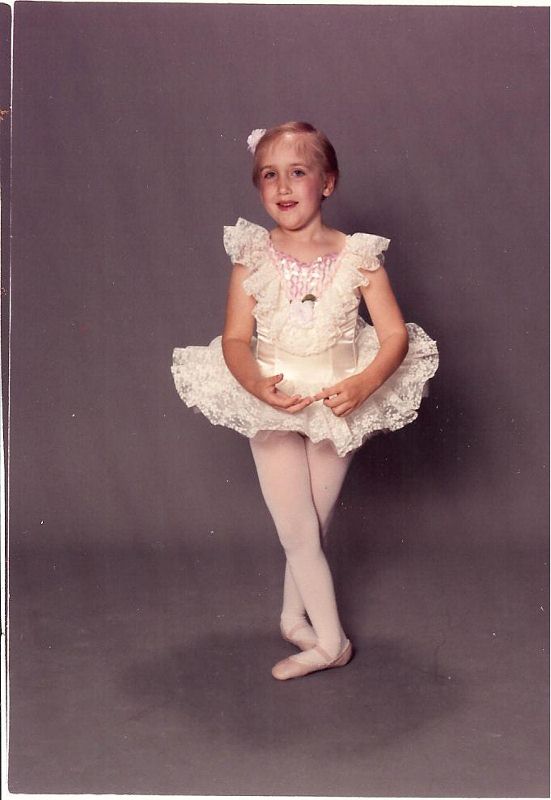
ballerinaWhen Kelsey was six she wanted to take ballet lessons. I’m embarrassed to admit how much this frightened me.  At the time she was in chemotherapy. Her muscles were weak from the chemo drugs.  She had very poor balance following her brain surgery and her weight had slipped to 34 pounds. There was an awkwardness to her left leg and arm due to her cerebral palsy.  She was bald and wore a patch over her left eye.  I was afraid she would fall and get hurt.  And, let’s be honest, I was afraid the other girls would make fun of her.

Fortunately I didn’t know how to tell my daughter about my fears, and she persisted with her request until I enrolled her in ballet class.  I had forgotten what she knew instinctively.  The process is always more important than the product.  She danced with joy.  The sheer fun of dancing was her goal. Did she fall?  Of course.  Was she awkward?  You bet.  Did it matter?  Not a bit.  Every child and adult who watched Kelsey dance gained something special from it.  Her dancing career lasted four years.  She only quit when she decided she wanted to take horseback riding lessons instead.  This time I had learned my lesson.  I signed her up without hesitating.

lesson from basketballLessons from Basketball

In fifth grade Kelsey excitedly brought home a registration form for intramural basketball.  She wanted to play.  I knew it would be a major challenge for her.  Our daughter could only run very slowly and with great difficulty.  She was also very short as her pituitary gland had been severely damaged by the cranial radiation she had received to survive cancer.  For many, many years she received a daily injection of growth hormone to grow at all.  She only had the use of one hand to play ball.  Caution bells went off inside my head again, but I had learned to ignore them.  The excitement in her eyes emphatically canceled out all those drawbacks.

We signed her up.  After the first practice the coach/gym teacher, George Losh, said he was afraid for her to play in a regular game.  He was afraid she would get hurt.  I’m certain lawsuits danced in his head.  But every child who participates in sports risks physical harm.  If her risk was greater, her need to belong was greater too.  We encouraged him to let her play.  George Losh’s physical education classes were always child-centered and structured so that every child could feel some measure of success.  For two years Kelsey played basketball harder than any girl in the league.  No, she never made a basket during a game.  Some huge successes are subtle.  In two years we never once saw a teammate treat her as anything other than as asset to the team.  After weeks of trying, when Kelsey made her first basket during practice, every girl in the entire gymnasium stopped to applaud.  Watching this young lady struggle and triumph increased the humanity of all who knew her.  On game days when we stopped in the grocery store, Kelsey quickly shed her winter coat into the grocery cart.  It took me a few times to figure out that she was so proud of her team shirt, she didn’t want it to go unnoticed under her coat.  She was thrilled to be part of a team.

Most Important Lesson of All

hurts

What is the single most important lesson Kelsey taught me?

Being excluded hurts.  Be certain of this.  The older my daughter grew, the more excluded she was… both by her peers and unfortunately by some teachers too.  Whatever educational jargon or current political term you choose to use, the results are still the same.  Being excluded hurts.

Possessing a physical disability or struggling with a different learning style did not rob my daughter of her sensitivity.  Being excluded hurts!  It hurts the children being excluded.  It robs them of the role models-their typically developing peers-they so greatly need.  It shortchange the children with ‘normal’ growth patterns too.  Inclusive environments reduce fears, build understanding, and teach compassion, patience, and tolerance in a way ‘special’ schools and ‘special’ classrooms never will.  Inclusive environments reflect life and the society in which we live.  How can we separate our children now and expect them to adjust successfully to one another at some magical, mythical time in the future?

Becoming a Great Teacher

Good teachers become great teachers when they become students themselves.  Children have much to teach us if we will only watch and listen carefully.  Kelsey’s dream of becoming a teacher did not end when her cancer returned and she died at age sixteen.  Kelsey was an incredible teacher all of her life. I cannot tell you how many times one of her teachers would come to me at the end of the year and say, “She taught me so much more than I taught her.”  I came to expect it, because I had learned that it was true.

Kelsey modeled for me how to handle rejection without becoming angry.  She showed me how to simply ignore seemingly insurmountable challenges and just focus on living life to the fullest.  She taught me how to more greatly appreciate the simple joys of family and traditions.  She modeled how to maintain a sense of humor and grace even in the face of death.  She has left the most incredible legacy for all who knew and loved her…and all my future students too.  She will forever be the greatest teacher of my life.  May her story touch your teaching life, too.

Kelsey Noel Easley

1982-1999

Kelsey's lessons

TEACH...To Change Lives

TEACH…To Change Lives

Autographed or in large quantities from the author dauna@cinci.rr.com

Also available at Amazon.com

The Kiss

Standard

singing off keySinging Off Key

“Then he kissed me,” sang Nikki out loud and a little off-key.  My high school senior students were cutting, gluing, coloring and assembling learning games for preschoolers.  It wasn’t one of those times the classroom needed to be quiet.  No one responded to Nikki’s short impromptu song.  Some were having conversations of their own as they worked.

“Then he kissed me,” chimed Nikki again.  I was working on something at my desk.  No comment came from me either.

“Then he kissed me,” sang Nikki a third time as she continued to work.  Finally she turned to her classmates.   “I can’t get that song out of my head.  How does the rest of it go?”  A few classmates looked interested but no correct answers came forth.

Someone said, “I think it’s from a movie.”

Another one offered, “Was it in Pretty Woman?”

Silently I chuckled to myself.  That song was from my era, way, way back. Of course, a teenager who heard it in a movie today might think it was more recent.  A brief conversation among my students followed.  No one asked my opinion.  Several students suggested movies they thought featured the song. I made a quick internal decision.

Be Ready

Teachable Moments = Reachable Moments

Act Quickly

singing off keyWithout looking up from my work, giving absolutely no eye contact, I started to sing slowly.

“Each time I saw him I couldn’t wait to see him again.”

I stopped singing, but I continued working.  I still had not looked up.  From the periphery of my vision I could see them glancing at one another.  Are we hearing things?  Was the teacher singing?  No way.  I waited a long pause.  Eyes down, still looking intent on my work, I sang another line with feeling.

“I wanted to let him know that he was more than a friend.”

Oh good grief the teacher was singing.  How embarrassing was this?  You could feel the discomfort in the room.  Had Mrs. Easley gone mad?  But not one person spoke.  All eyes were glued to me.  Finally I looked up as I sang the next line.  I made slow and deliberate eye contact with each of them.

“I didn’t know just what to do”

(Pause)

“And so I whispered ‘I love you’.”

I waited even a longer pause.  They were frozen.  No one even breathed.  They had almost forgotten how embarrassed they were.  They were totally hooked into the story of the song.  When I knew I “had” them all I sang on slowly and deliberately.

He said that he loved me too…

And then he kissed me.”

The kiss

You could feel the sigh in the room.  Not one person said a word.  Nobody wanted to break the spell. Finally I spoke.

“Ladies, a kiss well done, I mean really well done is the sexiest experience in the world.  That’s because a totally great kiss carries so much emotion in it.  If you don’t think so, you’ve been kissing the wrong toads.  Take your time…and enjoy the kisses, ladies.”

A couple of the girls nodded.  I happened to be teaching in what we call an at-risk environment. This senior class had several young mothers and a couple of pregnant students too.  Clearly some toads had already arrived.

toads had arrived

But you could see that they agreed with me.  I wanted to remind them that they truly deserved some great kisses.  Slowly and only gradually they went back to work.  There was a hush, a closeness, in the room.  “The Kiss Lesson” wasn’t anywhere in my lesson plans or daily objectives.  If I had been with another group of students it might never have happened.  But it was the best and most memorable thing that happened that day…for all of us.

TEACH...To Change Lives

TEACH…To Change Lives

Available at Amazon.com

Or autographed or in large quantities from the author dauna@cinci.rr.com

Classroom Activities that are Memorable

Standard

get out of townGet Out of Town

One of the tough things about teaching is that you are so strictly tied into the school calendar.  In the middle of winter, when I’d like to be heading for the sunshine state, I’m stuck in the classroom.  Truth is, ten months a year classroom educators are just about as tied to a static location as anyone possibly can be.

Early in my career I discovered an effective way to get out-of-town when bad weather or boredom set in.  I plan an imaginary jet trip.  Don’t scoff until you’ve tried it.  The first time I attempted it, I admit I was young and green and would try anything.  My third graders were learning about New York City. In an attempt to make the experience more creative than simply reading from a textbook, I dreamed up taking an imaginary jet trip to the Big Apple.  I really talked it up to the children. In fact, I made it so real several of my students just mentally cancelled out the word “imaginary.”  Parents were calling the school to tell the principal or me that their children were afraid to get on the plane.  I had a lot of explaining to do.

Taking Off

imaginary jet trip

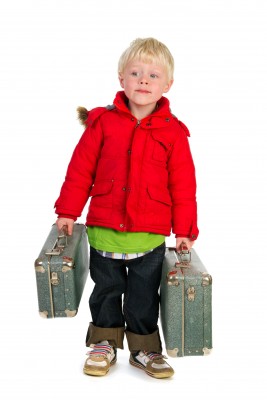
On the day of the “flight” the children arrived with their suitcases packed and their dads’ belts in tow.  We were going to use those dads’ belts as seat belts on the plane. Beforehand the children were given a weather report of the intended destination and some advice on what they might want to pack.  We always pretended we were going to spend the night so pajamas and favorite sleep items came along.  One of the most interesting activities we did while flying’was to unpack each child’s suitcase and examine what they had chosen to bring along.

For our flight the classroom chairs were arranged as seats might be on the inside of a jet.  We used tickets, now generated by a computer which made them very realistic and provided a great souvenir.  Students acted the parts of all the airline personnel.  We had a pilot and co-pilot complete with earphones and hats for realism.  We had ticket takers who stamped the tickets and baggage claim agents who tagged the luggage and took it away to the rear of the plane.  We usually used a wagon for a baggage cart.  Flight attendants welcomed the passengers aboard as they walked over a couple of steps we had arranged next to the plane.  Attendants then instructed the passengers to stow items under their seats and checked to make sure seatbelts were securely fastened.  They also served a snack while en route.  Personnel in the front office of the school used the intercom to welcome the passengers aboard the flight and invited them to sit back and relax as they flew.

We never had a plane crash, but we did one time encounter quite a bit of turbulance. 

turbulance

We were comfortably belted into our seats and watching a slide show of  New York tourist attractions when the school fire alarm went off.  I silently cursed the office personnel who I assumed were doing this as a prank.  The alarm had sounded shortly after they had come over the PA system to welcome us aboard.  They knew all my students were belted into their seats.  But in front of the students there was nothing to do but struggle along with them to help them unfasten their dads’ belts one by one.

We were by far the last class to arrive outside.  Finally we received the “all clear” signal to reenter the building.  I was doing my best to recreate the imaginary mood of the flight and had everyone buckled back in and almost calm when the fire alarm went off again.  I couldn’t believe it.  The first time might have been funny, but his was downright irritating.  It took us even longer this time to make it to our designated safe location.  I later learned that the fire inspector had indeed paid an unexpected visit to our school.  Because of my class we had flunked the inspection.  The fire official had waited a short time to give us a second chance, but we flunked again, royally.  Oops!  Apparently creativity has its price.

While I first used this activity in the elementary grades, I admit I have used it successfully for just about every age group.  It has become a yearly tradition in my classroom.  My senior early childhood education students get very involved with setting up the plans and activities for our laboratory preschool.  If I’m not teaching in an inflexible social studies curriculum, I allow my student a lot of freedom to choose the destination.  Two popular trips during the winter months are Hawaii and Disney World.  The students have fun pulling out their summer clothes to pack in the middle of winter, along with sunglasses, bathing suits, suntan lotion, and beach towels.  Some even come to school in shorts, a feat in Ohio in the winter months.  One of my seniors, wore a grass skirt and strategically placed half coconuts over her blouse.  That picture made the school yearbook. If we travel to Hawaii, we make grass skirts from green plastic trash bags and learn to dance the Hula to Hawaiian music.  We get out our beach towels and “sunbathe” during preschool story time.  We play beach blanket bingo, during which students pretend to sunbathe on a towel until the music stops and then run to a new towel.  We cut open a fresh pineapple for snack.  We make leis to wear home. Since camcorders and video cams have become popular, we can usually watch a video of our destination and parents love making their own recordings of our trip.  We always reboard our plane and fly home just in time to meet them.

coming home

Coming Home Again

The variations are as endless as your imagination, and so are the opportunities for learning.  When I taught in the primary grades, if we were traveling to China, I had a parent bring in Chinese food for lunch and we ate with chopsticks.  Going to Mexico?  Learn the Mexican Hat Dance, eat Mexican food and break a pinata.  Take a look at your curriculum.  What do you need to teach that you could make more realistic and more fun by imaginatively traveling to that destination?  Invite in a guest speaker with appropriate costumes.  If you’re studying a particular era in history, turn your classroom into a time machine and travel backwards in time.  Bring your classroom alive.  The sky is the limit.

TEACH...To Change Lives

TEACH…To Change Lives
Available at Amazon.com

Or autographed or in large quantities from the author dauna@cinci.rr.com