Teaching Celebrations and Frustrations

Standard

Celebrations

What I learned from bloggingRecently while navigating through the pages that support my blog site, I stumbled upon a page full of statistics where I learned that…

…during the past 90 days my teacher blog

at DaunaEasley.com

has been read by people in 35 different countries! 

                                   I was amazed and humbled.

A person writing a teacher blog should probably never admit this; but some of those countries I had never even heard of.  (Thankfully I didn’t teach high school geography).

Sometimes it is a lonely commitment, to sit down at my desk in my home and type my heart out about the teaching profession I love.  You wonder if anyone will ever value (or even read) the words that you write.  Thank you loyal followers.  You make my efforts feel so worthwhile.  At 3:00 am (yes that is the current time when I’m writing this), it helps to know that my words are welcome in places around the world I will never have the opportunity to visit.  I am in awe.

Teaching Frustrations

frustrationsRecently while watching a young student teacher assign homework to a group of middle school students, I heard all the young teens groan.  What was their frustration?  Their homework was being assigned out of the textbook.  Their texts were huge and they didn’t want to carry the book home in their backpacks along with all their other texts.  The teacher gave a brief apology.  “We don’t have paper to use.  The budget is low.  We have to use our textbooks for homework. Sorry.”

I know when I start to describe this dilemma there will be people who won’t understand.  They’ll tell me that no child in Africa has a textbook and they would be honored to have one to use.  Other people will tell me about classrooms around the world where the entire class must share a pencil or scratch their calculations out with a stick in the sand.  Maybe, in hindsight, I shouldn’t have even brought this up when I have just bragged about 35 countries reading this blog.  Awkward moment.

However, can you imagine corporations in America telling their employees to market, design, and produce a product without using paper?  It is a ludicrous notion.  And yet it happens in our classrooms all the time.  Teachers are routinely asked to teach without supplies as basic as paper.  For decades I have listened to administrators beg and then threaten teachers not to use paper or copy machines.  School budgets simply can’t absorb the cost of paper or copy machine repair.  Taxpayers will vote for building a new school.  But they will not vote money for a school operating levy.

broken political promises

Before every election, politicians make hefty promises to support education.  After every election they promise taxpayers to make hefty budget cuts.  The first to be deserted?  The schools…more correctly…the students.

I once wrote a humorous piece on copy machines in schools that I will share here.  If you’ve never worked in a school, you won’t believe it.  But every single situation is something I have experienced while teaching in schools in America.

Copiers

I’m not talking about kids who don’t want to study and look on classmates’ papers during a test.  I’m talking about machines that copy worksheets, newsletters to parents and homework assignments.  Here is  the reality within schools.

school frustrations

  • The only safe and accurate assumption to make is that no school in America will ever have a copier for teachers to use.  Don’t set your standards too high.  The reality will hurt too much.
  • I don’t mean that there won’t be one on the premises.  Usually if you know where to look you can spot one.  In my job before my last teaching job, I could spot one near my classroom.  It was in a small room with glass windows, but the door was locked.  You could see it and salivate, but that was all. I struggled for five years to get a key to that door.  Remember this is a true story.
  • If you ever actually spot a copy machine on school premises don’t get too excited.  Some copy machines are never allowed to be used by teachers.  Only administrators and secretaries have the authority to use them.  Intelligence and advanced degrees won’t buy you the right to touch them.
  • If the copy machine assigned to teachers is on, it will ask for a password.  But the password you’ve been assigned will never work when you need it most.  In some instances it will never work at all.  You will have to exchange other school supplies (like staplers, and 3 hole punches) to use the password of another teacher.  But they will never let you know their password, they will only tap it in quickly with their hand covering the little window on the machine.  They are not fools.  Teachers with working passwords are like English royalty.  No working password?  Learn to curtsy.
  • If you report to your administrator that your password is not working they will tell you to fill out a form…these days online…and send a request to technology.  You will never be able to find the name of the form. It will probably be named nwpw#3256.  That stands for non-working passwordThey throw in the numbers because they are afraid you might figure out the name of the form and consequently use paper and toner.
  • If you ever get a password and see a copy machine with no line next to it, trust me it isn’t working. Go ahead.  Don’t believe me.  It may appear to be working. Unfortunately you will only believe this after it eats your master copy.
  • No matter how early you arrive at school or how late you stay, the copy machine will always have a long line next to it.
  • If you arrive at 5:00 am and there is no line next to it, you will be in charge of turning it on.  It will take forever to warm up.  If you stand there and wait, forty-five minutes later you will finally figure out that it isn’t working.
  • If you turn it on to warm up and come back twenty minutes later to run your copies, there will be one person in front of you at 5:20.  They will be running 30 page packets.
  • No plan bell is ever long enough to work your way to the front of the copy line.  You will make it to the front of the line at the exact moment you have to be back in class teaching.
  • If you finally do get to the front of the copy line and are excited, you are only moments away from discovering that the person in line in front of you jammed the machine.  They will never admit this and you will be left trying to unjam his jam and everyone behind you will believe you broke the machine.  They will be complaining about you all over the building that day.
  • If you find that the machine does not have a line, your password actually works, and it doesn’t show a jam, there is only one possible explanation.  There is no paper left in the cabinet.
  • If you report to the administrator (or more probably someone he has designated) that there is not paper in the cabinet, she will tell you that you must order copy paper from your budget.
  • You have no budget for ordering paper.
  • Kinkos (is that still their name?), Staples and Office Depot know all these facts and love them.  Their stock is buffered by the long line of teachers who use their take home salaries to buy copy paper and run off work for their students.

Thus I return to and stand by my original premise.  No school in America will have a copier for a teacher’s use.  We can replace  chalkboards with wipe off boards and sometimes even smart boards.  Every kid can carry a cell phone and an electronic notebook.  Those that can’t, will soon have to walk to the public library to submit their work online, because no school in the Land of the Free can afford copy paper.

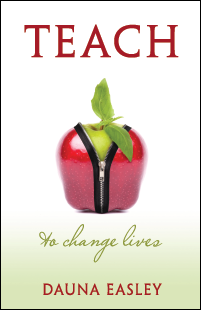
TEACH...To Change Lives

TEACH…To Change Lives

Autographed or in large quantities by the author:  dauna@cinci.rr.com

Also available at Amazon.com

Kindness in the Classroom

Standard

Let’s Talk About Kindness

kindnessKindness helps everything.  It can smooth over advice for improvements.  Sincere empathy during a difficult time can make that adversity seem a little more bearable.   An unexpected kindness can build a positive rapport between people.  That rapport can then be used to give a young person the courage to discuss their challenges and dreams with you.  There is always a choice to bring kindness into a situation…especially the classroom.  Kindness can make even devastating news more palatable.  Kindness can be as simple as saying nothing when a young person has really made a poor choice.  We all need kindness the most when we deserve it least.

Be Kind to Yourself

kindness in the classroomAs a rule teachers are pretty tough on themselves.  We accept assignments late and jeopardize our own free time to show kindness to students.  We give up our lunch breaks, planning bells and spend countless hours before and after school tutoring, running clubs, or just talking with students.  We answer emails, call parents, serve on committees, mentor a new teacher and then end up taking all our grading home.  Most teachers are “yes” people.  It seems the last person we are kind to is ourselves.

A few summers ago I enrolled in a couple of one week workshops for teachers. One of the teachers had us do an activity I will never forget.  She asked us to write a letter to ourselves about any area or aspect of our life that concerned us.  The letters were going to be mailed back to our homes in a self-addressed stamped envelope at a specified later date.  But here is the twist that made this activity to powerful.  She asked us to write that letter using the same type of kind and encouraging words that we would use with a student.  Whoa! I learned very quickly that I talk to and criticize myself in a very different way than I would talk to students.  Writing to myself using the tact and care I use with my students was a very emotional experience.  I could tell it had the same impact on every teacher in that room. It revealed to me that on a daily basis I am probably my own worst enemy.

Helping Students Learn Kind Self-Talk

teach kindness to students

The following year I used this activity with my seniors shortly before they graduated.  It was a classroom full of future teachers.  They were going to be writing encouraging notes and letters to students.  I had them practice on themselves.  I gave them the same instructions my workshop teacher had given me.  They asked if I was going to read them or not.  I gave them the same answer as my workshop teacher.  “If you seal them, I won’t read them.”  As they wrote silently, you could feel the intensity in the classroom.  Rachael began to cry quietly as she wrote encouraging words to herself.  She wasn’t the only student who reacted with emotion.  She later said, “Well, Mrs. Easley, you made me cry in school.  I have managed to get through kindergarten and twelve years of school without ever crying in class.  But just before I graduate, you make me cry in class!”  Ouch.

While my goal certainly wasn’t to make her cry,  (truthfully she made herself cry with what she wrote), I could see the experience had made a lasting impact on her and many others in class.  When that much emotion is attached to an activity, you know that they have experienced something memorable.  To be honest I knew there were a few in the room who found the activity too emotional, and then just wrote something meaningless in the envelope and sealed it.  But I suppose that is true of any endeavor.  We get out of it what we are willing to put into it.  That is also true of life.

Hurdle Roadblocks with Kindness

roadblocks in lifeI’ve also learned that kindness works for me when I come across a roadblock in my life. I try to teach students about this technique.  The kindness doesn’t even have to be directed at the situation that is presenting a roadblock.  In fact it works better if it is completely unrelated.  Small kindnesses make us feel as good as the person to whom we direct the kindness.  When we feel better about ourselves, we are more effective on many fronts. Unselfish kindnesses do have a way of coming back to us with unexpected rewards, but that cannot and should not be our original goal.  Spreading kindness has a domino effect.  Except unlike dominoes kindness doesn’t knock people over, it builds them up.  And isn’t that the best definition of teaching?

TEACH...To Change Lives

TEACH…To Change Lives

Available autographed or in large quantities from the author dauna@cinci.rr.com

Also available from Amazon.com

A Parent Teacher Conference I’ll Never Forget

Standard

Meaningful Moments

parent teacher conferenceI taught for more decades than I care to admit. During that time I’ve probably conducted thousands of parent teacher conferences.  Many of those memories run together.  However possibly a dozen parent conferences stand out in my mind because of what they taught me.

One time while teaching future teachers in a Teacher Academy program at high school level, I had the opportunity to talk with Jack’s mom.  Jack was a junior in my class and an all around great guy.  Everyone loved Jack. This particular class happened to be dominated by girls which meant that sometimes there was female drama percolating just below the surface within the classroom. But somehow Jack could stay above it and even maintain a friendship with every single female in the class.  Watching him I knew he had the diplomacy, humor and kindness to be a great teacher.  He instinctively knew how to make people feel valued.

Early in the year I asked the students in my Teacher Academy to give a speech on any topic of their own choosing.   I wanted them to use the Smart Board, make slides, practice speaking comfortably in front of the class so I allowed the topic to be a topic of their choice.  Jack’s topic surprised all of us.

How NOT to Get a Girlfriend

As speeches go it was terrific.  He had the attention of every person in the classroom.  He had made wonderful slides.  His premise was that girls aren’t really attracted to the thoughtful, nice guys.

  • Drive them to school and carry their books from class to class….THAT won’t get you a girlfriend.
  • Listen to them talk about their boyfriend’s bad habits and build up their self esteem…THAT won’t get you a girlfriend.
  • Bring them a flower or buy them a dessert in the cafeteria…THAT won’t get you a girlfriend.

He went through several such examples accompanied by humorous slides.  Every person in the class was laughing and attentive.  They could hear the truth in his comments.  When he had his audience primed and ready,  Jack showed his final slide titled…

The Only Way to REALLY Get a Girlfriend

  • Reach into your pockets filled with lots of money, pull the money out and say, “I have all this money to spend and I don’t know what to do with it.  Do you want to go to the mall?”  THEN you’ll have a girlfriend.

Needless to say it was a very effective speech for a room full of high school students.  Everyone was laughing and recognizing the uncomfortable truth in some of what Jack was saying.  Why do high school girls overlook some of the best guys?

The Parent Teacher Conference Continues

I love telling parents cute stories about their kids.  I thought perhaps Jack had told his family about his speech at home, maybe even practiced it in front of them, but he hadn’t.  As I told his mom this story I could see that she was hearing it for the first time.  I was laughing but she had tears in her eyes.  I was confused.  I paused to let her tell me why she was upset.  She was too emotional to speak so she motioned for me to continue.

I started to understand that she had bad news to share, but I went on to tell her another story about Jack.  He knew even as a junior in high school that he wanted to teach junior high level.  Part of my job was to procure placements within the district for my students to shadow current professional teachers.  I had Jack placed in a junior high classroom.  It is daunting for even adults to get up in front of junior high students and maintain control of the class.  Jack was only a junior in high school, just a couple of years older than these young teens, and yet he had an instinct for handling this age group using just the right combination of firmness and humor.  He impressed even this seasoned teacher. I described to his mom a class I saw him teach successfully in a junior high health class.

By now Jack’s mom had tears running down her cheeks.  She was openly crying. I knew that she was going to reveal that she had a life threatening illness.  I braced myself for the bad news and was thinking of encouraging things I might say in response.  I waited a few beats and asked, “So why the tears?”

Here’s what she said while trying hard to control her emotions.

Mrs. Easley, Jack has two older sisters, both of whom knew exactly what they wanted to do in life. They knew what their career path would be from a young age and then went straight toward their goals.  Jack has been so different from them.  He didn’t seem to know what he wanted to do.  In Junior High he just seemed to get off course.  His grades started to slip.  Things he cared about previously he just kind of gave up on.  His friends changed.  We have just been so worried about him.  We just wanted him to find something he loved.  We’ve had so many conversations about what was going to happen to Jack.

She paused.

When he signed up for the Teacher Academy program we were surprised…pleased, but maybe just a little skeptical.  But right now, in the past ten minutes, listening to you, I realize that Jack has found his niche.  I can’t tell you how grateful I am for the stories you shared with me.  Jack has found his niche. It is the biggest relief to know that he has found something he loves and then to know he is good at it…it is the best possible news.

It took a lot of kleenex for her to get her story out.  Her gratitude and relief was so great that she just let the tears flow.

It is one of the conferences I will never forget.  I had completely blindsided her with good news.  Isn’t it wonderful when a teacher can play that role?  It gave me a renewed resolve to take time to share stories with parents.  Conferences aren’t just about rattling off test scores and homework expectations.  The very best parent teacher conferences are about listening to parents and then blindsiding them with great news and stories about their kid.

Guess What?

A couple of weeks ago I heard from Jack.  I think of him frequently and even made an attempt to find him last summer, but failed.  But only a couple of weeks ago his name popped up on my Facebook page.  He now has his Masters Degree in Education from The Ohio State University.  I’m impressed but not surprised. He has a long-term substitute teaching job, with a full-time teaching job possibility on the horizon.  Oh, and also he coaches a junior high girls’ basketball team.

I know he is going to be great with this age group, even the ones who get a little off course…maybe especially those kids.  I know he is just the kind of guy who will blindside their parents with good news at conference time.

On the days when my life has too many challenges, I think about all the wonderful kids I knew when they were aspiring future teachers.  Most of them are in the classroom now or only a year or two away from it.  It makes me optimistic about our schools’ future and optimistic about the teachers in front of today’s students.

TEACH...To Change Lives

TEACH…To Change Lives

Available autographed or in large quantities from the author at dauna@cinci.rr.com

Also available at Amazon.com

Great Classroom Activity

Standard

Which Words Rule Our Lives?

Words that Rule Our LivesIt’s important for us that we know the words that rule our lives. This is a great activity I learned from my own high school students, Taylor and Cody.  The assignment was for each of my students who aspired to be future teachers, to teach a lesson in front of their classmates.  At the time of this assignment the classic children’s book Where the Wild Things Are had just been made into a movie and was being shown in theaters.  Taylor and Cody began their lesson by having the students watch the movie trailer.  In a very effective style the trailer pointed out that each of us has three words within us.  We all possess a little fear.  We all crave a little adventure.  And we all need a little hope.

movie trailerHow clever Taylor and Cody were to get Hollywood to create the hook for their lesson!  The movie trailer was quite effective and had every student’s attention.  The “teachers” then asked the class to focus on those three words:  fear, adventure and hope.

Decide which one of those words rules your life.

Think about it and then share it with your peers.

After a few minutes of thought they brought the class together into a cozy circle.

teens in a circle

Each student truthfully described which of these three words currently seemed to dominate their lives.  They were very honest and revealing.  (I believe students truly want to share what is on their minds.  I’ve seen it too many times to be wrong about this).  It is the challenge of an insightful teacher to find a vehicle that will encourage that sharing.

After everyone had shared their thoughts, the teaching partners posed a second question…

Are you satisfied with the word that seems to drive your life right now?

Once again the students took turns sharing their answers.  This kind of activity will only be successful if a teacher has previously created a safe, accepting environment in which all students feel free to share.  Once again the answers were candid and insightful.  This activity forced each of us to assess our lives.  It forced us to evaluate our motives, to really think about the choices we were making and whether those choices served us well.  It also built tremendous understanding and empathy among class members.  It deepened our sense of community.  As a side benefit it is important to recognize…bullies can’t thrive when you build a sense of acceptance within a classroom community.  How proud I was of my students for creating such an effective experience for our class.

dream big

Is there one word that seems to drive your life?  Fear?  Adventure? Hope?  Which one is it?  I always participate fully in any revealing activity like this in my classroom.  It bonds the teacher with the class.  It builds understanding across generations and defines the classroom as a safe place.  Even more important it shows the students the teacher is willing to talk about feelings.  It gives them the courage to approach the teacher when something really important is on their minds.  It puts a welcome mat in front of the door to your classroom and your heart.

Thank you Taylor and Cody, for creating this wonderful lesson for me to share with others!

TEACH...To Change Lives

TEACH…To Change Lives

Available autographed or in large quantities from the author:  dauna@cinci.rr.com

Also available at Amazon.com

What is Important?

Standard

School Rules

What is important?Today more than ever, our schools are filled with rules.  Like it or not rules are necessary to keep students safe.   We can’t tolerate guns or drugs in school buildings or their surroundings.  We want bullies to know they are not in charge of our students.  We have rules against discrimination and rules that demand modifications for students with learning challenges.  In some schools you can’t wear hats, hoods or head-gear or even carry large book bags in the hallways.  In other schools you have to walk up one stairway and down another in order to help students get to class on time.  Most school rules are important.  Some we just tolerate.  And let’s be honest, some we ignore until they are taken off the rule list completely.

Life Rules Matter

what is importantBeyond the school rules, though, I believe it is most important to teach our students LIFE rules.  This is not so easy, but vital for their future success.  I like to start with the rule of 10-10-10.  When I see students getting frustrated or overwhelmed I like to refer to it in the classroom.  The 10-10-10 rule is simple.  Look into the future, stop and think:

  • Is what I’m doing or worrying about right now going to matter ten days from now?  Well is it?
  • Is what I’m doing or worrying about right now going to matter in ten months?
  • Is what I’m doing right now going to matter ten years from now?

Some teens stress out over something that isn’t even going to matter in ten minutes“Look at this text message!  What do you think he means by that?!”  In ten minutes the bell will ring and you can ask him.

These three questions really help our students understand how to evaluate the ways they spend their time.  They are also questions that need to guide our own lives.  Isn’t that why we chose teaching after all?  We chose a profession that would impact our student’ lives for more than ten years.  (If we do it well).

When I take a break from my writing to pick up a grandchild from gymnastics or attend a baseball game to watch my grandson play ball, I’m doing something that will matter even ten years from now.  I want my grandchildren to know they matter to me.  I must do that now.  In ten years, four of my grandchildren will be living away from home.  This is the time I must build a permanent relationship with them.  I am very aware of that.  THIS is when they look forward to seeing me.  I want them to remember that I was an important person in their lives  I want them to know that they are important people in MY life.

However, when I’m writing I don’t answer the phone for a number I don’t recognize.  I’ll finish my task and then listen to my messages.

Both of those responses honor the 10-10-10 rule.  Recently while shopping I saw a little plaque that read:

I always have time to talk about how busy I am

  Ouch.  Aren’t we all a little guilty of that?

Using these three questions can make us and our students just a little bit more aware of how much time we spend on useless drivel.  Teachers spend hours and hours doing things that will not matter one whit in ten days.  So much minutia is thrust upon us.  We have to learn to just say no to time wasters if we want to accomplish our bigger dream of helping our students become all that they can be.

Likewise students are completely inundated with electronics.

What is important?

Technology has turned our teens and far younger children into electronic junkies.  They stop any important project…driving, making eye contact with a parent or friend, or especially listening to a teacher, to respond to an endless barrage of text messages.  Screening these interruptions and prioritizing what is really important is a skill that must be taught.  What is our ultimate goal?  Focus on what will still be important in ten years.  Are our students working toward long-term goals or becoming a slave to trivial interruptions?

Making them aware of the ten-ten-ten rule will help them sort it out for themselves.  Maybe they won’t even “get it” right now.  But ten years from now, when they are trying to reprioritize their lives, they may understand the wisdom we were trying to share.

TEACH...To Change Lives

TEACH…To Change Lives

Available autographed or in large quantities from the author:  dauna@cinci.rr.com

Also available at Amazon.com

The Power of Optimism

Standard

Ask the Students

ask the studentsOptimism is a quality that flavors everything all day long.  We can expect the best in our lives and therefore give the universe an opportuntity to attract good things our way.  Or we can worry and grumble about the bad things that always seem to invade our space.  It is a choice we make every day.

Every year I ask students to identify great teachers from their lives.  Then we write letters to them.

It shouldn’t be a surprise that they describe the teacher’s personal qualities more often than they talk about the academic material that they learned.

Again and again I hear these comments…

She’s fun.

He likes to make jokes when he teaches.

He is so enthusiastic.

She doesn’t treat us like we are kids.

She is interested when we have problems.

We want to spend time with people who make us feel good.  Our students do too.  They are attracted to adults, parent, grandparents and teachers who are optimistic.

The Money Jar

The money jar

One of the differences I noticed between elementary aged children and teens is the lack of optimism that seems to prevail in the adolescent species.  Sometimes it seems like being optimistic isn’t cool.  When young children walk into your classroom, they are excited to see you and be in school.  They ask right away, “What do we get to do today?”

However, when teens walk in and I say, “Hi Tyler!  How are you this morning?”  One hundred percent of the time they say, “Tired,” or  “I don’t feel good.”  It can be downright depressing if you let it get to you.  I finally told my teens they had to give me a quarter for my reward jar every time they told me they were tired.  Did it stop them?  No.  But it made them think.  Now when I ask them how they are, they say things like, “I’d tell you, but it would cost me money.”

When I worked with teens on a daily basis, I had to listen to upbeat music on the way to school.  I used motivational or inspirational CDs in the car.  Do whatever it takes to remain optimistic for our students.  They need it from us.

On a Personal Note

 optimismEvery activity I write about is part of my personal teaching life.  Every story I tell is true.  On a rare occasion I talk about an experience with one of my children or grandchildren and explain lessons that they have taught me and ways they have changed me as a teacher.

Other than that I don’t mention my personal life very often.  Today I’m going to break that silence  just a little.  In December my husband suffered a heart attack and a stroke. I was absent on my Christmas Eve post because we spent 12 days in the hospital including all of the holidays.  This past Friday he had his second stroke.  We came home from the hospital yesterday afternoon.   Yes, it is a bit stressful and emotional.  But there is always a choice in how we react.  I’m focusing on the progress he is making every day as his language gradually returns to him.  I’m feeling grateful that this stroke revealed a new heart issue that we didn’t know he had.  I’m believing his situation is temporary.  If I adopt a gloom and doom attitude, will it make anything better?  No.  It will rob us of the small joys we have everyday.

It is how we live our lives everyday that impacts our students (and children) the most.

TEACH...To Change Lives

TEACH…To Change Lives

Autographed copies and large quantities available:  dauna@cinci.rr.com

Also available at Amazon.com

Conversations About our Schools

Standard

conversations about our schoolsTrue Stories from My Past Week

Story # 1

I was visiting an elementary school this past week observing a college senior who is student teaching this semester.  As I left her classroom I was walking through the school hallway alone.  A kindergarten boy came running down the hallway on his way to the bathroom.  He was close to me before he noticed me.

He stopped running when he saw me, looked me up and down and said, “What school did YOU go to last year?”

I laughed all the way home about his comment.

moving teachersMoving Teachers

Story #2

On Saturday I visited a school district 45 minutes away to watch my granddaughter perform in a competition.  There was a lady I had never met before sitting behind me.  She began talking about her past week as a kindergarten teacher. Once I realized she was a kindergarten teacher, I turned around to tell her my story about the little boy in the hallway.  She listened and laughed.  When she realized I was also in the teaching profession she then said, “Let me tell you about my week at school.

“On Thursday of this week the administrators called a previously unannounced teachers’ meeting.  We found out at that meeting almost all of the third through sixth grade teachers will be leaving our urban school.  They are getting rid of all but two teachers in those grades because the students’ test scores came back too low.  The only reason we kindergarten through second grade teachers still have jobs is because our students don’t yet take the standardized tests.”

I was stunned.  “Are they firing all those teachers?” I asked.

She continued her tale, “No, they are moving them to another school in our district.  The other school is in a completely different neighborhood with an entirely different clientele.  Guess what?  Not so surprisingly their tests scores are higher.  Therefore the administrators (or somebody) believes those teachers are more effective.  They are bringing those ‘effective’ teachers to our school to boost our students’ test scores.  They are moving what they consider our ineffective teachers to the other school to learn from the ‘effective’ teachers still there.”

We smiled at each other and shook our heads.

I thought to myself, “Who is making these decisions?  Did they visit in both those schools?  What are educators even thinking? Or are educators even involved in any of these decisions?”  Like the kindergarten boy I met in the hallway I wondered, “What school did THEY go to last year?”

Value Added

Story #3

school

On Sunday I was in another school watching yet another grandchild participate in a function.  Next to me sat a wonderful, committed first year teacher.  I have known this young lady for years and am very aware of her standard of excellence.  I told her the story the kindergarten teacher shared with me.  She was disappointed, but not surprised.

She described a similar circumstance she had encountered.  School districts have become so reactionary to test scores that it seems like learning takes a back seat to the almighty score.  Everyone is talking about value added.

Note from me:  When schools talk about ‘value added’ these days they only mean how did you raise test Dauna Easleyscores?  They don’t mean how well do you communicate with parents, differentiate instruction, tutor or counsel students.  Value added means only, “What did you do to raise test scores on the standardized tests?”  I’m sad about that.  A valuable teacher is so much more than one number on a page.  Ask any student what constitutes a valuable teacher.  They will describe one accurately. But students’ opinions don’t factor into the equation either.  Only standardized test scores matter anymore.

This young teacher pointed out that her subject (foreign language) isn’t covered on the state standardized test.  But the teachers still have to prove ‘value added’.  Essentially all they have to do is make up a pre-test, then teach the skill and administer their own post test.  If the scores go up, they can prove value has been added.  She is professional enough and committed enough to recognize the irony in this scenario and she is only a first year teacher.

Isn’t this just a little like asking the fox to guard the chicken coop?

value added

It makes me sad to see educators running in circles like this.  The cry for higher test scores from politicians and the media….higher test scores,  no matter what the method… is causing otherwise intelligent people to make some pretty desperate decisions.  When we don’t know what to do, we just get forced into doing something whether it is worthwhile or not.

I want to ask the politicians, government officials and reporters who are complaining about our schools…in the words of a kindergarten boy…

What schools did you go to last year?

What teachers did you interview? Did you ask them how to raise test scores?

What did students suggest about how to identify effective teachers and raise test scores?

TEACH...To Change Lives

TEACH…To Change Lives

Autographed books and large quatities available from the author: dauna @cinci.rr.com

Also available at Amazon.com

Time

Standard

two dadsTime Matters

Unfortunately children and students spell the word love  T-I-M-E.  Nothing is more valuable to them than your time. Though it may seem that the only thing they crave is the latest electronic device, what they really want most is your attention.  Remember: ninety percent of the time they spend on electronic devices connects them to people.  Simple translation?  The more time you spend with them, the more they believe you care about them.  This can be good and bad news.  Time seems to be what busy teachers and parents possess least.  Unfortunately there is no substitute.  We have to be diligent and creative about finding that time to spend with them.

robe dayA Special Request

My daughter, Kelsey, used to request a “robe day”.  Usually when we cleaned the house we’d turn up the music really loudly, stay in our robes and clean together.  When the music served up an especially favorite song we might boogie together.  But in Kelsey’s world “robe day” meant that mom wasn’t going anywhere…no work or errands… (you don’t leave the house in your robe)…just time together.  I learned that when she requested a robe day she needed my presence and that’s what I gave her.

parentingMy teacher friend, Barb, went through an especially busy time helping her husband while he was president of a national professional organization.  At the end of a busy year she thanked her children for their patience and asked the two of them what special things they would like to do.  Her son came up with a list of specific outings that he desired, but her younger daughter, Aimee, simply said,  “Mom, remember when we used to water the flowers together?  That’s what I want to do, just you and I watering flowers together.”  I’ve never forgotten that one simple request.  While we race around in our career trying to provide material items we think our children crave, what they really want most is simply our time.

How Can Teachers Find Time?

teachersFor teachers, finding this one-on-one time can be especially challenging.  Greeting each student as they enter the classroom is a start, but real connections require so much more.  In a high school setting I’ve learned that invariably certain students will figure out when my plan period or lunch time is and somehow just start showing up.  It’s hard not to think, “I need this time to answer emails or run to the copy machine.”  Because, in fact, it seems like these days the pressure we face to post each grade and syllabus online promptly, robs us of one-on-one time with our students.  As much as possible I fight the urge to spend my planning time serving the computer instead of providing a listening ear to my students.

taking a closer look at schools

Rapport, especially a trusting one, unfortunately takes time.  A student will show up unannounced with seemingly no agenda several times before s/he trusts you enough to talk to you about what is really on his/her mind.  Field trips are another good way to connect.  I’ve had some of my best discussions with students on a long bus ride or in a hotel room spending the night at a competition.  Outside the classroom the teacher seems more like a mentor and less like someone who averages grades.

baseball is lifeOther Ways to Connect

Speaking of outside the classroom, I try to attend sports events, drama productions and graduation parties to which I am invited.  I’ve gone to dance recitals, sign language concerts, gymnastics meets, winter guard showcases, bar mitzvahs, reunions, movies, showers and weddings.  Why?  A relationship doesn’t start and stop at the classroom door.  The time within the classroom walls just isn’t enough to develop the ongoing relationships I want to have with my students.  We can’t put more hours into a day, but we can think in creative ways to use that time well.

A few years ago our high school was in the state baseball championship.  I took my grandson (who was a young baseball player) and drove two hours to the state capital to see it.  In that way I spent quality time with my grandson while also supporting the efforts of my students.  My young granddaughters and husband go with me to drama productions and color guard showcases.  I get to see my students excelling in a non academic arena and spend time showing my grandchildren an extra curricular activity in which they may want to participate when they are older.  Guess what?  My grandson is now a varsity baseball player making plans to play college baseball.  My oldest granddaughter is in high school color guard and winter guard and another granddaughter is on the school gymnastics team.

Unfortunately we can’t put more hours in a day, but we can think outside the clock and look for winning ways to make time for all whom we love and want to encourage.

TEACH...To Change Lives

TEACH…To Change Lives

Available autographed or in large quantities from the author:  dauna@cinci.rr.com

Also available at Amazon.com

I Believe in You

Standard

teacherTeachers Make the Difference

Effective schools are about so much more than just memorization of academic facts.  The very best schools have teachers who come into the profession to change lives.  They come into the classroom to share their passion for a subject, but refuse to stop there.  They want to make a permanent difference in their students’ lives.  They are constantly looking for ways to make that happen.

But sometimes the challenges teachers face in the classroom seem insurmountable.  Our American schools welcome every learning style, nationality, culture, and disability. They welcome students who are homeless, children of incarcerated parents, children born with the consequences of their parents’ drug addictions and/or illiteracy. That is what makes America wonderful and unique.  We value and are dedicated to an education for all children.  Our schools are not merely available for elite learners, as is the case in many other countries to whom we are unfavorably compared.  Committed teachers in the USA make it happen whether or not they have the financial support of their community, the supplies they need or the training they crave.

These days I help supervise and train young teachers.  They are optimistic, committed and begging for ideas to make a positive difference in their students’ lives.

Are you afraid?Let’s Start with “A”

Are Your Students Afraid?

Here’s an important piece of information not all students know or believe.  You (the teacher) have to tell them or they won’t know.  Everyone is afraid.  Adults are afraid when they start a new job, are assigned a new project or (gasp!) face new computer software in the workplace.  Many celebrities are afraid when they take the stage.  Great speakers are often afraid before a speech.

What separates the successes from the people who just stand along the sidelines and never get started isn’t the lack of being afraid.  They simply take action in spite of being afraid.  Only action can overcome fear.  When we are afraid of something and don’t confront it, the fear grows.  Inactivity fertilizes fear.  Next time we experience that situation we are even more afraid.  I have a crazy friend who is so terrified of bugs that she drove a car without air conditioning with the windows completely rolled up in Florida during the summer time because she was afraid a bug might fly in the window while she was driving. It was probably 120 degrees inside that car.  I know because I was in it!  (I wish I had just made that up but unfortunately it is a true story).

Only action breaks the chain of fear.  What can a teacher do?  Talk to students about a time you were afraid.  I was almost fifty when I wrote my first book.  Was I afraid no one would want to read it?  Yes.  Talk to them honestly and frankly about how you overcame a fear.  Help them make a plan for confronting something they have been afraid of approaching.  If we don’t do this, when they feel fear they may believe it is reason to give up on a dream.  They may believe that experiencing the fear is a sign telling them it is not wise to move forward.  They need to understand that fear is just a step in the process and that every successful person faces it and pushes forward anyway.

I believe in you“B”

Believe in Your Students

This is an outrageously obvious but too frequently overlooked concept.  Children very frequently see their future successes first through the eyes of an adult whom they love or admire.  Even before they can dream a dream for themselves we can plant a seed within them.  Watch how still and receptive they become when you begin telling them about a skill in which you see them excel.  I’ve told many teens that they are better writers that I was at their age.  I’m not faking this.  It’s the truth and that’s important.  Children can discern honesty.  I tell them I can’t wait to read their first book.  I ask them in advance for an autographed copy of their future books.  Someday I know I’ll have those books on my shelf.

Usually when we truly have a gift we don’t notice it so much.  It comes easily to us and we assume everyone can do it.  We believe if we can do this so easily, it must not be any big deal  It is a breakthrough moment when we realize that the thing we do which seems so trivial to us, is a talent that others admire.

It’s easy for me to be in awe of students with artistic ability as I have absolutely no talent whatsoever along these lines. But I can compliment them, ask them to design contest posters and scrapbook pages  I can ask them for a copy of a favorite drawing to hang in my classroom.  I don’t have to be an art teacher to help them realize they have artistic talent.  All of these strategies are outside my curriculum, but encouraging a talent which may become a future career may be the most important thing that takes place in my classroom on any given day.  Recently I was watching a documentary on a famous Hollywood artist.  How did his dream to make art his career begin?  His kindergarten teacher stood him up in front of her class and told his peers that he would be a famous artist someday.  Never underestimate the power of a teacher’s words to shape a life.

creative careers“C”

Creative Careers

Look for ways to help the important children in your life to think creatively about careers.  There are thousands of careers that our children never think about simply because they have no awareness of them.  The same is true of adults.

When my younger daughter was sick it was quite an eye opener for me in so many ways.  I never realized that hospitals are actually small communities.  It takes so many kinds of careers to make a hospital effective.  Why do we only think of the doctors and nurses?

I began to ask each technician about their job.  How did you find out about this career?  What do you like about your job?  How much schooling do you need?  I learned about phlebotomists, respiratory therapists, physical and occupational therapists, x-ray and MRI technicians, social workers, audiologists, patient advocates, dieticians, child life specialists and the person who weighs and measures your child each time you visit the oncology clinic.

One little girl I taught in preschool eventually became the person who runs the machine in the operating room that keeps patients alive during heart and lung transplants.  We need to develop a curiosity about careers so we can help our children find just the right one that ignites a flame in their spirit.  Our curiosity and sharing will encourage their curiosity to explore. Have them think creatively.  What do they love to do that they could turn into a career?  What inspires them?  The most satisfied adults turn their favorite pastimes into careers by thinking creatively.

heart words

Great teachers teach much more than the curriculum.  They excite learners.  They recognize and encourage talents.  They explore and share possibilities.  They listen, counsel, and validate the worth of every student.  They are not satisfied until they TEACH…To Change Lives.

TEACH...To Change Lives

TEACH…To Change Lives

Available autographed or in large quantities from the author dauna@cinci.rr.com

Also available at Amazon.com

Lessons for Teachers

Standard

The teacher learnsLessons from the Greatest Teacher Of My Life

Ironically we met in a hospital and not in a school.  She wasn’t even the one who inspired me to become a teacher.  When we met, I had already been a teacher myself for fifteen years.  But that just made it easier for me to recognize what a master teacher she was.  I made myself a promise.  I would watch her carefully, ask questions, and learn everything I could.

The greatest teacher of my life is my daughter, Kelsey.  Born with cerebral palsy, she later developed brain cancer when she was five years old.  Vivid and remarkable are the lessons she taught me. I am a better teacher forever because of her patience with me.

learn to tie shoesA Challenge

When Kelsey was four, she wanted to learn to tie her shoes.  A best friend had accomplished this important childhood feat.  Even though I had worked with preschoolers for many years, I was stumped.  Because of cerebral palsy Kelsey was left with very little use of the fingers and thumb on her left hand.  I was unable to tie a shoe with one hand.  How could I teach her?  Medical insurance refused to cover occupational or physical therapy.  It seems the term “pre-existing condition” excuses them, forever, from a child’s needs.  We struggled for three and a half years with this one maddeningly simple task.  But she mastered it.  On the first day of summer vacation when she was seven and a half years old, as I watched and encouraged her she taught herself to tie her shoes with one hand.  She beamed from ear to ear.  I cried.

Lesson Learned

I noticed something important after she conquered her shoe laces.  No one ever asked her how old she was when she mastered the skill.  Lesson learned by this teacher?  In the long run learning pace is of little importance.  Accomplishing meaningful goals within our own timetable is what matters most.

Then Came the Cancer

Kelsey during cancer treatment

Throughout her cancer treatment, Kelsey gained some control over her circumstances through play.  Whenever we were in the hospital, she wanted to play “restaurant”.  She was always the waitress and I was cast as the customer.  Hours on end we played this game of her choice.  She lost herself in this dramatic- play-acting; it was if we weren’t in the hospital at all.

When we were home where she felt safe, she always wanted to play “hospital.”  In this game she was the doctor – in charge for a change.  Family members and friends had to be the patients. She developed a game called “radiation” that had an uncanny realism to it.  Her play often included medical terms her peers and many adults didn’t understand, but it didn’t matter.  She had found a healthy way to cope with the scary things that were happening to her in the hospital.  She did much better than cope.  She was happy.  What had I learned?  She taught me firsthand and emphatically about the important therapeutic value of play.

The Enthusiastic Ballerina

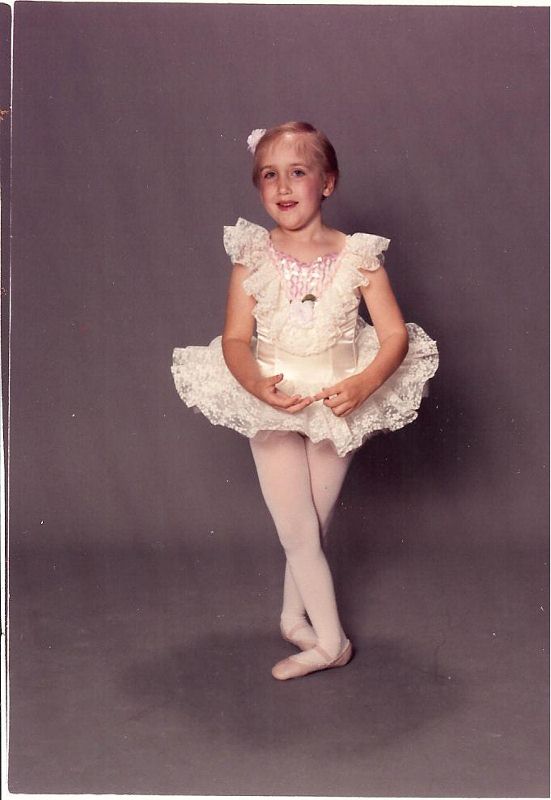
ballerinaWhen Kelsey was six she wanted to take ballet lessons. I’m embarrassed to admit how much this frightened me.  At the time she was in chemotherapy. Her muscles were weak from the chemo drugs.  She had very poor balance following her brain surgery and her weight had slipped to 34 pounds. There was an awkwardness to her left leg and arm due to her cerebral palsy.  She was bald and wore a patch over her left eye.  I was afraid she would fall and get hurt.  And, let’s be honest, I was afraid the other girls would make fun of her.

Fortunately I didn’t know how to tell my daughter about my fears, and she persisted with her request until I enrolled her in ballet class.  I had forgotten what she knew instinctively.  The process is always more important than the product.  She danced with joy.  The sheer fun of dancing was her goal. Did she fall?  Of course.  Was she awkward?  You bet.  Did it matter?  Not a bit.  Every child and adult who watched Kelsey dance gained something special from it.  Her dancing career lasted four years.  She only quit when she decided she wanted to take horseback riding lessons instead.  This time I had learned my lesson.  I signed her up without hesitating.

lesson from basketballLessons from Basketball

In fifth grade Kelsey excitedly brought home a registration form for intramural basketball.  She wanted to play.  I knew it would be a major challenge for her.  Our daughter could only run very slowly and with great difficulty.  She was also very short as her pituitary gland had been severely damaged by the cranial radiation she had received to survive cancer.  For many, many years she received a daily injection of growth hormone to grow at all.  She only had the use of one hand to play ball.  Caution bells went off inside my head again, but I had learned to ignore them.  The excitement in her eyes emphatically canceled out all those drawbacks.

We signed her up.  After the first practice the coach/gym teacher, George Losh, said he was afraid for her to play in a regular game.  He was afraid she would get hurt.  I’m certain lawsuits danced in his head.  But every child who participates in sports risks physical harm.  If her risk was greater, her need to belong was greater too.  We encouraged him to let her play.  George Losh’s physical education classes were always child-centered and structured so that every child could feel some measure of success.  For two years Kelsey played basketball harder than any girl in the league.  No, she never made a basket during a game.  Some huge successes are subtle.  In two years we never once saw a teammate treat her as anything other than as asset to the team.  After weeks of trying, when Kelsey made her first basket during practice, every girl in the entire gymnasium stopped to applaud.  Watching this young lady struggle and triumph increased the humanity of all who knew her.  On game days when we stopped in the grocery store, Kelsey quickly shed her winter coat into the grocery cart.  It took me a few times to figure out that she was so proud of her team shirt, she didn’t want it to go unnoticed under her coat.  She was thrilled to be part of a team.

Most Important Lesson of All

hurts

What is the single most important lesson Kelsey taught me?

Being excluded hurts.  Be certain of this.  The older my daughter grew, the more excluded she was… both by her peers and unfortunately by some teachers too.  Whatever educational jargon or current political term you choose to use, the results are still the same.  Being excluded hurts.

Possessing a physical disability or struggling with a different learning style did not rob my daughter of her sensitivity.  Being excluded hurts!  It hurts the children being excluded.  It robs them of the role models-their typically developing peers-they so greatly need.  It shortchange the children with ‘normal’ growth patterns too.  Inclusive environments reduce fears, build understanding, and teach compassion, patience, and tolerance in a way ‘special’ schools and ‘special’ classrooms never will.  Inclusive environments reflect life and the society in which we live.  How can we separate our children now and expect them to adjust successfully to one another at some magical, mythical time in the future?

Becoming a Great Teacher

Good teachers become great teachers when they become students themselves.  Children have much to teach us if we will only watch and listen carefully.  Kelsey’s dream of becoming a teacher did not end when her cancer returned and she died at age sixteen.  Kelsey was an incredible teacher all of her life. I cannot tell you how many times one of her teachers would come to me at the end of the year and say, “She taught me so much more than I taught her.”  I came to expect it, because I had learned that it was true.

Kelsey modeled for me how to handle rejection without becoming angry.  She showed me how to simply ignore seemingly insurmountable challenges and just focus on living life to the fullest.  She taught me how to more greatly appreciate the simple joys of family and traditions.  She modeled how to maintain a sense of humor and grace even in the face of death.  She has left the most incredible legacy for all who knew and loved her…and all my future students too.  She will forever be the greatest teacher of my life.  May her story touch your teaching life, too.

Kelsey Noel Easley

1982-1999

Kelsey's lessons

TEACH...To Change Lives

TEACH…To Change Lives

Autographed or in large quantities from the author dauna@cinci.rr.com

Also available at Amazon.com