Tag Archives: teaching

Conversations About our Schools

Standard

conversations about our schoolsTrue Stories from My Past Week

Story # 1

I was visiting an elementary school this past week observing a college senior who is student teaching this semester.  As I left her classroom I was walking through the school hallway alone.  A kindergarten boy came running down the hallway on his way to the bathroom.  He was close to me before he noticed me.

He stopped running when he saw me, looked me up and down and said, “What school did YOU go to last year?”

I laughed all the way home about his comment.

moving teachersMoving Teachers

Story #2

On Saturday I visited a school district 45 minutes away to watch my granddaughter perform in a competition.  There was a lady I had never met before sitting behind me.  She began talking about her past week as a kindergarten teacher. Once I realized she was a kindergarten teacher, I turned around to tell her my story about the little boy in the hallway.  She listened and laughed.  When she realized I was also in the teaching profession she then said, “Let me tell you about my week at school.

“On Thursday of this week the administrators called a previously unannounced teachers’ meeting.  We found out at that meeting almost all of the third through sixth grade teachers will be leaving our urban school.  They are getting rid of all but two teachers in those grades because the students’ test scores came back too low.  The only reason we kindergarten through second grade teachers still have jobs is because our students don’t yet take the standardized tests.”

I was stunned.  “Are they firing all those teachers?” I asked.

She continued her tale, “No, they are moving them to another school in our district.  The other school is in a completely different neighborhood with an entirely different clientele.  Guess what?  Not so surprisingly their tests scores are higher.  Therefore the administrators (or somebody) believes those teachers are more effective.  They are bringing those ‘effective’ teachers to our school to boost our students’ test scores.  They are moving what they consider our ineffective teachers to the other school to learn from the ‘effective’ teachers still there.”

We smiled at each other and shook our heads.

I thought to myself, “Who is making these decisions?  Did they visit in both those schools?  What are educators even thinking? Or are educators even involved in any of these decisions?”  Like the kindergarten boy I met in the hallway I wondered, “What school did THEY go to last year?”

Value Added

Story #3

school

On Sunday I was in another school watching yet another grandchild participate in a function.  Next to me sat a wonderful, committed first year teacher.  I have known this young lady for years and am very aware of her standard of excellence.  I told her the story the kindergarten teacher shared with me.  She was disappointed, but not surprised.

She described a similar circumstance she had encountered.  School districts have become so reactionary to test scores that it seems like learning takes a back seat to the almighty score.  Everyone is talking about value added.

Note from me:  When schools talk about ‘value added’ these days they only mean how did you raise test Dauna Easleyscores?  They don’t mean how well do you communicate with parents, differentiate instruction, tutor or counsel students.  Value added means only, “What did you do to raise test scores on the standardized tests?”  I’m sad about that.  A valuable teacher is so much more than one number on a page.  Ask any student what constitutes a valuable teacher.  They will describe one accurately. But students’ opinions don’t factor into the equation either.  Only standardized test scores matter anymore.
This young teacher pointed out that her subject (foreign language) isn’t covered on the state standardized test.  But the teachers still have to prove ‘value added’.  Essentially all they have to do is make up a pre-test, then teach the skill and administer their own post test.  If the scores go up, they can prove value has been added.  She is professional enough and committed enough to recognize the irony in this scenario and she is only a first year teacher.

Isn’t this just a little like asking the fox to guard the chicken coop?

value added

It makes me sad to see educators running in circles like this.  The cry for higher test scores from politicians and the media….higher test scores,  no matter what the method… is causing otherwise intelligent people to make some pretty desperate decisions.  When we don’t know what to do, we just get forced into doing something whether it is worthwhile or not.

I want to ask the politicians, government officials and reporters who are complaining about our schools…in the words of a kindergarten boy…

What schools did you go to last year?

What teachers did you interview? Did you ask them how to raise test scores?

What did students suggest about how to identify effective teachers and raise test scores?

TEACH...To Change Lives

TEACH…To Change Lives

Autographed books and large quatities available from the author: dauna @cinci.rr.com

Also available at Amazon.com

Time

Standard

two dadsTime Matters

Unfortunately children and students spell the word love  T-I-M-E.  Nothing is more valuable to them than your time. Though it may seem that the only thing they crave is the latest electronic device, what they really want most is your attention.  Remember: ninety percent of the time they spend on electronic devices connects them to people.  Simple translation?  The more time you spend with them, the more they believe you care about them.  This can be good and bad news.  Time seems to be what busy teachers and parents possess least.  Unfortunately there is no substitute.  We have to be diligent and creative about finding that time to spend with them.

robe dayA Special Request

My daughter, Kelsey, used to request a “robe day”.  Usually when we cleaned the house we’d turn up the music really loudly, stay in our robes and clean together.  When the music served up an especially favorite song we might boogie together.  But in Kelsey’s world “robe day” meant that mom wasn’t going anywhere…no work or errands… (you don’t leave the house in your robe)…just time together.  I learned that when she requested a robe day she needed my presence and that’s what I gave her.

parentingMy teacher friend, Barb, went through an especially busy time helping her husband while he was president of a national professional organization.  At the end of a busy year she thanked her children for their patience and asked the two of them what special things they would like to do.  Her son came up with a list of specific outings that he desired, but her younger daughter, Aimee, simply said,  “Mom, remember when we used to water the flowers together?  That’s what I want to do, just you and I watering flowers together.”  I’ve never forgotten that one simple request.  While we race around in our career trying to provide material items we think our children crave, what they really want most is simply our time.

How Can Teachers Find Time?

teachersFor teachers, finding this one-on-one time can be especially challenging.  Greeting each student as they enter the classroom is a start, but real connections require so much more.  In a high school setting I’ve learned that invariably certain students will figure out when my plan period or lunch time is and somehow just start showing up.  It’s hard not to think, “I need this time to answer emails or run to the copy machine.”  Because, in fact, it seems like these days the pressure we face to post each grade and syllabus online promptly, robs us of one-on-one time with our students.  As much as possible I fight the urge to spend my planning time serving the computer instead of providing a listening ear to my students.

taking a closer look at schools

Rapport, especially a trusting one, unfortunately takes time.  A student will show up unannounced with seemingly no agenda several times before s/he trusts you enough to talk to you about what is really on his/her mind.  Field trips are another good way to connect.  I’ve had some of my best discussions with students on a long bus ride or in a hotel room spending the night at a competition.  Outside the classroom the teacher seems more like a mentor and less like someone who averages grades.

baseball is lifeOther Ways to Connect

Speaking of outside the classroom, I try to attend sports events, drama productions and graduation parties to which I am invited.  I’ve gone to dance recitals, sign language concerts, gymnastics meets, winter guard showcases, bar mitzvahs, reunions, movies, showers and weddings.  Why?  A relationship doesn’t start and stop at the classroom door.  The time within the classroom walls just isn’t enough to develop the ongoing relationships I want to have with my students.  We can’t put more hours into a day, but we can think in creative ways to use that time well.

A few years ago our high school was in the state baseball championship.  I took my grandson (who was a young baseball player) and drove two hours to the state capital to see it.  In that way I spent quality time with my grandson while also supporting the efforts of my students.  My young granddaughters and husband go with me to drama productions and color guard showcases.  I get to see my students excelling in a non academic arena and spend time showing my grandchildren an extra curricular activity in which they may want to participate when they are older.  Guess what?  My grandson is now a varsity baseball player making plans to play college baseball.  My oldest granddaughter is in high school color guard and winter guard and another granddaughter is on the school gymnastics team.

Unfortunately we can’t put more hours in a day, but we can think outside the clock and look for winning ways to make time for all whom we love and want to encourage.

TEACH...To Change Lives

TEACH…To Change Lives

Available autographed or in large quantities from the author:  dauna@cinci.rr.com

Also available at Amazon.com

I Believe in You

Standard

teacherTeachers Make the Difference

Effective schools are about so much more than just memorization of academic facts.  The very best schools have teachers who come into the profession to change lives.  They come into the classroom to share their passion for a subject, but refuse to stop there.  They want to make a permanent difference in their students’ lives.  They are constantly looking for ways to make that happen.

But sometimes the challenges teachers face in the classroom seem insurmountable.  Our American schools welcome every learning style, nationality, culture, and disability. They welcome students who are homeless, children of incarcerated parents, children born with the consequences of their parents’ drug addictions and/or illiteracy. That is what makes America wonderful and unique.  We value and are dedicated to an education for all children.  Our schools are not merely available for elite learners, as is the case in many other countries to whom we are unfavorably compared.  Committed teachers in the USA make it happen whether or not they have the financial support of their community, the supplies they need or the training they crave.

These days I help supervise and train young teachers.  They are optimistic, committed and begging for ideas to make a positive difference in their students’ lives.

Are you afraid?Let’s Start with “A”

Are Your Students Afraid?

Here’s an important piece of information not all students know or believe.  You (the teacher) have to tell them or they won’t know.  Everyone is afraid.  Adults are afraid when they start a new job, are assigned a new project or (gasp!) face new computer software in the workplace.  Many celebrities are afraid when they take the stage.  Great speakers are often afraid before a speech.

What separates the successes from the people who just stand along the sidelines and never get started isn’t the lack of being afraid.  They simply take action in spite of being afraid.  Only action can overcome fear.  When we are afraid of something and don’t confront it, the fear grows.  Inactivity fertilizes fear.  Next time we experience that situation we are even more afraid.  I have a crazy friend who is so terrified of bugs that she drove a car without air conditioning with the windows completely rolled up in Florida during the summer time because she was afraid a bug might fly in the window while she was driving. It was probably 120 degrees inside that car.  I know because I was in it!  (I wish I had just made that up but unfortunately it is a true story).

Only action breaks the chain of fear.  What can a teacher do?  Talk to students about a time you were afraid.  I was almost fifty when I wrote my first book.  Was I afraid no one would want to read it?  Yes.  Talk to them honestly and frankly about how you overcame a fear.  Help them make a plan for confronting something they have been afraid of approaching.  If we don’t do this, when they feel fear they may believe it is reason to give up on a dream.  They may believe that experiencing the fear is a sign telling them it is not wise to move forward.  They need to understand that fear is just a step in the process and that every successful person faces it and pushes forward anyway.

I believe in you“B”

Believe in Your Students

This is an outrageously obvious but too frequently overlooked concept.  Children very frequently see their future successes first through the eyes of an adult whom they love or admire.  Even before they can dream a dream for themselves we can plant a seed within them.  Watch how still and receptive they become when you begin telling them about a skill in which you see them excel.  I’ve told many teens that they are better writers that I was at their age.  I’m not faking this.  It’s the truth and that’s important.  Children can discern honesty.  I tell them I can’t wait to read their first book.  I ask them in advance for an autographed copy of their future books.  Someday I know I’ll have those books on my shelf.

Usually when we truly have a gift we don’t notice it so much.  It comes easily to us and we assume everyone can do it.  We believe if we can do this so easily, it must not be any big deal  It is a breakthrough moment when we realize that the thing we do which seems so trivial to us, is a talent that others admire.

It’s easy for me to be in awe of students with artistic ability as I have absolutely no talent whatsoever along these lines. But I can compliment them, ask them to design contest posters and scrapbook pages  I can ask them for a copy of a favorite drawing to hang in my classroom.  I don’t have to be an art teacher to help them realize they have artistic talent.  All of these strategies are outside my curriculum, but encouraging a talent which may become a future career may be the most important thing that takes place in my classroom on any given day.  Recently I was watching a documentary on a famous Hollywood artist.  How did his dream to make art his career begin?  His kindergarten teacher stood him up in front of her class and told his peers that he would be a famous artist someday.  Never underestimate the power of a teacher’s words to shape a life.

creative careers“C”

Creative Careers

Look for ways to help the important children in your life to think creatively about careers.  There are thousands of careers that our children never think about simply because they have no awareness of them.  The same is true of adults.

When my younger daughter was sick it was quite an eye opener for me in so many ways.  I never realized that hospitals are actually small communities.  It takes so many kinds of careers to make a hospital effective.  Why do we only think of the doctors and nurses?

I began to ask each technician about their job.  How did you find out about this career?  What do you like about your job?  How much schooling do you need?  I learned about phlebotomists, respiratory therapists, physical and occupational therapists, x-ray and MRI technicians, social workers, audiologists, patient advocates, dieticians, child life specialists and the person who weighs and measures your child each time you visit the oncology clinic.

One little girl I taught in preschool eventually became the person who runs the machine in the operating room that keeps patients alive during heart and lung transplants.  We need to develop a curiosity about careers so we can help our children find just the right one that ignites a flame in their spirit.  Our curiosity and sharing will encourage their curiosity to explore. Have them think creatively.  What do they love to do that they could turn into a career?  What inspires them?  The most satisfied adults turn their favorite pastimes into careers by thinking creatively.

heart words

Great teachers teach much more than the curriculum.  They excite learners.  They recognize and encourage talents.  They explore and share possibilities.  They listen, counsel, and validate the worth of every student.  They are not satisfied until they TEACH…To Change Lives.

TEACH...To Change Lives

TEACH…To Change Lives

Available autographed or in large quantities from the author dauna@cinci.rr.com

Also available at Amazon.com

Lessons for Teachers

Standard

The teacher learnsLessons from the Greatest Teacher Of My Life

Ironically we met in a hospital and not in a school.  She wasn’t even the one who inspired me to become a teacher.  When we met, I had already been a teacher myself for fifteen years.  But that just made it easier for me to recognize what a master teacher she was.  I made myself a promise.  I would watch her carefully, ask questions, and learn everything I could.

The greatest teacher of my life is my daughter, Kelsey.  Born with cerebral palsy, she later developed brain cancer when she was five years old.  Vivid and remarkable are the lessons she taught me. I am a better teacher forever because of her patience with me.

learn to tie shoesA Challenge

When Kelsey was four, she wanted to learn to tie her shoes.  A best friend had accomplished this important childhood feat.  Even though I had worked with preschoolers for many years, I was stumped.  Because of cerebral palsy Kelsey was left with very little use of the fingers and thumb on her left hand.  I was unable to tie a shoe with one hand.  How could I teach her?  Medical insurance refused to cover occupational or physical therapy.  It seems the term “pre-existing condition” excuses them, forever, from a child’s needs.  We struggled for three and a half years with this one maddeningly simple task.  But she mastered it.  On the first day of summer vacation when she was seven and a half years old, as I watched and encouraged her she taught herself to tie her shoes with one hand.  She beamed from ear to ear.  I cried.

Lesson Learned

I noticed something important after she conquered her shoe laces.  No one ever asked her how old she was when she mastered the skill.  Lesson learned by this teacher?  In the long run learning pace is of little importance.  Accomplishing meaningful goals within our own timetable is what matters most.

Then Came the Cancer

Kelsey during cancer treatment

Throughout her cancer treatment, Kelsey gained some control over her circumstances through play.  Whenever we were in the hospital, she wanted to play “restaurant”.  She was always the waitress and I was cast as the customer.  Hours on end we played this game of her choice.  She lost herself in this dramatic- play-acting; it was if we weren’t in the hospital at all.

When we were home where she felt safe, she always wanted to play “hospital.”  In this game she was the doctor – in charge for a change.  Family members and friends had to be the patients. She developed a game called “radiation” that had an uncanny realism to it.  Her play often included medical terms her peers and many adults didn’t understand, but it didn’t matter.  She had found a healthy way to cope with the scary things that were happening to her in the hospital.  She did much better than cope.  She was happy.  What had I learned?  She taught me firsthand and emphatically about the important therapeutic value of play.

The Enthusiastic Ballerina

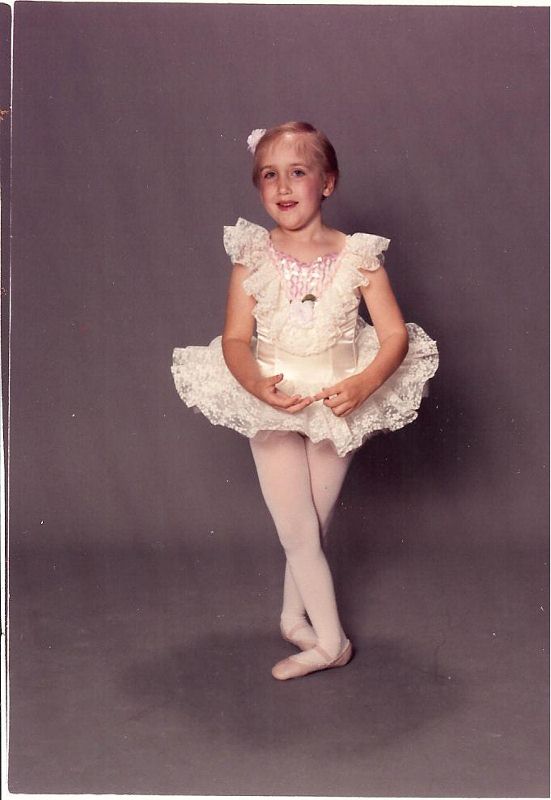
ballerinaWhen Kelsey was six she wanted to take ballet lessons. I’m embarrassed to admit how much this frightened me.  At the time she was in chemotherapy. Her muscles were weak from the chemo drugs.  She had very poor balance following her brain surgery and her weight had slipped to 34 pounds. There was an awkwardness to her left leg and arm due to her cerebral palsy.  She was bald and wore a patch over her left eye.  I was afraid she would fall and get hurt.  And, let’s be honest, I was afraid the other girls would make fun of her.

Fortunately I didn’t know how to tell my daughter about my fears, and she persisted with her request until I enrolled her in ballet class.  I had forgotten what she knew instinctively.  The process is always more important than the product.  She danced with joy.  The sheer fun of dancing was her goal. Did she fall?  Of course.  Was she awkward?  You bet.  Did it matter?  Not a bit.  Every child and adult who watched Kelsey dance gained something special from it.  Her dancing career lasted four years.  She only quit when she decided she wanted to take horseback riding lessons instead.  This time I had learned my lesson.  I signed her up without hesitating.

lesson from basketballLessons from Basketball

In fifth grade Kelsey excitedly brought home a registration form for intramural basketball.  She wanted to play.  I knew it would be a major challenge for her.  Our daughter could only run very slowly and with great difficulty.  She was also very short as her pituitary gland had been severely damaged by the cranial radiation she had received to survive cancer.  For many, many years she received a daily injection of growth hormone to grow at all.  She only had the use of one hand to play ball.  Caution bells went off inside my head again, but I had learned to ignore them.  The excitement in her eyes emphatically canceled out all those drawbacks.

We signed her up.  After the first practice the coach/gym teacher, George Losh, said he was afraid for her to play in a regular game.  He was afraid she would get hurt.  I’m certain lawsuits danced in his head.  But every child who participates in sports risks physical harm.  If her risk was greater, her need to belong was greater too.  We encouraged him to let her play.  George Losh’s physical education classes were always child-centered and structured so that every child could feel some measure of success.  For two years Kelsey played basketball harder than any girl in the league.  No, she never made a basket during a game.  Some huge successes are subtle.  In two years we never once saw a teammate treat her as anything other than as asset to the team.  After weeks of trying, when Kelsey made her first basket during practice, every girl in the entire gymnasium stopped to applaud.  Watching this young lady struggle and triumph increased the humanity of all who knew her.  On game days when we stopped in the grocery store, Kelsey quickly shed her winter coat into the grocery cart.  It took me a few times to figure out that she was so proud of her team shirt, she didn’t want it to go unnoticed under her coat.  She was thrilled to be part of a team.

Most Important Lesson of All

hurts

What is the single most important lesson Kelsey taught me?

Being excluded hurts.  Be certain of this.  The older my daughter grew, the more excluded she was… both by her peers and unfortunately by some teachers too.  Whatever educational jargon or current political term you choose to use, the results are still the same.  Being excluded hurts.

Possessing a physical disability or struggling with a different learning style did not rob my daughter of her sensitivity.  Being excluded hurts!  It hurts the children being excluded.  It robs them of the role models-their typically developing peers-they so greatly need.  It shortchange the children with ‘normal’ growth patterns too.  Inclusive environments reduce fears, build understanding, and teach compassion, patience, and tolerance in a way ‘special’ schools and ‘special’ classrooms never will.  Inclusive environments reflect life and the society in which we live.  How can we separate our children now and expect them to adjust successfully to one another at some magical, mythical time in the future?

Becoming a Great Teacher

Good teachers become great teachers when they become students themselves.  Children have much to teach us if we will only watch and listen carefully.  Kelsey’s dream of becoming a teacher did not end when her cancer returned and she died at age sixteen.  Kelsey was an incredible teacher all of her life. I cannot tell you how many times one of her teachers would come to me at the end of the year and say, “She taught me so much more than I taught her.”  I came to expect it, because I had learned that it was true.

Kelsey modeled for me how to handle rejection without becoming angry.  She showed me how to simply ignore seemingly insurmountable challenges and just focus on living life to the fullest.  She taught me how to more greatly appreciate the simple joys of family and traditions.  She modeled how to maintain a sense of humor and grace even in the face of death.  She has left the most incredible legacy for all who knew and loved her…and all my future students too.  She will forever be the greatest teacher of my life.  May her story touch your teaching life, too.

Kelsey Noel Easley

1982-1999

Kelsey's lessons

TEACH...To Change Lives

TEACH…To Change Lives

Autographed or in large quantities from the author dauna@cinci.rr.com

Also available at Amazon.com

The Kiss

Standard

singing off keySinging Off Key

“Then he kissed me,” sang Nikki out loud and a little off-key.  My high school senior students were cutting, gluing, coloring and assembling learning games for preschoolers.  It wasn’t one of those times the classroom needed to be quiet.  No one responded to Nikki’s short impromptu song.  Some were having conversations of their own as they worked.

“Then he kissed me,” chimed Nikki again.  I was working on something at my desk.  No comment came from me either.

“Then he kissed me,” sang Nikki a third time as she continued to work.  Finally she turned to her classmates.   “I can’t get that song out of my head.  How does the rest of it go?”  A few classmates looked interested but no correct answers came forth.

Someone said, “I think it’s from a movie.”

Another one offered, “Was it in Pretty Woman?”

Silently I chuckled to myself.  That song was from my era, way, way back. Of course, a teenager who heard it in a movie today might think it was more recent.  A brief conversation among my students followed.  No one asked my opinion.  Several students suggested movies they thought featured the song. I made a quick internal decision.

Be Ready

Teachable Moments = Reachable Moments

Act Quickly

singing off keyWithout looking up from my work, giving absolutely no eye contact, I started to sing slowly.

“Each time I saw him I couldn’t wait to see him again.”

I stopped singing, but I continued working.  I still had not looked up.  From the periphery of my vision I could see them glancing at one another.  Are we hearing things?  Was the teacher singing?  No way.  I waited a long pause.  Eyes down, still looking intent on my work, I sang another line with feeling.

“I wanted to let him know that he was more than a friend.”

Oh good grief the teacher was singing.  How embarrassing was this?  You could feel the discomfort in the room.  Had Mrs. Easley gone mad?  But not one person spoke.  All eyes were glued to me.  Finally I looked up as I sang the next line.  I made slow and deliberate eye contact with each of them.

“I didn’t know just what to do”

(Pause)

“And so I whispered ‘I love you’.”

I waited even a longer pause.  They were frozen.  No one even breathed.  They had almost forgotten how embarrassed they were.  They were totally hooked into the story of the song.  When I knew I “had” them all I sang on slowly and deliberately.

He said that he loved me too…

And then he kissed me.”

The kiss

You could feel the sigh in the room.  Not one person said a word.  Nobody wanted to break the spell. Finally I spoke.

“Ladies, a kiss well done, I mean really well done is the sexiest experience in the world.  That’s because a totally great kiss carries so much emotion in it.  If you don’t think so, you’ve been kissing the wrong toads.  Take your time…and enjoy the kisses, ladies.”

A couple of the girls nodded.  I happened to be teaching in what we call an at-risk environment. This senior class had several young mothers and a couple of pregnant students too.  Clearly some toads had already arrived.

toads had arrived

But you could see that they agreed with me.  I wanted to remind them that they truly deserved some great kisses.  Slowly and only gradually they went back to work.  There was a hush, a closeness, in the room.  “The Kiss Lesson” wasn’t anywhere in my lesson plans or daily objectives.  If I had been with another group of students it might never have happened.  But it was the best and most memorable thing that happened that day…for all of us.

TEACH...To Change Lives

TEACH…To Change Lives

Available at Amazon.com

Or autographed or in large quantities from the author dauna@cinci.rr.com

Classroom Activities that are Memorable

Standard

get out of townGet Out of Town

One of the tough things about teaching is that you are so strictly tied into the school calendar.  In the middle of winter, when I’d like to be heading for the sunshine state, I’m stuck in the classroom.  Truth is, ten months a year classroom educators are just about as tied to a static location as anyone possibly can be.

Early in my career I discovered an effective way to get out-of-town when bad weather or boredom set in.  I plan an imaginary jet trip.  Don’t scoff until you’ve tried it.  The first time I attempted it, I admit I was young and green and would try anything.  My third graders were learning about New York City. In an attempt to make the experience more creative than simply reading from a textbook, I dreamed up taking an imaginary jet trip to the Big Apple.  I really talked it up to the children. In fact, I made it so real several of my students just mentally cancelled out the word “imaginary.”  Parents were calling the school to tell the principal or me that their children were afraid to get on the plane.  I had a lot of explaining to do.

Taking Off

imaginary jet trip

On the day of the “flight” the children arrived with their suitcases packed and their dads’ belts in tow.  We were going to use those dads’ belts as seat belts on the plane. Beforehand the children were given a weather report of the intended destination and some advice on what they might want to pack.  We always pretended we were going to spend the night so pajamas and favorite sleep items came along.  One of the most interesting activities we did while flying’was to unpack each child’s suitcase and examine what they had chosen to bring along.

For our flight the classroom chairs were arranged as seats might be on the inside of a jet.  We used tickets, now generated by a computer which made them very realistic and provided a great souvenir.  Students acted the parts of all the airline personnel.  We had a pilot and co-pilot complete with earphones and hats for realism.  We had ticket takers who stamped the tickets and baggage claim agents who tagged the luggage and took it away to the rear of the plane.  We usually used a wagon for a baggage cart.  Flight attendants welcomed the passengers aboard as they walked over a couple of steps we had arranged next to the plane.  Attendants then instructed the passengers to stow items under their seats and checked to make sure seatbelts were securely fastened.  They also served a snack while en route.  Personnel in the front office of the school used the intercom to welcome the passengers aboard the flight and invited them to sit back and relax as they flew.

We never had a plane crash, but we did one time encounter quite a bit of turbulance. 

turbulance

We were comfortably belted into our seats and watching a slide show of  New York tourist attractions when the school fire alarm went off.  I silently cursed the office personnel who I assumed were doing this as a prank.  The alarm had sounded shortly after they had come over the PA system to welcome us aboard.  They knew all my students were belted into their seats.  But in front of the students there was nothing to do but struggle along with them to help them unfasten their dads’ belts one by one.

We were by far the last class to arrive outside.  Finally we received the “all clear” signal to reenter the building.  I was doing my best to recreate the imaginary mood of the flight and had everyone buckled back in and almost calm when the fire alarm went off again.  I couldn’t believe it.  The first time might have been funny, but his was downright irritating.  It took us even longer this time to make it to our designated safe location.  I later learned that the fire inspector had indeed paid an unexpected visit to our school.  Because of my class we had flunked the inspection.  The fire official had waited a short time to give us a second chance, but we flunked again, royally.  Oops!  Apparently creativity has its price.

While I first used this activity in the elementary grades, I admit I have used it successfully for just about every age group.  It has become a yearly tradition in my classroom.  My senior early childhood education students get very involved with setting up the plans and activities for our laboratory preschool.  If I’m not teaching in an inflexible social studies curriculum, I allow my student a lot of freedom to choose the destination.  Two popular trips during the winter months are Hawaii and Disney World.  The students have fun pulling out their summer clothes to pack in the middle of winter, along with sunglasses, bathing suits, suntan lotion, and beach towels.  Some even come to school in shorts, a feat in Ohio in the winter months.  One of my seniors, wore a grass skirt and strategically placed half coconuts over her blouse.  That picture made the school yearbook. If we travel to Hawaii, we make grass skirts from green plastic trash bags and learn to dance the Hula to Hawaiian music.  We get out our beach towels and “sunbathe” during preschool story time.  We play beach blanket bingo, during which students pretend to sunbathe on a towel until the music stops and then run to a new towel.  We cut open a fresh pineapple for snack.  We make leis to wear home. Since camcorders and video cams have become popular, we can usually watch a video of our destination and parents love making their own recordings of our trip.  We always reboard our plane and fly home just in time to meet them.

coming home

Coming Home Again

The variations are as endless as your imagination, and so are the opportunities for learning.  When I taught in the primary grades, if we were traveling to China, I had a parent bring in Chinese food for lunch and we ate with chopsticks.  Going to Mexico?  Learn the Mexican Hat Dance, eat Mexican food and break a pinata.  Take a look at your curriculum.  What do you need to teach that you could make more realistic and more fun by imaginatively traveling to that destination?  Invite in a guest speaker with appropriate costumes.  If you’re studying a particular era in history, turn your classroom into a time machine and travel backwards in time.  Bring your classroom alive.  The sky is the limit.

TEACH...To Change Lives

TEACH…To Change Lives
Available at Amazon.com

Or autographed or in large quantities from the author dauna@cinci.rr.com

Bright Ideas for Dark Days

Standard

bright ideas for dark days          The Teacher Was Absent

I post a new thought for teachers every Monday at this blog site.  However, on Monday December 24, my post was missing.  My apologies.  No, I wasn’t strolling on the beach as the photo seems to indicate.  I only wish that were the case.  My hubby was in the midst of a serious unexpected medical emergency.  I was at the hospital with him where I needed to be.  Yes, we spent the 10 days surrounding Christmas at the hospital, but our family came to see us there on Christmas Eve and Christmas Day.  He continues to recover.  Thank you for your understanding.

Twenty Bright Ideas for Dark Days

Bight Ideas fo dark days

When the memory of those beautiful fall days begins to dim and spring still seems a lifetime away, we may feel our classroom enthusiasm begin to take a nose dive.  Some of you may drive to school and/or even home in the dark.  Do you need some ways to keep yourself upbeat for your students?  Remember:  We can’t pass along what we don’t possess.  Try some of these ideas that worked for me.

  1. Fake it till you make it.  This isn’t phony.  William James, the psychologist called this the “as if” principle.  If you want to feel enthusiastic act ‘as if’ you already are.  I learned this lesson clearly during a particularly tough time in my personal life.  It was my job to be at the school entrance to greet young children when they arrived in the morning.  No matter how down in the dumps I felt when I arrived, after 20 minutes of greeting one child after another with a big smile and a friendly observation or two, I felt better for the whole day.
  2. Allow for spontaneity.  Change your plans.  Put a new twist on an old lesson.  What is something you have never tried in your classroom before?  Now is the time!  When I was writing my two books for teachers I discovered something that surprised me.  The stories I wrote about were almost always the first time I tried an activity in the classroom.   If the activity was a success, then I would do it again in subsequent years.  But it was almost always the first time I did the activity that was the “memory maker.”  Fresh ideas spark our creativity and engage students in new ways. 
  3. Build an encouragement folder.  Whenever someone writes you a positive note for any reason, pop that note into a folder.  Pull out all those notes when you need to recharge your batteries.  It will pump up your confidence and make you feel great.
  4. Lighten up!  When you find yourself getting really angry about something, step back and try to laugh about it.  Mentally make it into a comedy routine if you have to.  In our profession we spend way too much time lamenting about policies and new systems that have really nothing to do with teaching.  Focus on your students and the teaching.  That is what attacted us to this profession. Let the other stuff bounce off you like a kangaroo on a pogo stick.
  5. Read motivational books or inspirational thoughts late at night or before work in the morning. The morning news depresses me.  I have found that I can’t listen to how many murders, rapes and fires happened overnight and then teach teenagers during the day.  But with the right music and uplifting thoughts in my head, I’m the best that I can be.  Don’t my students deserve this?
  6. Practice kindness.  Kindness helps absolutely everything.  It is the language the blind can see and the deaf can hear.  I’m far from perfect but I can tell you this:  The times I haven’t been kind haunt me.  Kindness lifts everyone, not just the receiver of the kindness, but also the giver too.
  7. Take a class that will help you reflect on your job in a positive way.  I teach future teachers, but still I take classes with the same titles as the classes I teach.  I always learn new ideas and teaching strategies in every class in which I enroll.  I can also be a valuable contributor to a class I’m taking.   Every time I have taken a class I’ve come back to the classroom with fresh ideas to try with my students.  I don’t care how experienced you are, there are always new things to learn if your attitude is in the right place.
  8. Write down new ideas the moment they pop into your mind. Try to take some action on them within 24 hours.  Someone invented sticky notes just for me.  I’m full of ideas that are gone in an instant.  The creativity of the sticky notes compels me to use them to organize my thoughts.  There are arrows, tabs, neon bursts, and 4×6 inch sticky notes for more lengthy ideas.  Use them to jot down ideas and then take action.  Action will put you in a better frame of mind 100% of the time. 
  9. Improve your work space.  Buy a new organizer or select a new picture.  I work best when I’m surrounded by quotes that inspire me.  If you don’t have an extra nickel to spare, clean your desk area.  I’m very creative but my desk is always a mess.  Every time I take the time to clear my desk it lifts my spirits.  What is an added bonus?  I find great things.  I come across a new idea for teaching or writing that I only had time to jot down previously.  When I discover it again, I run with it.
  10. Purge.  Don’t stop with just your desk.  Clean out your files as though you were taking a new job.  That happened to me once.  On the last day of school I didn’t know that I would be taking a new job during the summer months.  I left years of files and had to start fresh.  At first it was scary, but it also felt great.  I now had room to file all the new ideas and items I needed to do my job now.  Purge as though you are moving.
  11. Record uplifting music.  Listen to it on the way to work and while you are grading papers.  I always play music as my students enter the room.  It feels as though something exciting is going to happen.
  12. Compliment a co-worker.  Better yet, put the compliment in writing.  It will uplift the person receiving the compliment, but it will also make you feel great.  Try to encourage and compliment at least one co-worker per day.  Make it your own secret challenge.
  13. Set goals that move and inspire you.  Don’t choose hollow goals or goals someone else assigns you.  Set goals that matter to you and move forward on them.  When we feel great about ourselves we can better inspire and motivate others.
  14. Create a new bulletin board or display in your classroom.  Visually appealing surroundings encourage us and our students.  Look at your classroom as though you are walking in the door for the first time.  What strikes you? 
  15. Keep a gratitude journal.  I record five things for which I am grateful every night before I go to bed.  During the summer months I do this in the morning instead of at night.  This activity will change the focus of your day.  You will begin to look for positive events rather than focus on annoyances.
  16. Solve a problem.  Instead of complaining about how things ought to be, come up with a solution.  Everyone will be grateful.  You’ll be a hero and that feels terrific.
  17. Attend an educational conference.  You’ll rub elbows with other educators who are serious about improving their skills.  You’ll return to school rejuvenated and ready to try some new ideas you discover.  Better yet, become a presenter at a conference.  Share ideas that have worked in your classroom.
  18. Change your routine.  Have a mental list of some things you’ve been wanting to do someday?  We all have a list like this.  Take a weekend trip to a place you’ve always wanted to visit.  Call up an old friend or drop them an email.
  19. Share ideas.  You have so much talent among your co-workers.  Find a way to have each of them share their best ideas with the rest of you.  I once ran a monthly professional development experience in the school where I worked.  Each month I had a few teachers share their best ideas.  Don’t overlook the teacher next door.
  20. Most important tip of all!  Don’t eat lunch with the crab apples.  During this valuable time of day, surround yourself with people who speak highly of students and those who are excited about making their classrooms and your school a positive place to be.

Twenty tips may overwhelm you.  But I believe if you try even a few of these ideas you won’t be just counting the days until spring; you’ll be doing things that make every day count.  Welcome 2013 into your life and your classroom.

TEACH…To Change Lives

Available at Amazon.com

Or autographed or in large quantities directly from the author  dauna@cinci.rr.com

TEACH...To Change Lives

Hope

Standard

Hope

Teaching Hope

The holiday season helps us remember that teaching our students to hope is our most important job.  While you enjoy your holiday break, take time to reflect on the important role that hope plays in your classroom.  How can you instill hope in your students in the new year?

Why?

Hope accelerates learning.

Hope is the lubricant for all future successes.

We need to sell hope harder than we push our subject matter.

Without hope winning in life is impossible.

Hope will help steer your students through all of life’s challenges.

We need to instill hope first before we assign any project.

A Dozen Ways to Build Hope

Building hope

  1. Look for ways to make your students shine.  Everyone has some kind of special talent. Find it and then find a way to capitalize on it.
  2. Describe in detail the successes you see in a student’s future.  Hope may first come from someone we admire visualizing our success and describing it to us.
  3. Make one-on-one eye contact with a student.  Don’t just glance or teach over their heads.
  4. Describe to your students a time in your own life when you may have felt hopeless.  Then recount how the situation resolved itself.
  5. Point out progress.  Don’t save all your accolades for perfection.
  6. Bring your own enthusiasm to the classroom. Not feeling it?  Fake it.
  7. Sit down next to a student at their desk and chat.
  8. Be approachable.  Let students know how they can find you for a private conversation.
  9. Listen!
  10. Hear them out as they describe all the reasons why they can’t win, be accepted, or succeed.  Then YOU make them listen to all the reasons why you know they can.  Support your opinions with stories, facts and observations.
  11. Reflect.  Think about specific students while you aren’t with them and brainstorm ways in which you can build hope within them.
  12. Let them know you were thinking about them.  Be specific.  “While I was driving to school, I was thinking about you.  Here’s what I was thinking…You have no idea how talented you are.” (It is so powerful to know that a teacher cares about us and thinks about our well-being even when we aren’t in the classroom).

TEACH...To Change Lives

TEACH…To Change Lives
Available at Amazon.com

 Autographed or in large quantities from the author dauna@cinci.rr.com

The Power of Quiet Words

Standard

Can You Hear Me Now?

heart wordsA few years back I spotted a small hand-made pillow at a craft fair which had wonderful words embroidered on it.  I purchased it and put in on the seat of an old-fashioned school desk that I kept in a corner of my classroom.  I used it as a reminder for me and all the future teachers that I taught.  What did the embroidery say?

“Words that soak into the heart are whispered, never yelled.”

Since I have retired from full-time teaching, that little pillow sits in a small child-sized wicker rocker that I have in my home for my grandchildren.  What powerful words those are.

Just this last week as I traveled from school to school to observe future teachers in training, one of them complained to me.  “My voice doesn’t travel well in the classroom.  I don’t think I’ll ever be able to control my students because they won’t be able to hear me.”  I explained to that young aspiring teacher that a soft voice can be an asset, if you know how to use it well.  I quoted my pillow.

When to Yell

Never.  Alright, maybe if there is a tsunami wave on the beach right outside your school building and you quickly enter your noisy school cafeteria.  You must get them to listen to immediate emergency directions.  THEN you may yell…once.

But in every other teaching situation, to speak effectively, speak quietly.  When someone yells at us, we Don't yellfreeze.  Our survival instinct kicks in and we desperately try to separate ourselves from the environment.  We feel like a raccoon caught in bright headlights.  Unfortunately students usually cannot just get up and leave a classroom when a teacher yells at them.  But they flee mentally or emotionally when someone raises their voice.  The teacher may be yelling, trying to make a point, but the student isn’t really “there” at all.  And yet there is some kind of instinct we too often develop while growing up watching our parents.  Why is it we think, “If they don’t get it, we should just say it again…only louder.” ? We repeat the same explanations  in the exact same way only with more volume, then they’ll understand.  Right?  Wrong.

shhhhQuiet words sink in.  Words spoken softly don’t shut us down.  Quiet words encourage us and help us breakthrough to understanding.  They reassure us of our worth.  When you sit next to a student and give them kind, quiet, reassuring directions and compliments it opens a student to learning heights they may have previously doubted they would ever achieve.  Quiet words invite us into the learning process.  They break through our resistance to new ideas and thoughts.

I once watched a master teacher named Nancy McClimans demonstrate the power of quiet words.  She always spoke to her first graders in a quiet, calm voice.  When she really wanted their attention, she would speak quietly and with each sentence she would make her voice just a little bit softer.  Within seconds the students were completely still, giving her total eye contact and even leaning forward to catch every important word.  Try this strategy.  You will be amazed at its power.

Quiet calm words are even more important when working with students from an ‘at risk’ environment.  Too many of today’s children hear yelling in their homes.  It  also surrounds them on reality television.  On TV students watch talk shows and opinion panels during which every participant over talks or even over shouts every other member of the panel.  How do you effectively respond to a shouting out-of-control student? There is only one way… with quiet, calm words.

Teach to Change Lives small cover jpeg

TEACH…To Change Lives

Available at Amazon.com  

Or autographed or in large quantities from the author at dauna@cinci.rr.com

An apology and a disclaimer.  WordPress (my blog site) has made some changes which I’m finding difficult to maneuver.  I usually post on Monday mornings, but last week on Sunday Dec. 2nd I apparently hit a wrong button and my article posted before it was finished.  It didn’t have a conclusion or even any editing. At that point words were spelled incorrectly and some words were even missing.  I fear some of my most loyal followers who subscribe to my blog got a far inferior version of my regular blog.  My humble apologies.  Please be patient with me as I learn the new twists and turns of wordpress.

Gifts from the Classroom

Standard

1770209_sWhat is the best holiday gift you have ever received? From my childhood I remember a much wished for and cherished bike that sat in front of the Christmas tree, the only new one I ever owned.  This was a stunning event in the household where I grew up, because we usually didn’t receive what we most wanted.  However the elves must have been extremely busy that year because they didn’t do a good job of assembling this bike and it never actually worked just right.  Oh, it looked very pretty, but sometimes when you turned the handle bars, the front wheel didn’t turn – not a reliable characteristic for a bike.  I probably jumped more miles on my on my beloved pogo stick than I ever rode on that bike.  Oh, could this gal pogo!  I bounced everywhere.  Yep, I’d have to say that my pogo stick was my all time favorite gift from childhood.

What I Admire About You

What I admire about youBut as we mature we come to realize the truth of that adage, “The best things in life aren’t  things.”  They truly aren’t.  The best thing in life is making others feel good about themselves.  We all long to feel valued and appreciated.   About two-thirds of the way through my teaching career I discovered an activity that helped accomplish this goal.  I always planned this activity for sometime during the holidays.

As my students entered the classroom they received a stack of blank index cards…one for each of their classmates and one for the teacher.  Silently I had them write the name of a classmate at the top of each card and then write one thing they admired about that student.  I encouraged them to be as specific as possible.  General statements like, “You are a great gal” are not as powerful as “I admire the way you always have something encouraging to say when someone in our class is down in the dumps.”  They were required to write one about me (the teacher) also.  Let me tell you high school teachers need their encouragement too.  There were a few cautions and guidelines I voiced ahead of time.  Absolutely no ‘put downs” would be tolerated, only positive comments were permitted.

A Confession

I admit that occasionally I had a group of students so at odds with one another before we began this activity, that I didn’t require that they write a compliment to every classmate.  I might limit it to 10 or 12 compliments written using time parameters as an excuse.  I wanted to make certain no one was ever hurt by this activity.  But when you set limits like these, you always risk the omission of someone being complimented.  I only used these limits a time or two.  Here’s the real beauty of the activity.  Each time I limited the number of compliments they had to provide, they always got half way through the activity and then THEY requested of ME that they be able to write something they admired about everyone in the class.  That is how great is the power of writing positive words about someone.

Then Comes the Magic

magic

At the end of our time limit, we circled our desks and orally read one card at a time.  One student would read aloud to one other student a single comment while all others listened.  Then the next person in the circle would read a comment about someone else.  I encouraged them to keep changing the people who were being complimented.  “Try and choose someone no one has yet read about,” was my occasional  reminder.  When it was my turn to read I always started by complimenting someone I felt was considered just a little outside the inner circle…the kids not quickly accepted by their peers.  As we listened around and around that circle twenty or thirty revolutions, you could feel the climate of our classroom change. They smiled more easily, eyes moistened, shoulders relaxed, heads nodded as everyone agreed with a compliment being shared orally, and teens relaxed their armor.  Kindness settled softly over our circle like a cashmere blanket. Friends became closer and former adversaries demonstrated tolerance.  When others validate us, we are more likely to notice and appreciate positive traits in others.  The students in my classroom became a family.  There is no greater gift for a student who will be walking into your classroom every day for an entire school year.

Just before our time together ended, I instructed them to pass their cards out to one another.  By taking the time to distribute their compliments in written form, everyone could carry the compliments away and read them again whenever they might need a morale boost. As dozens of students stood to distribute their cards to others, I anticipated it to be quite a noisy time.  It never was.  Why?  The moment they received a card from someone, their eyes were magnetically drawn to the compliments written on those cards. They hungered for that validation from their peers.

Our class was always changed from that day forward.  We became a community working together, a unit.  As a side (but not unimportant) benefit, a bully has a hard time finding a foot hold in a community where everyone has your back.

TEACH...To Change Lives

TEACH…To Change Lives

Available at Amazon.com