Tag Archives: schools

Never Say These Words

Standard

What Does A Great Teacher Do?

Never Say these words

A teacher builds bridges between dreams and accomplishments.

                                                                                                                   –Dauna Easley

But Never Say the Following Words

shhhhhThere’s a three word phrase that seems harmless but is, in fact, poison to our profession and is also detrimental to our students’ ears. Too often we use the phrase, “I’m just a teacher.”  No celebrity thinks of themselves as ‘just a star.’  No professional athlete puts the word ‘just’ in front of their athleticism.  And yet day in and day out we directly touch and mold more young lives than celebrities or athletes.  When our students struggle we are there to help.  When they face what they feel are insurmountable problems, we listen.  We care and we counsel. What is more important: shaping lives or creating a game score?  What is more important, encouraging a young human through a  personal challenge or the gross profits of a movie?

Setting the Record Straight

I must admit there is another profession equally as guilty of underestimating their value and importance.  That is the nursing profession.  Nurses are the front lines as are we teachers.  Teachers and nurses are the privates who do the work.  Having a daughter who battled a terminal illness I can tell you that every time her treatment improved and became more humane, it came in the form of a suggestion from a nurse.  Why?  Like teachers they were there on the front lines.  They cared, they listened and they sought solutions.

Words Matter

never say these wordsWe need to bite our tongues every time we hear ourselves say, “I’m just a teacher.”  We need to object when others use those words either orally or through their actions.  We are not just anything.  The only thing ‘just’ about us is the fairness we demonstrate when we value and advocate for all our students.  We just refuse to give up when we notice a child struggling with learning problems, social rejection, or family  issues

Our current students are the future of our country.  Statistics confirm that more of them will model their lives around the works and words of a positive teacher than any political figure, celebrity or sports figure.  We should be just plain tired of being thought of as just a teacher.  We’d tackle anyone who called one of our students ‘just’ a kid.  The parents of my students trust me with their most valuable possession.  Their child matters more to them than their house, their automobile, their investment portfolio or their job. I’m pleased to say that I doubt any of the parents of my former students will ever speak of me as just as teacher.

Nor Will I

My name is Dauna Easley.  I am proud to be a teacher.

TEACH…To Change Lives

Availble at Amazon.com

Teaching…What They Don’t Teach You in College

Standard

Surprises for New Teachers

Teaching Duties 101Kelly, a young teacher whom I have trained, emailed me recently and said, “You’re never going to believe this, Mrs. E. Our whole district has switched to a new reading program that is 100% online.  And guess what? We are a full week into the school year and not one computer in the whole school is working.”

I believed it.  Why?  Because in some form or another while teaching I’ve lived it over and over again.

Another young teacher said recently, “I’m supposed to be ready for students the minute they walk into my classroom, but I spend half an hour before school standing hall duty!  How can I be preparing for teaching while I’m in the hall watching for fights that might break out?”

Another teacher was spending too much of her first year salary at Kinkos running off papers for her students because she spent all of her planning time fulfilling her assigned duties or waiting at the end of a long line at the copy machine.

Teacher Duties 101

teaching secretsDo  you know what would be an excellent college course for future teachers?  Duties 101.  I’d love to have the opportunity to teach that class.  Here is the truth taken from someone who has taught preschool through high school seniors.

Though it may seem like overkill to write elaborate three page, creative lesson plans while you are in college, you might as well enjoy the process.  Because once you are really teaching in your own classroom, you will never again have time for three page lesson plans.  Why?  Because you will be “on duty.”  I’m not talking patriotic duty here.  No bands will play.  No flags will furl.  We are talking low-down-and-dirty teacher duties that they never describe to you in college.  The variety is endless.

  • In elementary school there is the adventurous playground duty.  I once had a hairpiece knocked clear off my head standing playground duty!  It was my own fault.  I walked too close to the tether ball game.  Amazingly we had NO playground equipment in the first school where I taught.  Something about liability.  Hundreds of kids would pour out onto the black top for recess with nothing to do but play our one tether ball game and chase each other.  What was our job?  To keep them from chasing each other, of course. “No running on the black top!” was our constant mantra.  Our tether ball game became as vicious and competitive as ice hockey, just ask my chignon (hair piece) that flew 20 yards.  I’m lucky it was only my fake hair. Just a few inches more and I would have had to say good-bye to some of my IQ points.
  • What’s worse?  Indoor recess.  Sounds tame but don’t let it fool you.  Ask any experienced teacher.  You’ll know who they are because they are wearing hearing aids and they sport a nervous twitch.
  • Then there is the ever-to-be-avoided cafeteria duty.   In elementary school this involves using your fingers to open 213 cardboard milk cartons and poking a pointed straw through 303 drink containers in an hour.  Correct dress code for cafeteria duty?  Hand-me-down duds that ketchup and food fight stains won’t bother, skid proof shoes that keep you from falling on your tush while sliding on spills, and ear plugs to protect your hearing from the animated lunch room ‘conversations’.  Your only protection will be the whistle around your neck.  We give teachers whistles when they really need fire hoses.  It builds their resourcefulness.
  • Bus duty is another thriller.  In my first life as an elementary teacher I thought this was the bottom of the barrel.  I was wrong (more on that later).  Elementary bus duty involved hundreds of kids swinging book bags larger than their bodies, darting this way and that between cars and buses as they scream comments to their friends.  Our local voters turned down 4 school tax levies in a row.  I feel so sorry for the kindergarten teachers who give up not only their lunch time but their before and after school planning time to carry umbrellas as they herd scores of five-year-olds through the rain  to their cars four times each day.
  • Teenagers take duties to a whole new depth.  There is restroom duty.  I fondly call this one ‘smoker’s duty.’  What happens?  A previously healthy teacher stands in a restroom full of adolescent hormones breathing more smoke than someone at a happy hour held in a tobacco barn.  Smoke flows from over and under every stall door.  Each and every time you approach a smoker they question your right to accuse them of anything.  Their attorney dad is already on their cell phone before they exit the stall.
  • Once I was assigned morning hall duty in a high school.   On this sacred duty a teacher spends every  minute of their class preparation time, not preparing.  I stood at an unlocked door asking students to show me their ID badges.  One hundred percent of the time they told me their ID badges were in their lockers.  At that time I was to direct them to the cafeteria door where there were other teachers stationed “on duty’ to supervise them.  One hundred percent of the time they claimed they were on their way to the cafeteria.  But my assignment issued from school administrators as a hall duty monitor is to NOT allow them in that doorway.  During those before school hours teens called me everything but a teacher.  By the time school would begin for the day I had the self-esteem of a roach.  I wonder why that door couldn’t have been locked?

shy?

  • Bottom of the barrel?  I swear I’ve done the research and this one is it.  High school parking lot duty!  Picture this.  During the last class of the day you have a six-foot-four 300 pound varsity football player mad at you because he doesn’t like the midterm grade he earned in your class.  Five minutes later the bell rings and you have to run outside in the sleet to stand in the center of the main driveway though which all students exit.  The same dude drives his two thousand-pound car right up to you.  He honks his horn for you to move.  You jump a foot high but stand your ground. You are, after all, ‘on duty’. You tell him lamely that you are not permitted to allow any students’ cars to leave until the buses pull out.  He revs his motor and inches his automobile right up against your thigh.  You can read his lips through his windshield.  You know in detail every expletive he is screaming at you, and you’re tying to remember if he wore his weapon-disguising trench coat to school that day.  Moments like these make me dream about the days when I taught preschool.
  • In preschool the only duties that are distasteful are wiping snot and hearing the proud little voice ring out from the potty area.   “Teeeeacher, I pooped.  Come and wipe my butt.”  The polite ones even say, “please.”  High school parking lot duty makes me remember preschool poop-wiping fondly.

I swear I’m not making any of this up.  Not… one… word.  But in writing it out, I’ve just come to a revelation about why we don’t teach these important details in college.  We don’t want to drive great people away from an already challenging profession.  We have to keep future teachers in the dark until we reel them in and they fall in love with the profession.  And the right ones will.

We have only one defense strategy, but it is powerful.  We have to laugh.  We somehow have to focus on the difference we can make in students’ lives and just laugh about the rest of the madness.   Find a fellow teacher with a positive attitude who is committed to students and laugh together.  If we let the insanity of the duties consume us, we will forget the real reasons we were drawn to this meaningful profession.   We are in the classroom to change lives.  Not one other profession in the world has the day-to-day power we have to improve lives.  Laugh at the nonsense and focus all of your efforts  on making a positive change in the lives of  your students.  Take it from a very experienced teacher looking back on a long career.  You will be forever grateful that you did.

TEACH…To Change Lives

Available at Amazon.com

Questions from Parents

Standard

Questions Teachers Hate

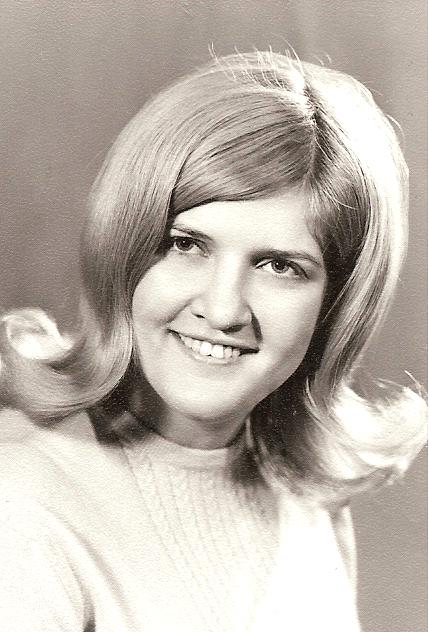
Dauna age 8From the time I was eight years old, I knew I wanted to become a teacher.  There were, however,  hurdles along the way.  I was the first person from my family to go to college so my parents couldn’t help me much with advice. But an even bigger challenge loomed.  I didn’t have much money.  In fact I had only enough money to attend college for two years and a teaching degree required four years of study.   Even that money had to be borrowed from the credit union. I was terrified that I would have to drop out of college without finishing;  so I formulated a plan.  My plan was to get a four year degree in two years.  That was a pretty ambitious goal at Miami University in Oxford, Ohio.  Miami has a reputation for academic excellence and colleges don’t make classes easy to schedule.  However, without any options and possessing quite a bit of personal drive, that is the path that I chose.

I had just turned twenty when I began teaching in my own classroom.  Some people believed I looked Dauna age 20younger than twenty.  You be the judge.  This is a photo taken of me the year I began teaching.  I had worked hard for my degree and I was as passionate and committed as a young teacher could possibly be.   I remember those days well.  I was so excited about my new role, I even recall missing my third graders when they went outside for a ten minute recess.  More mature teachers learn to look forward to those brief interludes.  But I adored wearing this new role that I had dreamed about for so long.

Parent Teacher Conferences

On conference days I was enthusiastic about sharing all that I knew with parents.  I couldn’t wait to tell them cute stories about their children and give them advice on how to help their children at home with school work.  But soon I started hearing those two dreaded questions.  I grew to hate these annoying questions.

How old are you?   (They would challenge me).

And even more insulting I believed:   Do you have children of your own?

How dare they ask me those questions?!

It felt rude and, frankly, condescending.

Why would they pose such undiplomatic questions?

Then Came the Birth of Understanding

birth of understanding

After seven years of teaching, I had a child of my own.  POW! (As Emeril would say).  The realization began to dawn.  My first-born was a swift and dynamic teacher.  What? Parents don’t have total control over their children?  Sometimes parents, no matter how honorable their intentions, have close to no control. The wisdom of my degrees and college professors began to be tested, disputed and sometimes even decimated by my own children.

My perspective did a complete about-face.  I slowly began to be embarrassed about all that unequivocal advice I had doled out to experienced parents.  This blog post is my written apology to all the parents I advised before I became a parent myself.  Forgive me.  My intentions were good, but I was viewing a three D movie without the benefit  of special glasses.

Make Parents Your Allies

listen to parentsThis is what I have learned-the hard way- from becoming a parent.  If you want to double or even triple your effectiveness with your students, enlist the help of their parents.  Listen to them.  Give them opportunities to share what they have already learned about their children.  It took me time and experience to learn ways to do this, but it tripled my effectiveness as a teacher.   Here are strategies that worked for me.

1. When I taught very young children, preschool, kindergarten or first grade, I tried to schedule a conference at the very beginning of the school year.  Some years those were home visits.  I called this the “You Tell Me” conference.  I asked questions about their children and I listened.  I wrote down their advice and consulted it frequently.  I found out what was on their minds before I began working with their child. They told me their concerns and strategies that worked with their children.  This information was invaluable.

One time a mom told me that her 3-year-old twins had escaped from more than one child care situtation…actually run out the door to the outside… even into the street.  I thought smugly that would never happen in my environment.  Know what?  It DID happen when their parents were in the room and in charge of their twins on my Orientation Day.  I had to have a staff member posted at the door every day for the remainder of the school year to make sure it didn’t happen again.  Oh how those twins maneuvered and tried to escape!  Houdini himself would have been impressed at their antics. Imagine what might have transpired had I not listened to their parents’ advice first?

2. At parent teacher conferences, get the parent to talk first.  Too often these time slots are short and the teacher rushes through the test scores, grades, behavior issues and upcoming events and assignments filling all of the time that was supposed to include two-way conversations.  Ask questions first.  “What is Courtney saying about my class?” is a good starting point.  “Do you have any concerns and questions for me?”  Start with the parent.  If the parent comes into the conference with a burning concern and the teacher talks through the entire allotted time, the “conference” is a failure.  Sometimes when I ask parents what is on their mind, they stare at me.  If I say, “Describe your child’s strengths and weaknesses,” they’ll begin to speak.

3. In upper elementary grades all the way through high school we teachers host evenings we call curriculum nights or grade level meetings.  The parents come to school and travel to all their child’s classrooms following their schedule for the day.  Teachers repeat the requirements of their class, distribute a syllabus,  and often list consequences for late assignments, failure to bring materials and other infractions.  Teachers hate when parents try to ask how Johnny is doing on a night like this when other parents are standing around listening to what should be confidential conversations.

Here’s what I learned to do.  I had parents pick up index cards as they entered the room.  On those cards I asked them to write answers to 3 questions I had already written on the screen in front of the class.  Those 3 questions were

  • What is your child (or teen) saying about my class?
  • Do you have any concern about your child that you would like to share with me?
  • What can I do that will most help your teen this year?

When I finished my quick presentation about my class, I’d ask anyone if they wanted to share one of the comments on their cards.  Almost always I would get a humorous comment or a comment about how my class was their child’s favorite class.  But the parents with concerns now had an avenue to share those concerns with me without doing so in front of others.  Parents left those cards with me.  I read them immediately (always that night) and called parents who had concerns the very next day.  Almost always they were astonished to hear from me.  But what a message it conveyed. “I care about the parents’ opinions and concerns.  I respect the parents’ input.  We are a team working in the best interest of their child. I recognize the value and insight a parent can contribute to the learning process.”

Teachers don’t do their best teaching in a vacuum.

Great teachers use all the resources available to them.

Parents should be at the top of that list.

TEACH...To Change Lives

TEACH…To Change Lives

Now available at Amazon.com

Take a Closer Look at Schools

Standard

Taking a Closer Look at Schools

Do You See What I See?

My grandson was pitching for batting practice this week.  He was hit in the eye with a line drive ball which broke five bones around his eye.  His eye was blood-shot,  swollen almost shut and he has temporarily (we hope) lost all depth perception.  In the emergency room, he couldn’t even get a straw into his mouth to take a drink without putting his hand on the straw first to guide it to his mouth.  He has to wear protective glasses at all times to keep everyone and everything from inadvertently jarring his eye until these fractures heal.

During this same week I was visiting schools to meet newly placed student teachers.  These are college seniors who are doing their final practice teaching before hopefully finding teaching positions in their own classrooms next year.  The professional teachers who are sharing their classrooms with these novices are called mentor teachers.  It took me eight days to visit 20 students in thirteen schools located in four different school districts.

How Are These Two Events Connected?

taking a closer look at schools

I see a significant parallel.  And I don’t think it was just because I was emotionally experiencing both of these events simultaneously.

It seems that everything you hear through the media about schools and our educational system these days is bad news.

And yet when I walk in schools’ hallways I see wonderful things happening.  It appears to this career teacher that the reporters and politicians who are being constantly quoted about the bad state of our American educational system, have no depth perception.  They are seeing out of only one eye.  Or are they even in our schools’ hallways.

I used both eyes and both ears as I walked the schools’ hallways and talked with the staff.

This is what I saw and heard about teaching.

I saw teachers sitting with students before school hours having breakfast together.  This free breakfast was served to everyone, every day to ensure that all students were getting a nutritional start to their day of learning without singling out anyone.

When I asked student teachers to describe their mentor teachers, they used these words:

committed, caring, kind, patient, hard-working, she comes in early and stays late, he answers all my questions and explains everything he is doing for me, helpful, fair, consistent, he has a wonderful rapport with his students, well-organized, enthusiastic, even the students who claim they don’t like English still like this teacher who is teaching English.  S/he is exactly the kind of teacher I want to become.

One student teacher was describing the principal in the building where she is assigned.  “She had all the student teachers over to her house for a meal.  She wanted to get to know us individually.  The teachers in the building tell me she offers to babysit their own children.  She is always asking the question, ‘What can I do to help you?'”

I saw classrooms decorated and organized with so much care, that the rooms made you want to spend days there learning.   I know how much (or more accurately) how little money a teacher is given to set up a classroom.  These teachers reach deep into their own pockets to make a comfortable environment conducive to learning. Their classrooms were charming, and exciting places to learn.

I saw so much evidence of beginning-of-the-school-year activities planned specifically to build a positive classroom community.  Anti-bullying themes were apparent everywhere.  One teacher photographed her students’ feet (shoes, socks and all) on the first day of school and placed these foot photos on their lockers.  Each student then wrote a paragraph about what they would do this year to put their best foot forward.

Secondary students were gathered in a circle discussing ways we can make isolated peers feel included.

I had one-on-one interviews with all the student teachers and asked them why they wanted to teach and what they wanted to teach.  More than one had tears in their eyes as they explained their passion for the profession.  Their enthusiasm was uplifting.  It made me feel optimistic all over again about this profession I love so much. One of my student teachers appears to be in his forties.  He left the insurance industry to become a teacher because of the way he recognized that teachers can change the lives of young people.

About three weeks ago I had dinner with a couple of former students who are now in the teaching profession.  One of them is in a district where her salary has been frozen for five years because the school tax levy was not passed by voters.  In addition to her rent and car payment she pays  $700.00 a month toward her college loan for her education.  She had applied at surrounding school districts trying to increase her pay and relieve some of her financial stress.  One of those districts called her for a job interview ten days before the beginning of this school year.  She thought it would be unfair to leave her current school district and students so close to the beginning of the school year, so she didn’t go after the job.  And yet in the media we only read about the seeming selfishness of teachers who strike for wages.  Does the teacher I just described sound selfish to you?  Will we read about her?  Only here.

Yesterday I was surfing the internet reading stories about teaching.  One article had a link to the Huffington Post.  I had never been there before.  What did I see?   Dozens of negative articles about teachers.  There was only ONE positive one.  And that article was written by a celebrity, Tony Danza.  Thank you Tony!  But once again, it was driven home to me that only negative or celebrity-written articles about teaching seem worthy of publication.

I’d start a personal campaign to get every parent and teacher I know to write a positive story about teaching and flood the media with them; but I know they wouldn’t get printed.  In the media there is a popular expression they use to determine what gets heard.  “If it bleeds, it leads.”  In other words bad stories, ugly stories attract viewers and readers.

All I can do is stage my own personal campaign on my blog site here or write a book about the positive side of teaching… which I have.  If you are new to my site, scroll back through the past couple of months and check out many true and inspiring stories about teaching.  Also read, TEACH…To Change Lives.

TEACH...To Change Lives

Available at Amazon.com

One Final Word About Our Schools

If the parents and grandparents of our country could have walked the halls of our schools with me this past ten days, they would have felt so good  and been so impressed with the commitment the teachers show to your children.  I heard it and saw it and felt it everywhere I went.   Take a deep breath and feel good about our schools.  This doesn’t seem to be popular right now, but it is the truth.

My grandson goes back to the eye specialist tomorrow.  It will be his third visit this week.  We know he has five fractures (one of them pretty serious) and a depth perception problem and we are watching it closely.  As for the media…I have only one piece of advice.

Taking a Closer Look at Schools

You Need Glasses!! 

A Lesson for Teachers

Standard

                        From Caterpillars to Butterflies

the teacher learns


Jennifer walked into my early childhood education class in her senior year planning to fail.  No, she didn’t announce this goal to me or to the class.  I guess you could say it was a secret goal, but she had her strategy all mapped out.  She even knew exactly when she was going to fail; November.  I had exactly two months to change the course of her destiny, but she didn’t even give me the benefit of telling me this.

The Countdown

graphShe was busy stacking all the evidence (data) to support her decision to fail.  It was powerful data, hard to ignore.  In her sophomore and junior years she had been absent over thirty days each year.  At this time in our state she was required to pass proficiency tests in four subject areas in order to prove she had the ability level of at least a ninth grader or she would not receive a high school diploma even if she had passed all her classes.  Though she had taken these tests twice a year since the ninth grade, she had continued to fail three of the four every time.  Neither of her parents had graduated from high school and they wanted her to graduate because they knew what if felt like to go through life without a high school diploma.  However, without any serious illness, they still allowed her to stay home more than thirty days per year.  In November Jennifer would be eighteen and she would no longer need her parents’ signature to drop out.  In November she would be out the door and I wasn’t even aware of the plan.  Even worse, the class I taught was in early childhood education.  Jennifer wanted to work in a child care setting with young children.  In our state you have to earn a high school diploma to do that.  Why had she signed up for my class if she had no chance to graduate?  The answer was simple.  She had to spend those two months somewhere.  But by November the charade would be over.

A Plan Thwarted

the U turn

Here’s how the U turn happened.  As soon as I found out Jennifer still needed to pass three of the four proficiency tests, I signed her up for tutoring sessions every day of the week.  No, she didn’t want to go.  She argued long and hard about the futility of it.  Hadn’t she already proven six times that it was impossible for her to pass those tests?  But I refused to allow her to skip those tutoring sessions. However hard she complained and dragged her feet, I still insisted she attend.  She went for tutoring during a portion of my class and during her lunch break, crabbing about it every step of the way.

I had another really lucky break.  In this particular school where I was teaching at the time, we had a significant number of at-risk kids.  With this type of enrollment one of the silly things that I noticed was that a substantial number of them failed to come on the first few days of school.  They would just pretend that they didn’t know when school started.  This behavior baffled me, because when I was growing up it seemed like everyone enjoyed the first few days of school.

But for whatever reason in this particular class everyone showed up for the first three days of school.  The first week was a short week of only three days.  I made a really big deal of having perfect attendance for a whole week.  I can’t remember the specific treat I brought in, but they really loved it.  Somehow this group of students latched on to that humble success and started seeing how long they could go with the whole class having perfect attendance. They really put pressure on one another not to break that chain.  It was a lucky break for me and Jennifer.  I don’t know if I could even recreate this set of circumstances.  I rewarded them every Friday with a treat and talked it up all around the school bragging about them to others when I knew my students could hear me.

Perfection!

blue ribbon

At the end of the first quarter at our awards program I asked our administrator to make a big deal out of their attendance.  He had the whole class stand up and told everyone in the packed room (full of their peers from other programs)  that this was what “perfect” looked like.  I’ll never forget that line.  The members of my class were far from perfect, but they had managed to accumulate perfect attendance for a full quarter.  They just beamed.  I’m certain Jennifer had never had the benefit of going to school regularly in her whole life.

In October Jennifer retook those three proficiency tests.  She wouldn’t find out the results until December.  She decided not to drop out until she had gotten those results.  So without my knowing about the plan to fail, I was given a one month’s reprieve.  Just before the holiday break, she found out she had passed two of the three tests!  Encouraged but still wary she quietly decided to stay until March when she would have just one more chance to pass that final test.   She continued to go for tutoring, but by now she could concentrate all her efforts on just one subject in which she was still deficient.

Let the Magic Begin

That extra time gave us the window for magic to take hold. Buoyed with her successes and reinforced with perfect attendance, Jennifer’s self esteem started to bloom.  She put together a project and competed in the regional competition and won.  She advanced to state competition and won.  In February my class began their final senior project.  Each student was required to put together a plan for an entire school.  Jennifer latched onto this project of planning a child care center with a commitment she had never shown in school before.  She named her child care facility From Caterpillars to Butterflies.  The project was outstanding in every way.  Step by step she poured all of her creativity into the project.  She drew a floor plan, wrote a philosophy, created a marketing strategy that included a logo and a slogan, developed an inventory and made a tri-fold display board about her school.   Her project was voted the best all around by hundreds of visitors who came to see our finished projects on display. Jennifer, the loser, became Jennifer the star.  Her peers looked to her for advice on their projects.

Becoming a Butterfly

She found out in early May that she had passed her final proficiency test she had taken in March.  She would be graduating with all of her peers, despite her total intention to fail when she first walked into my room.  How do I know all this?  In May she told me all about her original plan.  During our end of the year program with parents, employers and advisory council members in the audience, I gave Jennifer a small butterfly decoration.  I told everyone how I had watched Jennifer change from a caterpillar into a butterfly during that school year. (Just like the process she had named her child care facility).  She and her family were very touched.

On graduation night, during the graduation ceremony someone tapped me on my shoulder.  I ignored the tap.  I thought it was going to be one of my students asking to leave the ceremony to go to the restroom and I didn’t want to honor that request.  But the tap was repeated and over my shoulder was passed a flower arrangement from Jennifer’s mother and a card from Jennifer.  Inside the card Jennifer had included a butterfly necklace for me to wear.  She had also written me a poem.  I never saw Jennifer after the graduation ceremony.  I suppose the family had graduation celebration plans they had to rush off to implement, or perhaps Jennifer was too emotional for even a good-by hug. But the necklace and the poem brought tears to my eyes.  Though the poem is very simplistic its words touched my deeply.  I have recited its words to teacher audiences many times when I speak.

spreading wingsThe best teacher for me would be

The wonderful Mrs. Easley.

She listened as I talked

She even pushed me as I walked.

She pushed me to my limit

I didn’t even know I had it.

I was going nowhere and fast

I thought I’d never last.

I kept remembering failures of my past.

She turned my life around.

Now I might be college bound.

How do I repay something like this?

I keep remembering her words…

The lectures I’m going to miss.

Now because of her I believe

That “teacher” means much more to me.

A Question and a Challenge

How could a young woman who was two months away from dropping out of school write words I would be happy to have on my headstone when I die?

She listened as I talked

She even pushed me as I walked.

What teacher wouldn’t be honored to have a student write those words about her?

But there are two other lines in that poem that should scare every teacher in America.

She pushed me to my limit

I didn’t even know I had it.

How and why would a young lady in America make it all the way to her senior year in high school without even really knowing that she “had it?”  Jennifer had the ability all along.  Isn’t that our main job as teachers?  We have to reveal for students that they “have it” within them to succeed.

We must push them to their limit until they realize that they have it.

I learned that from a poem written by an 18-year-old girl who was two months away from walking away from an education.  Those are her words.  We must listen.

TEACH...To Change Lives

Jennifer’s story and many others…

plus classroom activity ideas to build success in life for our students…

 are in my newest book for teachers.

TEACH…To Change Lives.

Available at Amazon.com