Tag Archives: schools

I Love Tony Danza’s Mother

Standard

I’ve never met Tony Danza’s mother, but I can tell you I admire her.  Why?  I once read an article in a magazine about Tony in which he described his mother’s philosophy.  I can’t remember or even find the exact wording of the  quote, but like all thoughts worth remembering, it has stuck with me for years without having to memorize the exact words. She said, in essence…

Every child deserves at least one adult in their lives who is passionately and even irrationally committed to their success.

Isn’t that a perfect thought?  Isn’t that what every child really needs and deserves?  The truth is my own mom believes I’m smarter and more capable than I am.  Her belief has gone a long way to build my confidence and create any courage that I have.  It encouraged me to personally push toward success.  She is the first person I want to tell about any of my triumphs.  She is also the person I go to when I feel deflated by the world.  When the world hurts me she is mad at the world and she hurts too.  She believes the world is wrong because she is committed to seeing the best in me.

I even like Mrs. Danza’s son.  He values education and teachers.  He is infectiously enthusiastic in every role he plays.  I credit her.

But I’ve taught long enough to face other realities.  Many, many of our country’s schools are filled with students who do NOT have even one adult who is passionately and or irrationally committed to their success.  Not a parent, nor a relative, coach or even an adult friend.  No one.

This leaves teachers with a tough and tall order to fill.  But we must step up to the challenge especially when no one else does.  Somehow every student needs to feel like we are committed to their success, yes even irrationally committed… even if all the sign posts point in the opposite direction.  That is when our commitment is most important, most needed.  Every one of our actions needs to demonstrate, “I’m on your side.  I see your talents even when you haven’t yet discovered them.  I know you have the ability and/or persistence to succeed.  Whatever the evidence I am committed (irrationally if need be) to your success.

Tony Danza’s mom would expect no less of us.  We shouldn’t either.

TEACH...To Change Lives

TEACH…To Change Lives

Available autographed or in large quantities from the author:  dauna@cinci.rr.com

Also available at Amazon.com

Dauna Easley available to speak to your group:  dauna@cinci.rr.com

The Teacher Who Made ME Want to Teach

Standard

The Teacher Who Made ME Want to Teach I wish I had a photo of her, but unfortunately I don’t.  Her name was Esther Waggoner and her third grade classroom pointed me in the direction of my life’s work: teaching.  I feel certain she taught me multiplication tables, cursive writing, reading and  many other academic subjects.  Plenty of exciting learning takes place in third grade.

I remember another thrill that school year.  Our old school building added a new wing while I was in third grade.  In the middle of the school year we got to pick up our belongings in our arms and carry them to our new classroom.  But none of these reasons are why I mention her here.  It wasn’t the academics or the surroundings that made that year special for me.  It was the enthusiasm of the woman in front of the classroom.

don't ever do this

Mrs. Waggoner just simply taught with Joy.  Messes didn’t seem to bother her.  Noise didn’t freak her out.  She loved children and she loved teaching.  She honestly was having so much fun in her classroom that she made me want to grow up and enter a profession in which I could go to work and have that much fun.

At home my parents belonged to the “Go Play” philosophy of child rearing. “Don’t make a mess or too much noise.  Do your chores and then go play.”  I was fine with that.  I never questioned it.  I loved to play outside from the time my chores were done to the time the lightning bugs came out at night. I honestly had no complaints.  I hadn’t experienced any other way.

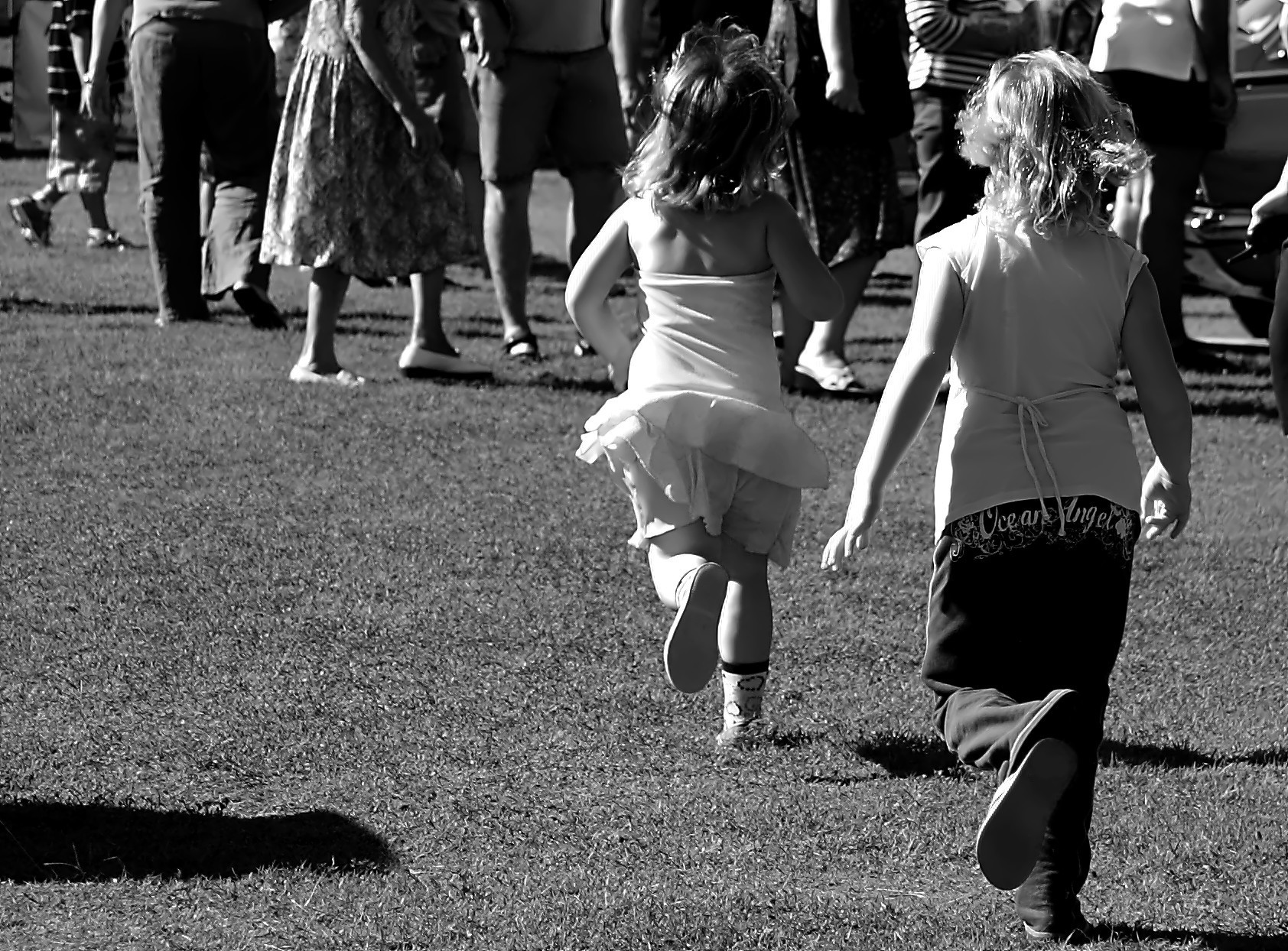
Play with us Then Mrs. Waggoner appeared in my life.  She actually played with her students.  I studied her like she was some kind of personal science experiment.  What was this?  An adult who enjoyed playing with children? I had never met another adult like her.  During the winter months when we had a long season of indoor recesses she let us push all our chairs back against the wall and set up bowling pins.  We’d roll the ball knocking those wood pins down over and over again.  She never flinched.

DSC_0390_x2_Iván_Melenchón_Serrano_MorgueFileI remember one month when she even taught us how to square dance at recess time indoors.  She’d  clap her hands to the music and yell out those square dance calls with enthusiasm while we swung our partners and learned to do-si-do. She even danced with us when there was an odd number of students so no one would be left out.

I was hooked.  From third grade on I wanted to grow up and enter a profession that allowed an adult to experience that much joy.  Mrs. Waggoner is the reason I became a teacher.  Of course I taught academics.  Yes!  Students won’t respect a teacher who doesn’t challenge them academically.  But I first considered teaching because of the way that Mrs. Waggoner made me feel.  I wanted to connect with young people in the same way she connected with me.  It was Mrs. Waggoner’s joy that first sent me into teaching.  But it was the connections I made with young people that kept me there.  I’m proud to say that I enjoyed the profession as much as Mrs. Waggoner did.

When I finished college, can you guess where I began my teaching career?  In third grade, of course.

I went to a small town parade this past weekend.  I noticed that when military people and firefighters passed by, the crowd applauded.  I was proud of everyone.  It was exactly the right thing to do.  I was applauding right along with them.

But somehow I wish that teachers were the recipients of some applause and not just the targets of the media and politicians running for office.  It has become fashionable to criticize teachers just the way too many citizens dishonored our veterans when they returned from Viet Nam.

Great teachers deserve applause.  We’ve even seen too many teachers protect their students with their own lives in the past decade.  Today I applaud Mrs. Waggoner, the woman who taught with such enthusiasm that she pulled me toward this important profession.  I hope I have made her proud.

TEACH...To Change Lives

TEACH…To Change Lives

Available autographed or in large quantities from the authordauna@cinci.rr.com

Also available at Amazon.com

Dauna Easley is a speaker who has been invited to speak in 37 states.

Contact:  dauna@cinci.rr.com

Building a Relationship with the Parents of Your Students

Standard

Students are backThe students are back.  Your bulletin boards are up.  You are beginning to feel like you are in the swing of things.  Though the general public claims that teachers have three months of vacation every year, I know very few teachers who aren’t teaching in August and June.   And my experience is that the Labor Day holiday in America is really a weekend when most teachers are still laboring away in their classrooms or getting caught up at home from the long hours they have put into starting back to school.

Building a Positive Relationship with Parents

stepsBut there are still more steps to the process.  If you are going to be successful with students, you also need to have a positive relationship with their parents. Often that starts even before you meet them face to face with a summer letter.  Open Houses and Curriculum Nights also tend to be scheduled at the beginning of the school year.  In this post I’m going to talk about making the most of curriculum nights.  Those are the times when the parents come to school to walk through their child’s school day.  In the early grades this can sometimes be handled in one classroom, but as children grow older, often the parents move from room to room following their child’s schedule for the school day.

What Teachers Tell Themselves

Sometimes the messages that administrators and teachers tell themselves aren’t the whole truth.  We tell ourselves that parents come to Curriculum Night to learn about classroom policies, supplies needed, and how much time their child should spend on homework.  We believe parents want to learn about classroom projects and the expectations of the teacher.

Wrong!

When parents come to Curriculum Night they really have only four (or five) burning questions in mind.  They care very little about your preplanned presentation or your beautifully prepared class syllabus.  Here is what they are really thinking.

  1. Will my child like this teacher?
  2. Will this teacher like my child?  Will s/he be fair to my kid?
  3. In this classroom will my child learn?  Will s/he have the opportunity to succeed?
  4. I wish I had the chance to ask or tell the teacher about this burning issue on my mind…
  5. In the junior and senior year of high school there is a fifth burning question.  What are you going to do to help my kid get into college?  This is unique to these two years.  If you don’t address that on curriculum night, the parent will leave frustrated.  Think about it ahead of time and address it on curriculum night.

I promise you those four (or five) questions are what is really on the parent’s mind.  And they’ve already made a preliminary decision on questions number one and two.

The Real Truth

Like it or not…

Fair or not…

Accurate or not…

This is how the conversation goes when a child gets home from school on the first day…

Parent:  “Hi honey.  Did you have a great first day of school?”

Possible answers.

“No.  My teacher is mean.  She doesn’t like me.  And school is boring.”

“Yeah, It was great.  My teacher is funny.  She  likes me.”

Whether we like it or not, it is the child’s first perception of school on the very first day that most influences a parent’s point of view about the teacher and the school year. Smart teachers figure that out quickly and are very careful about the first days of school.  Fearful teachers say, “Don’t smile until Thanksgiving. That way the students will know who’s boss.”

Teacher Fears about Curriculum Night

On Curriculum Night teachers are afraid that one or two parents will tie them up asking personal questions about their child.  “Do you think Nikki has ADHD?”  Answers to these questions are confidential and it would be inappropriate to address when other parents could overhear a private response.  And, let’s me honest, the teacher is probably still trying to figure out if Nikki is the one with the curly brown hair or the glasses.  Those kind of conversations should best be left to parent teacher conference conversations.

Tips for Curriculum Night

smile

  • Smile!  Even if you’re nervous, smile and joke a little.  The parents will think, “Yes this teacher is friendly. My child will be able to approach this teacher with questions.”
  • Be wise and have a sheet listing conference times for which a parent may sign up.  This will help you greatly when you begin to schedule conferences.  ALSO it lets the parents know that coming up they will have a chance to discuss private issues with you.
  • Tell the parents how much you enjoy this class.  The parents aren’t particularly interested in how busy or stressed you are.  They want to believe you enjoy this class which includes their kid.
  • Don’t just spew off rules and deadlines.  Describe the strategies you will use to help all students succeed.  One of my own daughters had special needs.  I left too many Curriculum Nights almost in tears.  Teachers were quick to talk about how they wouldn’t bend the rules or make modifications in front of a room full of parents.  Many of them did make wonderful and necessary modifications for my daughter.  But on curriculum night I often felt like my child had no chance to succeed.  (This was especially true in the upper grades).  Think about every parent who might be sitting in your room.
  • Have the parents pick up an index card as they enter your room.  In the front of the room have 3 questions on display.  Invite the parents to write responses to these three questions.

1. What is your child saying about my class so far.

2. How can I help your child succeed in my classroom this year?

3. Do you have any questions or concerns you’d like to share about your child?

Collect the cards as they leave.

Don’t have them pass the cards to other parents.  The contents may be private.

Follow Up

Don’t just have parents fill out the cards, read those cards as soon as possible.  I read through them on Curriculum Night or at the latest, the next day.  I put the most pressing concerns on top.  For the next few days I called parents or emailed them and let them know I had read their comments.  I would ask for further input in some cases.  In other cases I would tell them what I was going to do to help them with their concern.  My follow-up usually stunned and impressed parents, especially at the high school level.

This follow-up will help you enormously as a teacher.  You will avoid inadvertent mistakes when you find out what is on the parents’ minds at the very beginning of the school year. The first weeks of school are crucial in developing a positive reputation in your school and community.  Parents talk to other parents.  The word will spread quickly that you are a caring professional, or the opposite.  Do yourself a favor.  Every interaction with the parent for the remainder of the school year will be easier if you make a positive impression from the beginning.

TEACH...To Change Lives

TEACH…To Change Lives

Available autographed or in large quantities from dauna@cinci.rr.com

Also available at Amazon.com

Dauna Easley available to speak to teacher audiences.


Teaching Strategies

Standard

Making Lessons Meaningful

questions from teensAsk any teacher.  What is the most common question students ask?

 Why do we have to learn this?

In junior high and high school you have to add a whining voice or a sneer…and two more words to the end of that question…

Why do we have to learn this stupid stuff?

Now you’re moving closer to the dilemma that teachers face everyday.  The most effective assignments are meaningful to the students.  What’s even better than that?  Classroom assignments that are meaningful to both the students AND their families.  If you can lasso a lesson like that you are sitting on a throne right on top of the learning pyramid.  Yay you!

Let me describe three lessons I’ve run across in the past couple of years that fit smack in the middle of that category.  As a grandparent who also is a teacher, many school projects the grandchildren are assigned are routed in my direction for guidance and encouragement.  Here are three of my favorites.  My hat is off to the teachers who planned these lessons.

Let’s Talk About Love

let's talk about loveA few years ago my seventh grade granddaughter, Taylor had to build a poetry folder.  She had to select a topic and find poems of all kinds to include in that folder.  Her idea wasn’t unique.  The topic she chose was Love.  I wondered how many hundreds of seventh grade girls over the years had chosen love as their topic?

But the assignment was well constructed and this made the project so much more meaningful.  Yes, the students had to gather love poems and tell why they selected those particular poems.  But they also had to write their own poem about love.  Additionally they had to ask two other people to write love poems that they were to include in their portfolio.

This opened up all kinds of meaningful dialogues about love between my granddaughter and me.  I wrote one of those love poems.  I wrote about what love is and what love isn’t.  I told her a story about the boy I secretly “loved” in high school and how I ended up the maid of honor in his wedding…and how I survived that to love again.  We had so many great conversations as we worked on this project together.  I know those conversations will stay with Taylor forever.  Thank you to Ms. Shannon King from Liberty Junior High for that great lesson.

Looking into the Future

looking into the futureMany teachers wisely look into the future to come up with an authentic assignment for their students.  When my grandson was a junior, he had to write an essay that he might later use as a college admissions essay.  The teacher required them to describe themselves and their talents.  What made them unique?

My grandson, Austin came to me for assistance with this task.  He doesn’t like to write and he especially didn’t want to write something “bragging about himself.”  Those were his words.   He chose to write about his background in sports first. (High school boys like to talk about sports as much as seventh grade girls like to talk about love).

Then he hit a wall.  After he wrote about his experiences in sports he didn’t know what else to say.  He counted the words and found his essay wasn’t long enough. He stewed.  He was completely unaware that he has leadership skills.  And he didn’t have a clue about his greatest talent.  He has a unique gift for making others feel valued.  He brings people together.  I watched him do this his whole life.  I had marveled about it to myself many times.

Why had I never put this into words before?  Why didn’t he know that about himself?   That assignment gave me a vehicle for putting this into words.  He was amazed at the things I was saying.  I gave him many examples from his life to make my point.  He listened and nodded.  You could see it was the first time he recognized this ability within himself.

I know this is another conversation that will stay with a grandchild long after I am gone.  Thank you to Ms. Erin Schneider from Lakota East High School for this authentic assignment.  This essay helped him craft future college essays.  In only a couple of weeks he graduates from high school and he was accepted by the college of his choice.

Looking into the Past

authentic assignmentThe most recent authentic assignment happened this past week and was a reminder and the motivation for me to write this post.  Memorial Day is just ahead.  My eighth grade granddaughter, Kiley, was given an assignment by her language arts teacher.  Each student had to find out about a relative who had died before they were born.  They had to interview family members and ask them a list of questions to learn about their deceased relative and give a speech about them.  What a great way to draw families together to discuss their shared past.

This was an especially significant assignment for Kiley.  My youngest daughter, Kelsey, died of cancer at age 16.  She happened to pass away one week before my granddaughter, Kiley was born.  Kiley is her namesake and was given Kelsey as a middle name.  Kiley has heard stories about Kelsey all her life.  However, she dutifully wrote up her interview questions and I filled them out completely.  She even remembered a couple of stories I had forgotten to include.  She asked me to repeat those stories to her.  We did a lot of gathering photos and she assembled her display board.  She emailed me a picture of her poster before she glued things down.

Kiley's poster

She made it through her speech but her voice quivered a quite a bit.  When her chin started shaking she said to herself, “I can’t cry in this class.  There are too many boys in here!”  Everywhere she looked kids were getting tears in their eyes. She had to skip one of the stories she wanted to use, but she made it through.  A success!

But the greater lesson is what she learned by preparing the speech.  That is the hallmark of an authentic assignment.  Meaningful assignments grow the student.  They are memorable in a significant way.  They open channels of communication.  We think about those assignments for years.  I can picture Kiley decades from now helping her own grandchild with a speech.  I’m sure she’ll tell her grandchild about her quivering chin in her speech when she talked about her Aunt Kelsey whom she never met.  Thank you to Ms. Brooke Schreiber from Liberty Junior for your meaningful lesson.

Thank you to all the teachers who take the time to create authentic assignments.

Choose to TEACH…To Change Lives.

The choice is yours.

TEACH...To Change Lives

TEACH…To Change Lives

Available autographed or in large quantities from the author:  dauna@cinci.rr.com

Also available at Amazon.com

The Danger of Test Scores

Standard

Is This Wise?

Is This Wise?There is a great fable about an imagined animal school which decides to adopt the design structure of schools for humans.  Humans have greater thinking and learning power than animals, right?  Someone erroneously believes they can improve the performance of ALL animals by modeling animal schools after a learning institution for people.  But is this wise?

In this new animal school, rather than the teacher being satisfied with the beaver’s ability to chop down trees and build dams, the teacher also insists the beaver learn to fly.  The results of the beaver’s efforts to fly are, of course, frustrating and even ludicrous. Facing such a failure the beaver is no longer even proud of his innate ability to build dams better than any other animal.

What Are We Doing?

Take a discerning look at our schools.  Isn’t that too close to what we really do?  Instead of identifying and capitalizing on a student’s intrinsic talents, we reduce the time he spends in a pursuit in which he excels and simultaneously increase the amount of time he spends being tutored in a skill for which he has minimal talent.  Think for a moment about this.

In a culture in which we are being driven by only test scores, we remove a student from his favorite class to tutor him/her for a class in which s/he is failing.  Did it work for the beaver?  What a scary philosophy this becomes when you consider the implications not just for individuals, but also for our country.

16269121_s

Why do we put all our efforts into forcing students to remediate to obtain mere passing scores in a subject area in which they are weak?  Why not use those same efforts to encourage and push them in an area of their brilliance?  What our country really needs is people functioning at the top of their form in the areas in which they excel.  Ignite the flame in the area of their strengths and watch them catapult forward.  If and when we finally do that, our entire nation will benefit.

Great teachers know this.  They search and search until they discover and reveal a student’s talent.  They frequently are the first to reveal that talent to the student.  They give voice to it, encourage it and often push the student to heights they didn’t believe they could ever achieve.

I’m not the national Secretary of Education, but I think one of the things we need to be doing in every school district in America, is identifying individual student’s areas of brilliance and finding ways to encourage, enhance and grow that talent.  Flying beavers are not the answer.

Want to help stop test score obsession?  Please share this blog post with someone.

TEACH...To Change Lives

TEACH…To Change Lives

Available autographed or in large quantities from the author:  dauna@cinci.rr.com

Also available at Amazon.com

Helping Students Create Their Own Destiny

Standard

YOU Create Your Own Destiny

Create your destiny

Between stimulus and response there is a space.

In that space is our power to choose our response.

In our response lies our growth and our freedom.”

                                            -Viktor E. Frankl

These words have always inspired me.  Written by a man who survived the concentration camps of the holocaust makes them even more significant.  We cannot control many of the things that happen to us in life; but we have absolute control over the ways we respond to those events.

One of our greatest roles as teachers, is to teach truths about life.  Sure, we are hired to teach our academic areas; but I believe we miss one of our most important choices if we don’t also teach underlying truths that help our students live a successful life.  This quote helped me come up with a way to teach students that they have the power to create their own destiny.  How did I do that?

Early in the school year, I put a dot or a star on the far left margin of the chalk board.  (Think wipe-off board or electronic board these days).  Then I would move to the farthest right side of the board and make another dot or star.

I would pause until they seemed interested in what I was doing.  You can do a lot of teaching in the pauses.  Once they seemed quiet and curious I would say as I pointed…

This dot on the left side of the board represents the things that happen to us as we live our lives.

Pause

Sometimes those events are terrible. Someone we love rejects us. 

(Teens always are interested in matters of the heart).

Pause

Sometimes we work hard toward a goal and yet we get passed over.  Someone else gets recognition that we deserve.  We lose our jobs.  A loved one dies.  Someone insults you or passes around untrue gossip about you.  Someone steals something from you.  Someone hurts you deeply.

(Each time I offer one of these scenarios I once again point to the star or dot on the left side of the board).    I sometimes ask them to add bad things that might happen in life.

Then I move to slowly the left side of the board and point to the dot on the far right.

Way, way over here on the far right side of the board is the way you respond to those events.

Pause

Do you know what is between these two dots?

Usually they just look at me and wait.  Sometimes someone will make a joke and say, “Nothing?”

Pause

The only thing that lies between an event and what you do to respond to that event, is your choice.  No matter what happens to us, we always, always, have control over the way we respond to it.

create your destiny

We need to remember only we have the choice to decide how we respond.  We always choose.  It is those choices that determine our destiny.  Look carefully.  What is between those two dots? 

I  then v-e-r-y  s-l-o-w-l-y draw a wavy line between those two dots on opposite ends of the board.

choices

You have allllllll this time between the two dots, between the event and your response to decide how you are going to respond.

Choosing the way you will respond, making the choice creates your destiny.  What happens to you, doesn’t create your destiny.  Your choices in the way you react create your destiny.

Teens (and some adults) limit their destiny when they react without thinking…without making a choice.  They say things like, “Well, he pushed me so I punched him,” or “When she looked at me like that I just had to tell her off.”

Wrong.  Your reaction was a choice.

Teens will tell me that their parents or buddies told them never to let people treat you like that.

Look around you.  Are the people who give you this “punch-them-in-the-face” advice… are they themselves a success in life?  Are they living a life you want to emulate?  Well, are they

Or are they in prison or holding entry-level jobs or no jobs even though they are middle age?

You create your own destiny by the choices you make between any stimulus and the response you choose.

Let’s be honest, sometime in life we’ve all made a mistake with a knee-jerk reaction to a situation.  I know I have.  But I later regretted my response.  I share a couple of examples of my own mistakes with my students.  We can teach quite a bit by sharing our failures and vulnerabilities.  They hear us best when we aren’t preaching.

As the year progresses and a teen or two will invariably make a poor choice, I don’t have to say anything.  I just go to the board, make my two dots, and draw the wavy line in between.  No words have to be spoken, though many of the students will give that little hum (or groan) of understanding.

I find it’s best to do this activity early in the year before a poor choice has occurred.  That way no student is made the target of the exercise.  When students come into class all excited about a fight that has just occurred in the cafeteria or hallway, I just draw my two dots and that slow wavy line in between.  They get it. They may say something like, “No, seriously Mrs. E. you should have seen it, it was so cool.” But I just draw my two dots and my wavy line again.

What is My Hope?

a teacher's hopeSomeday when I’m no longer standing in front of them in a classroom, my students will remember the two dots and the long wavy line between them.  They will realize that they have the power to create their own destiny with the choices they make.  They won’t feel they have to become the victim of their own poor choices even if lousy choices were all that was modeled for them.

When I move outside the sometimes confining limits of my academic area, I often feel like I’m doing my most important teaching.  It is when I most feel like I am teaching to change lives.

TEACH...To Change Lives

TEACH…To Change Lives

Available autographed or in large quantities from the author: dauna@cinci.rr.com

Also available at Amazon.com

Teaching Celebrations and Frustrations

Standard

Celebrations

What I learned from bloggingRecently while navigating through the pages that support my blog site, I stumbled upon a page full of statistics where I learned that…

…during the past 90 days my teacher blog

at DaunaEasley.com

has been read by people in 35 different countries! 

                                   I was amazed and humbled.

A person writing a teacher blog should probably never admit this; but some of those countries I had never even heard of.  (Thankfully I didn’t teach high school geography).

Sometimes it is a lonely commitment, to sit down at my desk in my home and type my heart out about the teaching profession I love.  You wonder if anyone will ever value (or even read) the words that you write.  Thank you loyal followers.  You make my efforts feel so worthwhile.  At 3:00 am (yes that is the current time when I’m writing this), it helps to know that my words are welcome in places around the world I will never have the opportunity to visit.  I am in awe.

Teaching Frustrations

frustrationsRecently while watching a young student teacher assign homework to a group of middle school students, I heard all the young teens groan.  What was their frustration?  Their homework was being assigned out of the textbook.  Their texts were huge and they didn’t want to carry the book home in their backpacks along with all their other texts.  The teacher gave a brief apology.  “We don’t have paper to use.  The budget is low.  We have to use our textbooks for homework. Sorry.”

I know when I start to describe this dilemma there will be people who won’t understand.  They’ll tell me that no child in Africa has a textbook and they would be honored to have one to use.  Other people will tell me about classrooms around the world where the entire class must share a pencil or scratch their calculations out with a stick in the sand.  Maybe, in hindsight, I shouldn’t have even brought this up when I have just bragged about 35 countries reading this blog.  Awkward moment.

However, can you imagine corporations in America telling their employees to market, design, and produce a product without using paper?  It is a ludicrous notion.  And yet it happens in our classrooms all the time.  Teachers are routinely asked to teach without supplies as basic as paper.  For decades I have listened to administrators beg and then threaten teachers not to use paper or copy machines.  School budgets simply can’t absorb the cost of paper or copy machine repair.  Taxpayers will vote for building a new school.  But they will not vote money for a school operating levy.

broken political promises

Before every election, politicians make hefty promises to support education.  After every election they promise taxpayers to make hefty budget cuts.  The first to be deserted?  The schools…more correctly…the students.

I once wrote a humorous piece on copy machines in schools that I will share here.  If you’ve never worked in a school, you won’t believe it.  But every single situation is something I have experienced while teaching in schools in America.

Copiers

I’m not talking about kids who don’t want to study and look on classmates’ papers during a test.  I’m talking about machines that copy worksheets, newsletters to parents and homework assignments.  Here is  the reality within schools.

school frustrations

  • The only safe and accurate assumption to make is that no school in America will ever have a copier for teachers to use.  Don’t set your standards too high.  The reality will hurt too much.
  • I don’t mean that there won’t be one on the premises.  Usually if you know where to look you can spot one.  In my job before my last teaching job, I could spot one near my classroom.  It was in a small room with glass windows, but the door was locked.  You could see it and salivate, but that was all. I struggled for five years to get a key to that door.  Remember this is a true story.
  • If you ever actually spot a copy machine on school premises don’t get too excited.  Some copy machines are never allowed to be used by teachers.  Only administrators and secretaries have the authority to use them.  Intelligence and advanced degrees won’t buy you the right to touch them.
  • If the copy machine assigned to teachers is on, it will ask for a password.  But the password you’ve been assigned will never work when you need it most.  In some instances it will never work at all.  You will have to exchange other school supplies (like staplers, and 3 hole punches) to use the password of another teacher.  But they will never let you know their password, they will only tap it in quickly with their hand covering the little window on the machine.  They are not fools.  Teachers with working passwords are like English royalty.  No working password?  Learn to curtsy.
  • If you report to your administrator that your password is not working they will tell you to fill out a form…these days online…and send a request to technology.  You will never be able to find the name of the form. It will probably be named nwpw#3256.  That stands for non-working passwordThey throw in the numbers because they are afraid you might figure out the name of the form and consequently use paper and toner.
  • If you ever get a password and see a copy machine with no line next to it, trust me it isn’t working. Go ahead.  Don’t believe me.  It may appear to be working. Unfortunately you will only believe this after it eats your master copy.
  • No matter how early you arrive at school or how late you stay, the copy machine will always have a long line next to it.
  • If you arrive at 5:00 am and there is no line next to it, you will be in charge of turning it on.  It will take forever to warm up.  If you stand there and wait, forty-five minutes later you will finally figure out that it isn’t working.
  • If you turn it on to warm up and come back twenty minutes later to run your copies, there will be one person in front of you at 5:20.  They will be running 30 page packets.
  • No plan bell is ever long enough to work your way to the front of the copy line.  You will make it to the front of the line at the exact moment you have to be back in class teaching.
  • If you finally do get to the front of the copy line and are excited, you are only moments away from discovering that the person in line in front of you jammed the machine.  They will never admit this and you will be left trying to unjam his jam and everyone behind you will believe you broke the machine.  They will be complaining about you all over the building that day.
  • If you find that the machine does not have a line, your password actually works, and it doesn’t show a jam, there is only one possible explanation.  There is no paper left in the cabinet.
  • If you report to the administrator (or more probably someone he has designated) that there is not paper in the cabinet, she will tell you that you must order copy paper from your budget.
  • You have no budget for ordering paper.
  • Kinkos (is that still their name?), Staples and Office Depot know all these facts and love them.  Their stock is buffered by the long line of teachers who use their take home salaries to buy copy paper and run off work for their students.

Thus I return to and stand by my original premise.  No school in America will have a copier for a teacher’s use.  We can replace  chalkboards with wipe off boards and sometimes even smart boards.  Every kid can carry a cell phone and an electronic notebook.  Those that can’t, will soon have to walk to the public library to submit their work online, because no school in the Land of the Free can afford copy paper.

TEACH...To Change Lives

TEACH…To Change Lives

Autographed or in large quantities by the author:  dauna@cinci.rr.com

Also available at Amazon.com

Lessons for Teachers

Standard

The teacher learnsLessons from the Greatest Teacher Of My Life

Ironically we met in a hospital and not in a school.  She wasn’t even the one who inspired me to become a teacher.  When we met, I had already been a teacher myself for fifteen years.  But that just made it easier for me to recognize what a master teacher she was.  I made myself a promise.  I would watch her carefully, ask questions, and learn everything I could.

The greatest teacher of my life is my daughter, Kelsey.  Born with cerebral palsy, she later developed brain cancer when she was five years old.  Vivid and remarkable are the lessons she taught me. I am a better teacher forever because of her patience with me.

learn to tie shoesA Challenge

When Kelsey was four, she wanted to learn to tie her shoes.  A best friend had accomplished this important childhood feat.  Even though I had worked with preschoolers for many years, I was stumped.  Because of cerebral palsy Kelsey was left with very little use of the fingers and thumb on her left hand.  I was unable to tie a shoe with one hand.  How could I teach her?  Medical insurance refused to cover occupational or physical therapy.  It seems the term “pre-existing condition” excuses them, forever, from a child’s needs.  We struggled for three and a half years with this one maddeningly simple task.  But she mastered it.  On the first day of summer vacation when she was seven and a half years old, as I watched and encouraged her she taught herself to tie her shoes with one hand.  She beamed from ear to ear.  I cried.

Lesson Learned

I noticed something important after she conquered her shoe laces.  No one ever asked her how old she was when she mastered the skill.  Lesson learned by this teacher?  In the long run learning pace is of little importance.  Accomplishing meaningful goals within our own timetable is what matters most.

Then Came the Cancer

Kelsey during cancer treatment

Throughout her cancer treatment, Kelsey gained some control over her circumstances through play.  Whenever we were in the hospital, she wanted to play “restaurant”.  She was always the waitress and I was cast as the customer.  Hours on end we played this game of her choice.  She lost herself in this dramatic- play-acting; it was if we weren’t in the hospital at all.

When we were home where she felt safe, she always wanted to play “hospital.”  In this game she was the doctor – in charge for a change.  Family members and friends had to be the patients. She developed a game called “radiation” that had an uncanny realism to it.  Her play often included medical terms her peers and many adults didn’t understand, but it didn’t matter.  She had found a healthy way to cope with the scary things that were happening to her in the hospital.  She did much better than cope.  She was happy.  What had I learned?  She taught me firsthand and emphatically about the important therapeutic value of play.

The Enthusiastic Ballerina

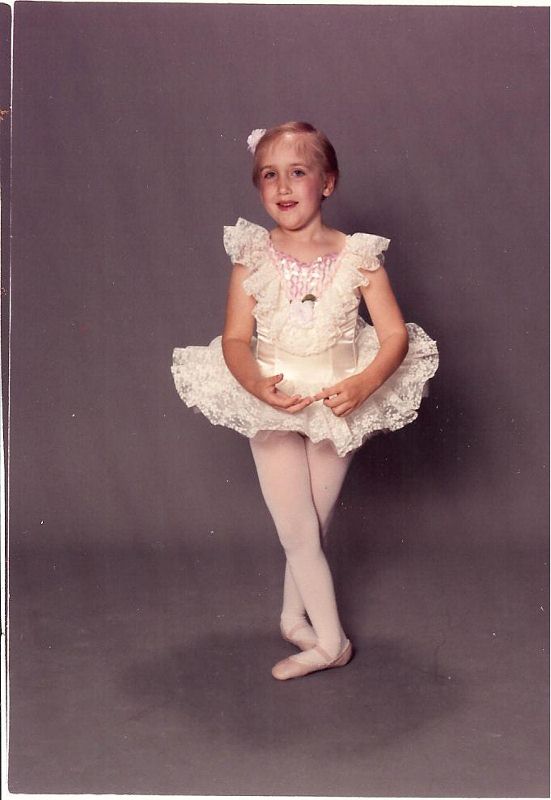
ballerinaWhen Kelsey was six she wanted to take ballet lessons. I’m embarrassed to admit how much this frightened me.  At the time she was in chemotherapy. Her muscles were weak from the chemo drugs.  She had very poor balance following her brain surgery and her weight had slipped to 34 pounds. There was an awkwardness to her left leg and arm due to her cerebral palsy.  She was bald and wore a patch over her left eye.  I was afraid she would fall and get hurt.  And, let’s be honest, I was afraid the other girls would make fun of her.

Fortunately I didn’t know how to tell my daughter about my fears, and she persisted with her request until I enrolled her in ballet class.  I had forgotten what she knew instinctively.  The process is always more important than the product.  She danced with joy.  The sheer fun of dancing was her goal. Did she fall?  Of course.  Was she awkward?  You bet.  Did it matter?  Not a bit.  Every child and adult who watched Kelsey dance gained something special from it.  Her dancing career lasted four years.  She only quit when she decided she wanted to take horseback riding lessons instead.  This time I had learned my lesson.  I signed her up without hesitating.

lesson from basketballLessons from Basketball

In fifth grade Kelsey excitedly brought home a registration form for intramural basketball.  She wanted to play.  I knew it would be a major challenge for her.  Our daughter could only run very slowly and with great difficulty.  She was also very short as her pituitary gland had been severely damaged by the cranial radiation she had received to survive cancer.  For many, many years she received a daily injection of growth hormone to grow at all.  She only had the use of one hand to play ball.  Caution bells went off inside my head again, but I had learned to ignore them.  The excitement in her eyes emphatically canceled out all those drawbacks.

We signed her up.  After the first practice the coach/gym teacher, George Losh, said he was afraid for her to play in a regular game.  He was afraid she would get hurt.  I’m certain lawsuits danced in his head.  But every child who participates in sports risks physical harm.  If her risk was greater, her need to belong was greater too.  We encouraged him to let her play.  George Losh’s physical education classes were always child-centered and structured so that every child could feel some measure of success.  For two years Kelsey played basketball harder than any girl in the league.  No, she never made a basket during a game.  Some huge successes are subtle.  In two years we never once saw a teammate treat her as anything other than as asset to the team.  After weeks of trying, when Kelsey made her first basket during practice, every girl in the entire gymnasium stopped to applaud.  Watching this young lady struggle and triumph increased the humanity of all who knew her.  On game days when we stopped in the grocery store, Kelsey quickly shed her winter coat into the grocery cart.  It took me a few times to figure out that she was so proud of her team shirt, she didn’t want it to go unnoticed under her coat.  She was thrilled to be part of a team.

Most Important Lesson of All

hurts

What is the single most important lesson Kelsey taught me?

Being excluded hurts.  Be certain of this.  The older my daughter grew, the more excluded she was… both by her peers and unfortunately by some teachers too.  Whatever educational jargon or current political term you choose to use, the results are still the same.  Being excluded hurts.

Possessing a physical disability or struggling with a different learning style did not rob my daughter of her sensitivity.  Being excluded hurts!  It hurts the children being excluded.  It robs them of the role models-their typically developing peers-they so greatly need.  It shortchange the children with ‘normal’ growth patterns too.  Inclusive environments reduce fears, build understanding, and teach compassion, patience, and tolerance in a way ‘special’ schools and ‘special’ classrooms never will.  Inclusive environments reflect life and the society in which we live.  How can we separate our children now and expect them to adjust successfully to one another at some magical, mythical time in the future?

Becoming a Great Teacher

Good teachers become great teachers when they become students themselves.  Children have much to teach us if we will only watch and listen carefully.  Kelsey’s dream of becoming a teacher did not end when her cancer returned and she died at age sixteen.  Kelsey was an incredible teacher all of her life. I cannot tell you how many times one of her teachers would come to me at the end of the year and say, “She taught me so much more than I taught her.”  I came to expect it, because I had learned that it was true.

Kelsey modeled for me how to handle rejection without becoming angry.  She showed me how to simply ignore seemingly insurmountable challenges and just focus on living life to the fullest.  She taught me how to more greatly appreciate the simple joys of family and traditions.  She modeled how to maintain a sense of humor and grace even in the face of death.  She has left the most incredible legacy for all who knew and loved her…and all my future students too.  She will forever be the greatest teacher of my life.  May her story touch your teaching life, too.

Kelsey Noel Easley

1982-1999

Kelsey's lessons

TEACH...To Change Lives

TEACH…To Change Lives

Autographed or in large quantities from the author dauna@cinci.rr.com

Also available at Amazon.com

Teachers Create the Classroom

Standard

                        The Teacher Makes the Choice

Image credit: <a href='http://www.123rf.com/photo_7438300_illustration-of-a-lighthouse-illuminating-the-night.html'>lisann / 123RF Stock Photo</a>One of my all time favorite quotes for teachers was written by Dr. Haim Ginott and comes from his book Between Teacher and Child.

“I have come to the frightening conclusion that I am the decisive element in the classroom.  It is my personal approach that creates the climate.  It is my daily mood that makes the weather.  As a teacher I possess tremendous power to make a child’s like miserable or joyous.  I can be a tool of torture or an instrument of inspiration.  I can humiliate or humor, hurt or heal.  In all situations, it is my response that decides whether a crisis will be escalated or de-escalated, and a child humanized or de-humanized.”

Oh, how I wish I had written that myself.  I am so grateful that someone did.  The book, Between Teacher and Child is around forty years old and yet contains advice that is timeless.

Image credit: <a href='http://www.123rf.com/photo_8535805_a-wooden-ruler-with-the-words-do-you-measure-up-symbolizing-personal-appraisal-and-assessment.html'>iqoncept / 123RF Stock Photo</a>

A Great Measuring Stick

It IS our personal approach that creates the climate in the classroom.  Do we provide a welcoming presence.  Are we pleasant and approachable?  Can students trust our moods?  Or are we the grinch that only smiles twice a year.  We honestly do have the power to make a student’s life joyous or miserable.  We teachers have had teachers too.  We all can remember a teacher who was a tool of torture.  We’ve all had a teacher who honestly was an instrument of inspiration.

A word of caution here:  A teacher cannot truly be an instrument of inspiration if they are a tool of torture to only one or two students.  Students are always watching.  I believe they judge teachers on the way they treat the most challenging child in the class.

I’ve been sitting in high school teacher cafeterias and listened to something a teacher said to a student that made me wonder who was the adult in the classroom.  Trying to “one up” a student who has just made an inappropriate comment in class is a losing proposition for any teacher.  Professionalism goes out the window.  Sometimes it is tough to listen, absorb, and under-react but retaliating an inappropriate comment with a sarcastic one, only escalates the negative.  It may feel like a win in the short term, but it is a long term loss.

I chose a lighthouse to illustrate this point for a reason.  Lighthouses demonstrate their real worth during inclement times.  So do teachers.  It’s easy to be a good teacher when everything is going smoothly. But great teachers reveal themselves during the tough times.

A teenager stands up and yells profanities at you in class, then stomps out slamming the door on their way out of the room.  (Yes, this has happened in my classroom).  What do you do?  The choice is yours.  Do you escalate the situation or attempt to de-escalate it?  Before you make your choice, take a deep breath and then pause.  Every student will be watching your reaction. You are the beacon in this moment.  Will you dehumanize the student?  A teen is a child with longer legs, raging hormones and often tumultuous emotions.  You are the adult.   What you do next defines you as a teacher.

TEACh

TEACH…To Change Lives

Available at Amazon.com

How to Stop a School Bully

Standard

When They Don’t Want to Go to School

bullyingTwenty-five years ago my oldest daughter was in junior high school.  I sensed something wasn’t just right because she didn’t want to go to school.  The school nurse also frequently called me telling me that my daughter was in the clinic claiming to be ill.  I’d turn my schedule upside down in my own classroom where I was teaching to go and pick her up only to realize with a mother’s instinct that she really wasn’t sick at all.  She just wanted to come home.

Finally one day, even though she tried to continue to mask her situation, her secrets exploded at home and the truth came out.  Some girls were targeting her at school.  On the day that she couldn’t take it anymore the bullies had gotten her locker combination out of the counselor’s file drawer where they worked as ‘aides’ to the counselors instead of being assigned to study hall.  They used the confidential combination to open my daughter’s locker, and then dumped all her books and belongings in the restroom sink.  Then they turned on the water and left them there for others to discover as the sink overflowed.  Someone came to find my daughter and asked her why all her belongings were being flooded in the girl’s restroom.  They assumed she caused the flood.  That’s when she broke down at home.  She was afraid she would get in trouble for the restroom flood.  She was afraid if she revealed who really did it, they would pick on her more.

She sobbed as she told me this story.  But at the very same time she pleaded harder for my silence and made me promise not to go to school and talk to anyone about it.  She swore that administrators and teachers loved these girls.  They had everyone fooled.  She was sure no one would believe her.  If I went to school and “told on them” they’d know my daughter had told someone their identity and that would only escalate what they would do to her. Unfortunately I knew that this was (at that time) probably true.

These tormentors were the original ‘mean girls.’ They preceded the internet by fifteen years.  Imagine the trouble they could cause cyber-bullying today.   Clearly they showed one personality to adults or they wouldn’t have had access to the counselor’s files. (Of course, this isn’t at all professional and they were probably sneaking to do this).   But their true identity was revealed to their peers, especially to those who felt powerless to stand up to them.  To the masses they were the ‘popular’ girls.

What Did I Do About It?

losing cleepThe first thing I did was toss and turn all night.  I lost quite a bit of sleep trying to figure out how to handle this situation.  She’d made me promise her I wouldn’t go to school or tell anyone.  If I did, would the situation escalate?  She was certain it would. Would my daughter ever trust me again if I broke my promise?  Would she be willing to share her problems with me in the future?

What did I do?  I went to school, of course.  To my credit I didn’t take a weapon.  As I tossed and turned I remembered that I had formerly taught with the assistant principal’s mother in another school district.  She and I were no longer in touch, but it was at least an opening.  I sneaked into that assistant principal’s office when I knew my daughter would be in class.  I told him I knew his mother and how I knew her.  (That shouldn’t have made any difference, but somehow it made me feel better). I then told him that my daughter had made me promise that I would not come to school and let anyone know what she was experiencing.  I demanded his promise that she would never find out I had come.  He said he would honor that request.

Then I described what was happening.  I told him I couldn’t figure out how to handle it.  If I called these girls’ parents, would that make it worse?  Probably.  The girls would deny all of it to their parents.  I’ve known of parents who do this, but it never felt comfortable to me.  I told him I saw it as a school problem and I asked him what he was going to do to solve it without my daughter knowing I had come in.  But I let him know in no uncertain terms that I expected it to be solved quickly and discreetly.

Guess What?

We brainstormed together.  I wanted to make sure he wasn’t going to do something that would put my daughter in a more uncomfortable situation.  He came up with a wonderful idea which became the perfect solution.

What did he do?  He sought my daughter out in the cafeteria.  He told her one of her teachers had told him what a great gal she was.  He asked her if she could help him with a project.  In his role as assistant principal in this school he also served as athletic director. That put him in charge of all athletic functions.  He immediately put her in charge of a concession stand.  She was surprised to be sought out and valued by the assistant principal.  He would talk to her frequently in the halls and the cafeteria just being friendly.  She began going to all the games and functions.  She had a talent for this and wanted to live up to his confidence in her.  Soon she took on more and more responsibilities.  He had other students report to her putting her in a leadership role.

What happened to the bullies?  They saw the assistant principal talking to her frequently.  He was well liked by the students.  When they saw that he valued her, they stopped making her a target.  It was a subtle but perfect solution.  She stopped hating school.  She felt accepted and valued at school both during the day and at after school functions.

Did she ever find out that I went to school?  Eventually.  But let me tell you how it happened.  When my daughter (yes, the same one) had her own preteen daughter attending the same junior high school, she talked to me on the phone one day.  This is what she said.  “The school nurse is always calling me telling me that my daughter is sick.  I know she has been having headaches, but I think something else is going on.  I just don’t think she feels comfortable in this junior high setting.  Every morning she pretends to be sick and tries to stay home from school.  I just don’t know what to do about it.”

I paused a long time and then I said, “Do you want to know what I did about it when I had that same problem?”  There was a long silence on the phone.  She didn’t know what I was talking about.  I reminded her of the situation she encountered in junior high and confessed to the promise I had broken.  She was astonished, but by then, of course, not annoyed at all.  The next day she marched right into that junior high, asked to see a guidance counselor and said, “My daughter doesn’t want to come to school.  She just can’t seem to find a place to fit in here.  How can you and I help her?  Before she left the school, the guidance counselor had promised to seek her out and make her a photographer for the year book committee.

My granddaughter called me that night.  She was all excited about this new responsibility.  We bought her a digital camera and she was off to all the games and school functions.  This time there wasn’t a specific bully that we knew of.  I think we solved the problem more proactively before she became the target her mom had become.

When kids feel connected and valued, it goes a long way toward taking the power away from a bully.  I’m glad for all today’s bully hot lines. and the anti-bullying workshops and strategies taught currently.  These are long overdue.

But I am still continually amazed at the power of one teacher, one peer, one administrator, or one role model.  When I approached that administrator he knew exactly what to do.  He had the sensitivity and the influence to turn it all around very quickly.  Adults within our schools have a lot more influence than they would ever believe.  I’ve built wonderful friendships with students in the schools where I’ve taught who were never assigned to my class.  You can build positive relationships with kids in the hallways, standing duty, at athletic functions or walking through the cafeteria.

you can do it

I challenge every teacher to pick at least a dozen kids in the school building that you don’t have in class and focus positive attention on them.  Don’t seek out a ‘star.’  Choose a kid who appears to be on the sidelines. Choose someone who looks like they need a friend.  Choose someone dressed differently.  Smile and speak to them consistently.  Can you imagine what a positive difference we would make in our buildings if we all committed to this strategy?  Why not try it?  What do we have to lose?  A bully? 

TEACG

TEACH…To Change Lives

Available at Amazon.com