Tag Archives: classroom

Lessons for Teachers

Standard

The teacher learnsLessons from the Greatest Teacher Of My Life

Ironically we met in a hospital and not in a school.  She wasn’t even the one who inspired me to become a teacher.  When we met, I had already been a teacher myself for fifteen years.  But that just made it easier for me to recognize what a master teacher she was.  I made myself a promise.  I would watch her carefully, ask questions, and learn everything I could.

The greatest teacher of my life is my daughter, Kelsey.  Born with cerebral palsy, she later developed brain cancer when she was five years old.  Vivid and remarkable are the lessons she taught me. I am a better teacher forever because of her patience with me.

learn to tie shoesA Challenge

When Kelsey was four, she wanted to learn to tie her shoes.  A best friend had accomplished this important childhood feat.  Even though I had worked with preschoolers for many years, I was stumped.  Because of cerebral palsy Kelsey was left with very little use of the fingers and thumb on her left hand.  I was unable to tie a shoe with one hand.  How could I teach her?  Medical insurance refused to cover occupational or physical therapy.  It seems the term “pre-existing condition” excuses them, forever, from a child’s needs.  We struggled for three and a half years with this one maddeningly simple task.  But she mastered it.  On the first day of summer vacation when she was seven and a half years old, as I watched and encouraged her she taught herself to tie her shoes with one hand.  She beamed from ear to ear.  I cried.

Lesson Learned

I noticed something important after she conquered her shoe laces.  No one ever asked her how old she was when she mastered the skill.  Lesson learned by this teacher?  In the long run learning pace is of little importance.  Accomplishing meaningful goals within our own timetable is what matters most.

Then Came the Cancer

Kelsey during cancer treatment

Throughout her cancer treatment, Kelsey gained some control over her circumstances through play.  Whenever we were in the hospital, she wanted to play “restaurant”.  She was always the waitress and I was cast as the customer.  Hours on end we played this game of her choice.  She lost herself in this dramatic- play-acting; it was if we weren’t in the hospital at all.

When we were home where she felt safe, she always wanted to play “hospital.”  In this game she was the doctor – in charge for a change.  Family members and friends had to be the patients. She developed a game called “radiation” that had an uncanny realism to it.  Her play often included medical terms her peers and many adults didn’t understand, but it didn’t matter.  She had found a healthy way to cope with the scary things that were happening to her in the hospital.  She did much better than cope.  She was happy.  What had I learned?  She taught me firsthand and emphatically about the important therapeutic value of play.

The Enthusiastic Ballerina
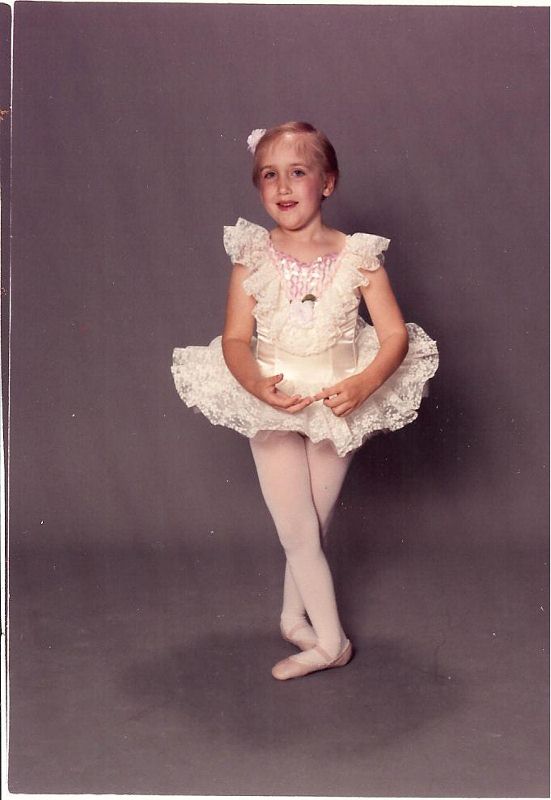
ballerinaWhen Kelsey was six she wanted to take ballet lessons. I’m embarrassed to admit how much this frightened me.  At the time she was in chemotherapy. Her muscles were weak from the chemo drugs.  She had very poor balance following her brain surgery and her weight had slipped to 34 pounds. There was an awkwardness to her left leg and arm due to her cerebral palsy.  She was bald and wore a patch over her left eye.  I was afraid she would fall and get hurt.  And, let’s be honest, I was afraid the other girls would make fun of her.

Fortunately I didn’t know how to tell my daughter about my fears, and she persisted with her request until I enrolled her in ballet class.  I had forgotten what she knew instinctively.  The process is always more important than the product.  She danced with joy.  The sheer fun of dancing was her goal. Did she fall?  Of course.  Was she awkward?  You bet.  Did it matter?  Not a bit.  Every child and adult who watched Kelsey dance gained something special from it.  Her dancing career lasted four years.  She only quit when she decided she wanted to take horseback riding lessons instead.  This time I had learned my lesson.  I signed her up without hesitating.

lesson from basketballLessons from Basketball

In fifth grade Kelsey excitedly brought home a registration form for intramural basketball.  She wanted to play.  I knew it would be a major challenge for her.  Our daughter could only run very slowly and with great difficulty.  She was also very short as her pituitary gland had been severely damaged by the cranial radiation she had received to survive cancer.  For many, many years she received a daily injection of growth hormone to grow at all.  She only had the use of one hand to play ball.  Caution bells went off inside my head again, but I had learned to ignore them.  The excitement in her eyes emphatically canceled out all those drawbacks.

We signed her up.  After the first practice the coach/gym teacher, George Losh, said he was afraid for her to play in a regular game.  He was afraid she would get hurt.  I’m certain lawsuits danced in his head.  But every child who participates in sports risks physical harm.  If her risk was greater, her need to belong was greater too.  We encouraged him to let her play.  George Losh’s physical education classes were always child-centered and structured so that every child could feel some measure of success.  For two years Kelsey played basketball harder than any girl in the league.  No, she never made a basket during a game.  Some huge successes are subtle.  In two years we never once saw a teammate treat her as anything other than as asset to the team.  After weeks of trying, when Kelsey made her first basket during practice, every girl in the entire gymnasium stopped to applaud.  Watching this young lady struggle and triumph increased the humanity of all who knew her.  On game days when we stopped in the grocery store, Kelsey quickly shed her winter coat into the grocery cart.  It took me a few times to figure out that she was so proud of her team shirt, she didn’t want it to go unnoticed under her coat.  She was thrilled to be part of a team.

Most Important Lesson of All

hurts

What is the single most important lesson Kelsey taught me?

Being excluded hurts.  Be certain of this.  The older my daughter grew, the more excluded she was… both by her peers and unfortunately by some teachers too.  Whatever educational jargon or current political term you choose to use, the results are still the same.  Being excluded hurts.

Possessing a physical disability or struggling with a different learning style did not rob my daughter of her sensitivity.  Being excluded hurts!  It hurts the children being excluded.  It robs them of the role models-their typically developing peers-they so greatly need.  It shortchange the children with ‘normal’ growth patterns too.  Inclusive environments reduce fears, build understanding, and teach compassion, patience, and tolerance in a way ‘special’ schools and ‘special’ classrooms never will.  Inclusive environments reflect life and the society in which we live.  How can we separate our children now and expect them to adjust successfully to one another at some magical, mythical time in the future?

Becoming a Great Teacher

Good teachers become great teachers when they become students themselves.  Children have much to teach us if we will only watch and listen carefully.  Kelsey’s dream of becoming a teacher did not end when her cancer returned and she died at age sixteen.  Kelsey was an incredible teacher all of her life. I cannot tell you how many times one of her teachers would come to me at the end of the year and say, “She taught me so much more than I taught her.”  I came to expect it, because I had learned that it was true.

Kelsey modeled for me how to handle rejection without becoming angry.  She showed me how to simply ignore seemingly insurmountable challenges and just focus on living life to the fullest.  She taught me how to more greatly appreciate the simple joys of family and traditions.  She modeled how to maintain a sense of humor and grace even in the face of death.  She has left the most incredible legacy for all who knew and loved her…and all my future students too.  She will forever be the greatest teacher of my life.  May her story touch your teaching life, too.

Kelsey Noel Easley

1982-1999

Kelsey's lessons

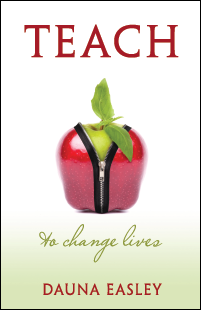
TEACH...To Change Lives

TEACH…To Change Lives

Autographed or in large quantities from the author dauna@cinci.rr.com

Also available at Amazon.com

The Power of Quiet Words

Standard

Can You Hear Me Now?

heart wordsA few years back I spotted a small hand-made pillow at a craft fair which had wonderful words embroidered on it.  I purchased it and put in on the seat of an old-fashioned school desk that I kept in a corner of my classroom.  I used it as a reminder for me and all the future teachers that I taught.  What did the embroidery say?

“Words that soak into the heart are whispered, never yelled.”

Since I have retired from full-time teaching, that little pillow sits in a small child-sized wicker rocker that I have in my home for my grandchildren.  What powerful words those are.

Just this last week as I traveled from school to school to observe future teachers in training, one of them complained to me.  “My voice doesn’t travel well in the classroom.  I don’t think I’ll ever be able to control my students because they won’t be able to hear me.”  I explained to that young aspiring teacher that a soft voice can be an asset, if you know how to use it well.  I quoted my pillow.

When to Yell

Never.  Alright, maybe if there is a tsunami wave on the beach right outside your school building and you quickly enter your noisy school cafeteria.  You must get them to listen to immediate emergency directions.  THEN you may yell…once.

But in every other teaching situation, to speak effectively, speak quietly.  When someone yells at us, we Don't yellfreeze.  Our survival instinct kicks in and we desperately try to separate ourselves from the environment.  We feel like a raccoon caught in bright headlights.  Unfortunately students usually cannot just get up and leave a classroom when a teacher yells at them.  But they flee mentally or emotionally when someone raises their voice.  The teacher may be yelling, trying to make a point, but the student isn’t really “there” at all.  And yet there is some kind of instinct we too often develop while growing up watching our parents.  Why is it we think, “If they don’t get it, we should just say it again…only louder.” ? We repeat the same explanations  in the exact same way only with more volume, then they’ll understand.  Right?  Wrong.

shhhhQuiet words sink in.  Words spoken softly don’t shut us down.  Quiet words encourage us and help us breakthrough to understanding.  They reassure us of our worth.  When you sit next to a student and give them kind, quiet, reassuring directions and compliments it opens a student to learning heights they may have previously doubted they would ever achieve.  Quiet words invite us into the learning process.  They break through our resistance to new ideas and thoughts.

I once watched a master teacher named Nancy McClimans demonstrate the power of quiet words.  She always spoke to her first graders in a quiet, calm voice.  When she really wanted their attention, she would speak quietly and with each sentence she would make her voice just a little bit softer.  Within seconds the students were completely still, giving her total eye contact and even leaning forward to catch every important word.  Try this strategy.  You will be amazed at its power.

Quiet calm words are even more important when working with students from an ‘at risk’ environment.  Too many of today’s children hear yelling in their homes.  It  also surrounds them on reality television.  On TV students watch talk shows and opinion panels during which every participant over talks or even over shouts every other member of the panel.  How do you effectively respond to a shouting out-of-control student? There is only one way… with quiet, calm words.

Teach to Change Lives small cover jpeg

TEACH…To Change Lives

Available at Amazon.com  

Or autographed or in large quantities from the author at dauna@cinci.rr.com

An apology and a disclaimer.  WordPress (my blog site) has made some changes which I’m finding difficult to maneuver.  I usually post on Monday mornings, but last week on Sunday Dec. 2nd I apparently hit a wrong button and my article posted before it was finished.  It didn’t have a conclusion or even any editing. At that point words were spelled incorrectly and some words were even missing.  I fear some of my most loyal followers who subscribe to my blog got a far inferior version of my regular blog.  My humble apologies.  Please be patient with me as I learn the new twists and turns of wordpress.

Gifts from the Classroom

Standard

1770209_sWhat is the best holiday gift you have ever received? From my childhood I remember a much wished for and cherished bike that sat in front of the Christmas tree, the only new one I ever owned.  This was a stunning event in the household where I grew up, because we usually didn’t receive what we most wanted.  However the elves must have been extremely busy that year because they didn’t do a good job of assembling this bike and it never actually worked just right.  Oh, it looked very pretty, but sometimes when you turned the handle bars, the front wheel didn’t turn – not a reliable characteristic for a bike.  I probably jumped more miles on my on my beloved pogo stick than I ever rode on that bike.  Oh, could this gal pogo!  I bounced everywhere.  Yep, I’d have to say that my pogo stick was my all time favorite gift from childhood.

What I Admire About You

What I admire about youBut as we mature we come to realize the truth of that adage, “The best things in life aren’t  things.”  They truly aren’t.  The best thing in life is making others feel good about themselves.  We all long to feel valued and appreciated.   About two-thirds of the way through my teaching career I discovered an activity that helped accomplish this goal.  I always planned this activity for sometime during the holidays.

As my students entered the classroom they received a stack of blank index cards…one for each of their classmates and one for the teacher.  Silently I had them write the name of a classmate at the top of each card and then write one thing they admired about that student.  I encouraged them to be as specific as possible.  General statements like, “You are a great gal” are not as powerful as “I admire the way you always have something encouraging to say when someone in our class is down in the dumps.”  They were required to write one about me (the teacher) also.  Let me tell you high school teachers need their encouragement too.  There were a few cautions and guidelines I voiced ahead of time.  Absolutely no ‘put downs” would be tolerated, only positive comments were permitted.

A Confession

I admit that occasionally I had a group of students so at odds with one another before we began this activity, that I didn’t require that they write a compliment to every classmate.  I might limit it to 10 or 12 compliments written using time parameters as an excuse.  I wanted to make certain no one was ever hurt by this activity.  But when you set limits like these, you always risk the omission of someone being complimented.  I only used these limits a time or two.  Here’s the real beauty of the activity.  Each time I limited the number of compliments they had to provide, they always got half way through the activity and then THEY requested of ME that they be able to write something they admired about everyone in the class.  That is how great is the power of writing positive words about someone.

Then Comes the Magic

magic

At the end of our time limit, we circled our desks and orally read one card at a time.  One student would read aloud to one other student a single comment while all others listened.  Then the next person in the circle would read a comment about someone else.  I encouraged them to keep changing the people who were being complimented.  “Try and choose someone no one has yet read about,” was my occasional  reminder.  When it was my turn to read I always started by complimenting someone I felt was considered just a little outside the inner circle…the kids not quickly accepted by their peers.  As we listened around and around that circle twenty or thirty revolutions, you could feel the climate of our classroom change. They smiled more easily, eyes moistened, shoulders relaxed, heads nodded as everyone agreed with a compliment being shared orally, and teens relaxed their armor.  Kindness settled softly over our circle like a cashmere blanket. Friends became closer and former adversaries demonstrated tolerance.  When others validate us, we are more likely to notice and appreciate positive traits in others.  The students in my classroom became a family.  There is no greater gift for a student who will be walking into your classroom every day for an entire school year.

Just before our time together ended, I instructed them to pass their cards out to one another.  By taking the time to distribute their compliments in written form, everyone could carry the compliments away and read them again whenever they might need a morale boost. As dozens of students stood to distribute their cards to others, I anticipated it to be quite a noisy time.  It never was.  Why?  The moment they received a card from someone, their eyes were magnetically drawn to the compliments written on those cards. They hungered for that validation from their peers.

Our class was always changed from that day forward.  We became a community working together, a unit.  As a side (but not unimportant) benefit, a bully has a hard time finding a foot hold in a community where everyone has your back.

TEACH...To Change Lives

TEACH…To Change Lives

Available at Amazon.com

Dear Teacher,

Standard

A Letter from a Student

Image credit: <a href='http://www.123rf.com/photo_9732125_3d-illustration-of-mailbox-with-many-letters-over-blue-sky-background.html'>madmaxer / 123RF Stock Photo</a>When I taught young children I used to receive short love notes from them all the time.  They’d tell me that they loved me and insert a picture they had drawn just for me.  Little kids would bring me an apple or a flower from their garden.  I felt valued and appreciated.

I didn’t believe that would happen when I moved into the high school to teach.  But I was wrong.  I have 3 ring notebooks full of notes and letters teens wrote to me.  There were, of course, some differences.  Teens usually dropped a note on my desk quickly when no one else was in the room and then they’d make an exit through the classroom door as fast as they could.  Once they believed I truly cared about them, they would pour their hearts out to me. They would write about a crisis in their lives. Or sometimes they’d write to tell me about something I had said or read to them during class and admit how it touched them or encouraged them.

I’m going to share (with the writer’s permission) one of those letters with you. This letter was written by Sarah.  Sarah had become a single mom at age sixteen.  She was 17 when she wrote this and had been in my classroom for only about 3 months.  She was intelligent and caring, but she didn’t trust people very much. She dressed with a flair that usually resulted in her peers categorizing her as someone outside their circle. She might wear a black leather studded collar or bracelet along with a pink tutu on the same day.  She had gorgeous strawberry blonde hair that women would pay hundreds of dollars to have created at a salon, but Sarah was apt to have a purple or pink stripe running through hers.

I share this letter humbly, not to boast about my relationship with students, but to help teachers understand what it is that our students really need.  Read between the lines and listen to what Sarah desperately wanted.

Dear Mrs. Easley,

“I would truly like to thank you.  You are a great inspiration to me and a great role model as well. You have done everything in your life that I would hope to do in mine. You have become an amazing teacher, one who truly touches the lives of many she comes in contact with.  You have opened your own school and most importantly you are a dedicated mother to your own children even after they are gone.

Through life I have learned many lessons.  I have learned that there are people who will enjoy hurting you, who will enjoy beating you down, who enjoy seeing you cry. But I have also learned you can’t let them stop you.  You are your own person, you can do what you wish, you can be who you want and no one can stop you. Your classroom lets me be the person I want to be. You do not judge me. You see my intelligence, not my clothing, you see me. I have never had a teacher say they admire me before, when you did, I felt strong. I have never felt strong.

I’m sorry for the struggles you have had to face. Losing a child is hard. I hope I never have to learn how that feels first hand. But Kelsey would be proud of you.  You have become so much to children of all ages. I know I am proud of you. I do not have a mother to fall back on. I don’t have parents that support me, I have ones that push. You encourage me; you know what I am capable of and expect me to show it and know myself.

I love to be myself, but sometimes it’s hard to do. You have let me know that you should never be afraid to be yourself. I hope I can instill that in my daughter.  She has helped me to grow so much.  How much she has helped me makes me realize why you are such a good teacher; you had your children to help you learn.

I truly hope that one day I can be like you.  Just this short time with you has opened my eyes. At first I was not sure about teaching; now I know it is what I have to do. You are an inspiration to your students, Mrs. Easley whether they realize this now or not. You have instilled lessons in us that at this time may seem pointless but later will show such immense value. Thanks to your class.  Thanks to your stories, I really know I can make a difference, like the one you have made with me.

I cannot entirely describe my gratitude through a letter so attached is a poem, one that I have written just for you, describing the feelings I hold toward you now.

Thank you,

Sarah

A mother never wanted me

A family threw me away

I was lost in apathy

Not wanting to survive each day.

School became the home I wanted

Books my seclusion

Writing as my outlet

Loving the illusion

I may not fully thrive at this

But nor do I fail

I only use it to find myself

And with that I do prevail.

A classroom like this

Makes me feel unharmed

A place where I feel welcomed

Where I need not feel alarmed.

People welcome me everyday

Faces painted up with smiles

Giving me encouragement

Helping me through painful miles.

They do not know all my struggles,

But they have let me know

That they are here for me

To help me all the way I have to go.

You have helped me the most

Showing me encouragement and light,

Giving me a warming smile

To let me know what’s right.

Learning from your experiences

As I have learned from mine

Mothers and teachers alike

We are two of a kind.

I feel like I connect with you

We express ourselves the same

To others school is work

To me it is a game.

Nothing compared to the outside world

It is easy within these walls

You either succeed or you fail

Outside few hear your calls.

You have made me realize

I should learn as I go

Teaching me of both school and reality

I now know what I need to know.

Thank you…

Teens take writing notes to their teacher to a whole new powerful level. If you let them know that they matter to you, they will, sooner or later, make you aware of how much they appreciate your commitment to them. I didn’t read Sarah’s note without tears. Can you imagine how many times I’ve read it?  On those tough days, it became a beacon to me. It touched me so much, that when I wrote my book TEACH…To Change Lives I included her letter in my book (after receiving her permission, of course).  Using Sarah’s words helps me encourage teachers.  It reminds them of the important role they play in their students’ lives.  You see I honestly do believe that we teach to change lives.

TEACH...To Change Lives

TEACH…To Change Lives

Available at Amazon.com

(or in quantities from the author at dauna@cinci.rr.com)

Teachers Create the Classroom

Standard

                        The Teacher Makes the Choice

Image credit: <a href='http://www.123rf.com/photo_7438300_illustration-of-a-lighthouse-illuminating-the-night.html'>lisann / 123RF Stock Photo</a>One of my all time favorite quotes for teachers was written by Dr. Haim Ginott and comes from his book Between Teacher and Child.

“I have come to the frightening conclusion that I am the decisive element in the classroom.  It is my personal approach that creates the climate.  It is my daily mood that makes the weather.  As a teacher I possess tremendous power to make a child’s like miserable or joyous.  I can be a tool of torture or an instrument of inspiration.  I can humiliate or humor, hurt or heal.  In all situations, it is my response that decides whether a crisis will be escalated or de-escalated, and a child humanized or de-humanized.”

Oh, how I wish I had written that myself.  I am so grateful that someone did.  The book, Between Teacher and Child is around forty years old and yet contains advice that is timeless.

Image credit: <a href='http://www.123rf.com/photo_8535805_a-wooden-ruler-with-the-words-do-you-measure-up-symbolizing-personal-appraisal-and-assessment.html'>iqoncept / 123RF Stock Photo</a>

A Great Measuring Stick

It IS our personal approach that creates the climate in the classroom.  Do we provide a welcoming presence.  Are we pleasant and approachable?  Can students trust our moods?  Or are we the grinch that only smiles twice a year.  We honestly do have the power to make a student’s life joyous or miserable.  We teachers have had teachers too.  We all can remember a teacher who was a tool of torture.  We’ve all had a teacher who honestly was an instrument of inspiration.

A word of caution here:  A teacher cannot truly be an instrument of inspiration if they are a tool of torture to only one or two students.  Students are always watching.  I believe they judge teachers on the way they treat the most challenging child in the class.

I’ve been sitting in high school teacher cafeterias and listened to something a teacher said to a student that made me wonder who was the adult in the classroom.  Trying to “one up” a student who has just made an inappropriate comment in class is a losing proposition for any teacher.  Professionalism goes out the window.  Sometimes it is tough to listen, absorb, and under-react but retaliating an inappropriate comment with a sarcastic one, only escalates the negative.  It may feel like a win in the short term, but it is a long term loss.

I chose a lighthouse to illustrate this point for a reason.  Lighthouses demonstrate their real worth during inclement times.  So do teachers.  It’s easy to be a good teacher when everything is going smoothly. But great teachers reveal themselves during the tough times.

A teenager stands up and yells profanities at you in class, then stomps out slamming the door on their way out of the room.  (Yes, this has happened in my classroom).  What do you do?  The choice is yours.  Do you escalate the situation or attempt to de-escalate it?  Before you make your choice, take a deep breath and then pause.  Every student will be watching your reaction. You are the beacon in this moment.  Will you dehumanize the student?  A teen is a child with longer legs, raging hormones and often tumultuous emotions.  You are the adult.   What you do next defines you as a teacher.

TEACh

TEACH…To Change Lives

Available at Amazon.com

Teacher for a Lifetime

Standard

Not A Runner

I’m not a runner, so using running analogies in my writing is a dangerous proposition for me.  But a few parallels between teaching and running strike me.  The National Education Association has been collecting data on teachers for years.  What they reveal is that 50% of teachers quit within their first five years of the profession.  And they never teach again.  That means half of the people who enter the profession spend less time IN the profession than they did preparing for the profession.

Those are staggering and disappointing numbers, but I’d have to also confess, that they don’t surprise me.  I threw so much of myself into my job that I became sick in only my second year of teaching.  I had never been sick before.  My illness baffled and scared me. The doctors couldn’t explain it to satisfy me.  I was desperate to get better and considered quitting the profession at that time.  But I hung in there and realized that teaching, if you wanted to make it a career, was more like a marathon than a sprint.  You simply can’t finish a marathon if you try to maintain a sprinter’s pace.  No, I’m not in favor of half-way teaching.  I’m a teacher who threw herself whole heartedly into the profession.  BUT if you don’t find your own pace, your comfort zone that will somehow sustain you to hang in to make it to the end of the marathon, you will never survive in this career.

After more than two decades of teaching, I moved from the elementary grades into high school.  High school?!  If you had told me at any time during my first half of my career that I would eventually teach high school, I would have laughed in your face and then run out of the school building…in a sprint.   In my 24th year of teaching I taught high school for the first time.

I didn’t just move from elementary to high school, I also moved into an entirely new student demographic at the same time. Most of my students were tough and oppositional, living in at-risk situations.  Many of my students didn’t know their fathers and some even had mothers in prison or unemployed parents on drugs. I have no idea what kept me from quitting that year.  Professionally it was the hardest year of my life.  I almost quit in the first week of school. I only made it until 11:00 am on the second day before I was crying.  I spent the rest of the year questioning my judgement for staying.  That first group of teens chewed me up and spit me out on the pavement. Then they walked over me and left me for dead.  And they enjoyed it.

I continued to teach in that challenging environment for 12 years.  Do you know what I learned?  When I made a positive difference in a student’s life in that environment, I was usually the only person turning that kid’s life around.  I learned that those kids challenged me until they trusted me.  Life had dealt them some serious blows and they weren’t going to let anyone hurt them again.  Once they finally trusted and accepted me then they became my greatest allies.  It was in that school that I accomplished some of my most meaningful teaching.  It was, in a strange way, kind of intoxicating.  I was making a difference.  Isn’t that why most of us enter this profession?  To make a difference?

It was also during this era that I began speaking and writing about teaching.  I wanted to encourage and inspire other teachers.  Day in and day out I saw a lot of teachers who looked defeated.  I wanted them to feel supported and realize the positive difference they were making.   Speaking and writing helped build my self esteem back up a little while the students continued to pummel me like a tether ball dangling from a pole in a prison yard.   Yes, making a positive difference in a tough environment feels good, but it also had its down side.  I began to feel pessimistic about the future of our country.  If the students I was teaching were the future of our world, what was our world going to become?

Fortunately for me my teaching career took another unexpected detour.  Someone heard me speak and offered me a job in a more traditional academic high school teaching in a Teacher Academy program.  The students who enrolled in that program already knew they wanted to teach.  For the most part they were wonderful role models, great students, caring and encouraging to others and even their teacher.  The last seven years of my full-time teaching career were blissful.  I maintain long-term professional friendships with many students and I watch them finish college and enter their own classrooms.  Once again I feel quite optimistic about the future of our schools and our country.

Today I continue to write and speak about teaching while I supervise college level student teachers part time.  I love this role.  In this capacity I am able to be in and out of schools interacting with top quality mentor teachers, while calming the fears and encouraging beginning teachers.  After twice considering walking away from the profession, it turns out I am a teacher for life.

Tips for Running a Teaching Marathon

  •  Find your own pace.  When you discover your energy flagging, turn your attention to the other parts of your life.  Are you socializing enough?  Are you having any fun in the rest of your life? Have you given up an activity you enjoy? If teaching consumes your whole life, you won’t be able to stick with it long-term.
  • Find a coworker with a positive attitude and good sense of humor.  You can encourage one another and laugh about the occasional lunacies of the profession.
  • Focus on the students.  Try not to focus on the frustrations of the profession.  There will always be a new program, new curriculum, a new computer system, data collection, testing pressure, politicians who complain  about schools during campaigns,  or a change in policy or administration.  None of that is as important as building a rapport with students and helping them learn and grow into positive adults.  Laugh about the rest and focus on the kids.
  • Don’t eat lunch with the crab apples.  Every school (or business) has crab apples.  Spend your time with the positive staff members.  Avoid staffers who complain about the quality of the students, the community or the administration.  Seek out professionals who genuinely care about the students and have the ability to keep the rest of the job in perspective.
  • Never quit after a frustrating year.  There’s an old saying, “Never cut a dead tree in the winter time.”  Wait until spring.  It may just appear dead and will flourish in the spring.  In teaching, each school year  is a clean slate.  I’ve had some of my best teaching years just following some of my most challenging.  Those sweet years can rejuvenate you.
    In my life I play many roles.  I’m a daughter of aging parents, wife, friend, mom, grammy, speaker and writer.  But in addition to all those roles, I know that in my soul I am a lifetime teacher.  I hope somehow you will be able to obtain the satisfaction from teaching that I have.  The world needs committed teachers more than any other profession.  If you agree, you are probably one of us.  I teach to change lives.

             TEACH…To Change Lives

             Available at Amazon.com

Take a Closer Look at Schools

Standard

Taking a Closer Look at Schools

Do You See What I See?

My grandson was pitching for batting practice this week.  He was hit in the eye with a line drive ball which broke five bones around his eye.  His eye was blood-shot,  swollen almost shut and he has temporarily (we hope) lost all depth perception.  In the emergency room, he couldn’t even get a straw into his mouth to take a drink without putting his hand on the straw first to guide it to his mouth.  He has to wear protective glasses at all times to keep everyone and everything from inadvertently jarring his eye until these fractures heal.

During this same week I was visiting schools to meet newly placed student teachers.  These are college seniors who are doing their final practice teaching before hopefully finding teaching positions in their own classrooms next year.  The professional teachers who are sharing their classrooms with these novices are called mentor teachers.  It took me eight days to visit 20 students in thirteen schools located in four different school districts.

How Are These Two Events Connected?

taking a closer look at schools

I see a significant parallel.  And I don’t think it was just because I was emotionally experiencing both of these events simultaneously.

It seems that everything you hear through the media about schools and our educational system these days is bad news.

And yet when I walk in schools’ hallways I see wonderful things happening.  It appears to this career teacher that the reporters and politicians who are being constantly quoted about the bad state of our American educational system, have no depth perception.  They are seeing out of only one eye.  Or are they even in our schools’ hallways.

I used both eyes and both ears as I walked the schools’ hallways and talked with the staff.

This is what I saw and heard about teaching.

I saw teachers sitting with students before school hours having breakfast together.  This free breakfast was served to everyone, every day to ensure that all students were getting a nutritional start to their day of learning without singling out anyone.

When I asked student teachers to describe their mentor teachers, they used these words:

committed, caring, kind, patient, hard-working, she comes in early and stays late, he answers all my questions and explains everything he is doing for me, helpful, fair, consistent, he has a wonderful rapport with his students, well-organized, enthusiastic, even the students who claim they don’t like English still like this teacher who is teaching English.  S/he is exactly the kind of teacher I want to become.

One student teacher was describing the principal in the building where she is assigned.  “She had all the student teachers over to her house for a meal.  She wanted to get to know us individually.  The teachers in the building tell me she offers to babysit their own children.  She is always asking the question, ‘What can I do to help you?'”

I saw classrooms decorated and organized with so much care, that the rooms made you want to spend days there learning.   I know how much (or more accurately) how little money a teacher is given to set up a classroom.  These teachers reach deep into their own pockets to make a comfortable environment conducive to learning. Their classrooms were charming, and exciting places to learn.

I saw so much evidence of beginning-of-the-school-year activities planned specifically to build a positive classroom community.  Anti-bullying themes were apparent everywhere.  One teacher photographed her students’ feet (shoes, socks and all) on the first day of school and placed these foot photos on their lockers.  Each student then wrote a paragraph about what they would do this year to put their best foot forward.

Secondary students were gathered in a circle discussing ways we can make isolated peers feel included.

I had one-on-one interviews with all the student teachers and asked them why they wanted to teach and what they wanted to teach.  More than one had tears in their eyes as they explained their passion for the profession.  Their enthusiasm was uplifting.  It made me feel optimistic all over again about this profession I love so much. One of my student teachers appears to be in his forties.  He left the insurance industry to become a teacher because of the way he recognized that teachers can change the lives of young people.

About three weeks ago I had dinner with a couple of former students who are now in the teaching profession.  One of them is in a district where her salary has been frozen for five years because the school tax levy was not passed by voters.  In addition to her rent and car payment she pays  $700.00 a month toward her college loan for her education.  She had applied at surrounding school districts trying to increase her pay and relieve some of her financial stress.  One of those districts called her for a job interview ten days before the beginning of this school year.  She thought it would be unfair to leave her current school district and students so close to the beginning of the school year, so she didn’t go after the job.  And yet in the media we only read about the seeming selfishness of teachers who strike for wages.  Does the teacher I just described sound selfish to you?  Will we read about her?  Only here.

Yesterday I was surfing the internet reading stories about teaching.  One article had a link to the Huffington Post.  I had never been there before.  What did I see?   Dozens of negative articles about teachers.  There was only ONE positive one.  And that article was written by a celebrity, Tony Danza.  Thank you Tony!  But once again, it was driven home to me that only negative or celebrity-written articles about teaching seem worthy of publication.

I’d start a personal campaign to get every parent and teacher I know to write a positive story about teaching and flood the media with them; but I know they wouldn’t get printed.  In the media there is a popular expression they use to determine what gets heard.  “If it bleeds, it leads.”  In other words bad stories, ugly stories attract viewers and readers.

All I can do is stage my own personal campaign on my blog site here or write a book about the positive side of teaching… which I have.  If you are new to my site, scroll back through the past couple of months and check out many true and inspiring stories about teaching.  Also read, TEACH…To Change Lives.

TEACH...To Change Lives

Available at Amazon.com

One Final Word About Our Schools

If the parents and grandparents of our country could have walked the halls of our schools with me this past ten days, they would have felt so good  and been so impressed with the commitment the teachers show to your children.  I heard it and saw it and felt it everywhere I went.   Take a deep breath and feel good about our schools.  This doesn’t seem to be popular right now, but it is the truth.

My grandson goes back to the eye specialist tomorrow.  It will be his third visit this week.  We know he has five fractures (one of them pretty serious) and a depth perception problem and we are watching it closely.  As for the media…I have only one piece of advice.

Taking a Closer Look at Schools

You Need Glasses!! 

The Empty Truck

Standard

the empty truckAre You Kidding Me?

All the prospective teachers in my classroom were angry.  You could feel the tension hanging in the air within the classroom walls.  I  was teaching in a Teacher Academy program for high school juniors and seniors.  I had just shown my group of high school aged future teachers an article that compared teacher salaries to the yearly income of a wide variety of other professions.  But this activity backfired.  The reality didn’t just inform them, it infuriated them.

Heated comments fueled by adolescent hormones were flying around the room.  “Why should we work this hard to learn about a profession that pays so poorly”?  “What makes accountants and salesmen more valuable than teachers?”  “How come basketball players and sports figures are worth so much more than teachers who educate our country’s children?”  They looked at me with indignation.  They seemed to blame me as though I had written the economic reality of my own profession.

In that moment I sensed I was poorly prepared to answer them.  I chose the escape route of a chicken.  If you don’t know the answer, pose a question.      chicken

“Maybe it’s a good time to revisit the question I asked you on the first day of school,” I challenged them.  “Why do you want to teach?”

I paused and waited for their answers.  But they weren’t falling for it.  They didn’t feel like sharing those touchy-feely stories again.  If society didn’t value teachers were they preparing for the wrong career?  Their body language said it all.  They leaned back in their chairs and crossed their arms over their chests.  They were daring me to defend a profession that was seemingly undervalued by our American culture.

I paused even longer, and not just because I know that an effective teacher gives students time to formulate answers.  I waited because I knew I had to say exactly the right thing to this group at this moment.  I couldn’t come up with the right words.  I started to sweat.

Finally seventeen-year-old Chelsea began to speak.  “My real dad is jealous of my step dad,” she began.

Every head in the room swung to look at her like she was nuts.  Why in the world was she talking about her two dads at a time like this?  But she read their body language and continued, “Wait, just a minute, hear me out.  My real dad is jealous of my  step dad.  I know this is true because he told me so.  My real dad said he is jealous for two reasons.  First, my step dad gets to live with me.  My real dad claims he’s jealous because my step dad gets to spend more time with me.”

two dads

“The second reason he says he’s jealous is because my step dad is an engineer who designs toys.  He first designs a toy.  If that toy design is selected by the big toy company he works for, he gets to watch the whole toy development process.  He watches them produce the toy, choose packaging for it, and market the toy through ads and television commercials.  He even gets to see his finished toy on the toy store shelf and watch kids take it home to play.  My real dad thinks that would be such a cool way to make a living.

You see, my real dad drives a delivery truck.  One day when we were having one of those kind of serious father/daughter talks, he told me that in his job at the end of a really good day all he has to show for it is an empty truck. He told me that he doesn’t care what profession I choose, but he wants me to choose carefully so that at the end of the day I will have something more than an empty truck.”

Teach to Change Lives

She paused to let that sink in and then she continued, “That’s why I want to teach.  Because as a teacher, at the end of a day of helping students learn, I’ll feel a sense of accomplishment that will be so much more than an empty truck.”

teacher

I had a lump in my throat when she stopped speaking. I thought about the courage of her father.  How tough it must have been to so eloquently admit his jealousy for her stepfather.  He was so focused on his daughter choosing a career with meaning that he put his own self-esteem on hold to share an analogy she will never forget.  She internalized his message so completely that she could pull it out and share it with others at just the right moment.  It changed the whole climate of my classroom in an instant.  My students sensed the complete truth in that story.  I didn’t have to add a word.

Isn’t that, after all, why all of us teach?  At the end of a day, a school year or even a career we will have so much more than an empty classroom.  In this profession we build relationships that can honestly span a lifetime and touch generations to come. When we prepare a student to enter a profession with meaning because we have first helped him believe in himself, we help define not just his life, but the way he raises his family as well.  As a career teacher, I admit not every day is easy.  On those tough days I like to think about Chelsea’s story of the empty truck.  I make myself stop, close my eyes, and actually visualize that truck.  Then I take a deep breath and just keep on truckin’.

TEACH...To Change Lives

Today Chelsea is a teacher and has her own students in Hamilton, Ohio.   I have written my second book for teachers titled TEACH…To Change Lives and Chelsea’s story is only one of the stories in it.  It is now available at Amazon.com.

Invisible Lessons

Standard

What do I like most about teaching?  The lessons I never planned; the student produced detours that suddenly interrupt the well thought out lesson plan.

Sometimes it is an irreverent comment from a student that makes a class collapse into laughter.  At first it annoys me.  I’m right in the middle of “important information” that I have to deliver and some kid funnier than I, kidnaps my class to prove he is more entertaining than the teacher.  In that moment I have two choices; enjoy the joke with them or annoy all of them.  I choose to laugh.

Another time a class discussion will take us in an unexpected direction as a student recalls a poignant moment from her life.  The class is riveted to her comments.  Her story touches them.  My professional self screams to me, “You have only fifteen minutes to teach them the next ten points in your lesson plan.”  Fortunately my human self realizes that that student has interrupted my well planned presentation with the most important lesson of the day.  I have to release and make a U turn.

Life is exactly like my classroom.  We are busy rushing from one item on our to-do list to the next, when traffic turns the interstate into a still life painting.  A baby is born on an unexpected time table and we stop everything to celebrate. Or the phone rings right in the middle of our busiest season to tell us someone we love has a serious illness. In an instant our priorities change.  We schedule an unexpected vacation and reexamine our choices.

It’s the unplanned lessons that touch us the most.  When emotions are involved, when we “feel” things we remember.   In life and in the classroom the lessons invisible at the beginning of the day are usually the ones most memorable in the long run.